


A bipartisan effort to effectively ban the social media network TikTok in the United States has taken a great leap forward. The House of Representatives voted 352–65 that the network’s parent company ByteDance must divest itself from Chinese ownership.
Lawmakers contend that “TikTok’s Chinese ownership poses a national security risk because Beijing could use the app to gain access to Americans’ data or run a disinformation campaign” (New York Times, 3/13/24). While proponents of the legislation say this is only a restriction on Chinese government control, critics of the bill say this constitutes an effective ban.
The bill faces an uncertain future in the Senate. That doesn’t make its passage in the House any less chilling, especially when President Joe Biden has said he will sign it into law if it reaches his desk (Boston Herald, 3/13/24).
‘Profound implications’

Below the scary headline, Politico (3/11/24) acknowledges that “there have been no concrete examples publicly provided showing how TikTok poses a national security threat.”
I have written for almost four years (FAIR.org, 8/5/20, 5/25/23, 11/13/23) about how the US government campaign against TikTok has very little to do with user privacy, and everything to do with McCarthyism and neo–Cold War fervor. Before the vote, a US government report (Politico, 3/11/24) said that the “Chinese government is using TikTok to expand its global influence operations to promote pro-China narratives and undermine US democracy.”
Sounds scary, but fears about TikTok‘s user surveillance, or platforming pernicious content or disinformation, apply to all forms of social media—including US-based Twitter (now known as X) and Facebook, which let political misinformation flow about the US elections (Time, 3/23/21; New York Times, 1/25/24). And the Chinese government point of view flows freely on Twitter: Chinese state media outlets CGTN and Xinhua have respectively 12.9 and 11.9 million followers on the network owned by Elon Musk.
The Global Times (3/8/24), owned by China’s Communist Party, predictably called the legislation a “hysterical move” against Chinese companies. But the American Civil Liberties Union (3/5/24) was also alarmed:
The ACLU has repeatedly explained that banning TikTok would have profound implications for our constitutional right to free speech and free expression, because millions of Americans rely on the app every day for information, communication, advocacy and entertainment. And the courts have agreed. In November 2023, a federal district court in Montana ruled that the state’s attempted ban would violate Montanans’ free speech rights and blocked it from going into effect.
Bipartisan support

“There’s no way that the Chinese would ever let a US company own something like this in China,” Seth Mnuchin told CNBC (3/14/24)—as though the Marxist-Leninist state should be the model for US media regulation.
We can’t write this off as MAGA extremist paranoia. In fact, 155 Democrats voted for the bill (AP, 3/13/24), joining 197 Republicans. Democratic Rep. Ritchie Torres (Twitter, 3/12/24) said TikTok “poses significant threats to our national security,” and that the “entire intelligence community agrees.” While the bill may not pass the Senate, it does enjoy some bipartisan support in the upper house (NBC, 3/13/24).
Former President Donald Trump reversed course, and now opposes new restrictions on TikTok (Washington Post, 3/12/24), in part because of his hostility toward TikTok competitor Facebook, which would benefit from a TikTok ban. Trump might have been hyperbolic in calling Facebook “the enemy of the people,” but it is true that Facebook owner Meta is behind the political push against its competitor (Washington Post, 3/30/22).
Former Trump Treasury Secretary Seth Mnuchin is enthusiastic about the bill, however—because he hopes to be TikTok‘s new owner. “I think the legislation should pass and I think it should be sold,” Mnuchin told CNBC’s Squawk Box (3/14/24). “It’s a great business and I’m going to put together a group to buy TikTok.”
Mainstream conservative outlets like the Economist (3/12/24) and Wall Street Journal, at least, have united signed on to the crusade. The Journal editorial board (3/11/24) wrote:
Xi Jinping has eviscerated any distinction between the government and private companies. ByteDance employs hundreds of employees who previously worked at state-owned media outlets. A former head of engineering in ByteDance’s US offices has alleged that the Communist Party “had a special office or unit” in the company “sometimes referred to as the ‘Committee.’”
The Journal’s editors (3/14/24) followed up to celebrate the House bill’s passage. “Beijing treats TikTok algorithms as tantamount to a state secret,” it wrote. This is another way that TikTok resembles US-based social media platforms, of course—but for the Journal, it’s “another reason not to believe TikTok’s denials that its algorithms promote anti-American and politically divisive content.”

The Wall Street Journal (3/11/24) complains that on TikTok, “pro-Hamas videos trend more than pro-Israel ones”—which is also true of Facebook and Instagram (Washington Post, 11/13/23). (By “pro-Hamas,” of course, the Journal means pro-Palestinian.)
In other words, while the US government can’t legally block content it deems politically questionable on Facebook and Twitter, it can use TikTok’s foreign ownership as means to attack “anti-American” content. The paper ignored the issue of censorship and anti-Chinese fearmongering, and denounced “no” votes as either fringe Republicans swayed by Trump, or left-wingers whose political base is younger people who simply love fun apps.
The National Review‘s Jim Geraghty (3/3/23) earlier scoffed at Democratic lawmakers who continue to engage with TikTok:
Way to go, members of Congress. This thing is too dangerous to carry into the Pentagon, but you’re keeping it on your personal phone because you’re afraid you might miss the latest dance craze that’s going viral. And if the last three years of our lives have taught us anything, hasn’t it been that anything that comes to us from China and “goes viral” probably isn’t good for us?
Republican Rep. Mike Gallagher, a major backer of the legislation, took to Fox News (3/12/24) to say that Chinese ownership of TikTok was a “cancer” that could be removed, that the problem wasn’t the app itself but “foreign adversary control.”
Vehicle for anti-Chinese fervor

It’s important to remember that people use TikTok to educate and organize, not just amuse—boosting efforts to unionize workers at Amazon and Starbucks, for example (Wired, 4/20/22).
This anger toward TikTok—which, just like other social media networks, is full of brain-numbing content, but has also been used as a platform for social and economic justice (NPR, 6/7/20; Wired, 4/20/22; TechCrunch, 7/19/23)—is not about TikTok, but is rather a vehicle for the anti-Chinese fervor that infects the US government.
Think, for example, how Sen. Tom Cotton (R-Ark.) embarrassed himself by repeatedly asking TikTok CEO Shou Zi Chew in a Senate hearing if he had ties to China’s Communist Party—despite repeated reminders that Chew is Singaporean, not Chinese (NBC, 2/1/24). Is Cotton ignorant enough to think Singapore is a part of China? Or was the lawmaker using his national platform to make race-based political insinuations, in hopes of bolstering the fear that Chinese government agents are simply everywhere (and all look alike)?
That fear is already potent enough to bring together a coalition of Democrats and Republicans to line up against the First Amendment, using a social media app to ramp up a Cold War with China. The targeting TikTok is an attack on free speech and the free flow of information, as the ACLU has argued, but it’s also part of a drumbeat for a dangerous confrontation between nuclear powers.
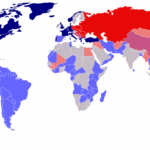



What else goes “Tik Tok”?
The Doomsday Clock
WSJ’s claim that “Xi Jinping has eviscerated any distinction between the government and private companies. ByteDance employs hundreds of employees who previously worked at state-owned media outlets” shows an almost comical lack of self awareness. The revolving doors in US government spin madly and constantly with highly paid corporate executives and federal employees moving from corporation to government at will: media, environmental protection, military, housing, healthcare… It’s the same here in the UK and, no doubt, in every capitalist state.
Wow this is so far from the truth , Tik Tok is owned by the communist and the data collected is used to mipulate user behavoir…. that why it should be banned ….
facebook and Google use user data to manipulate user behavoir too and these companies should be dispanned too …..
Ban TikTok. And Facebook, X(Twitter), Instagram, etc.
Ban companies from collecting, using and selling user data.
Ban targeted ads.
And most importantly, force all politicians and their families to divest from all domestic and international businesses, to avoid corruption, bias and conflict of interest.
I find politicians to be the greater threat to the American people.
No one keeps them in check.
If something is illegal, they’ll just make it legal.
If they want to abuse your constitution rights, they’ll simply fabricate a national security crisis and use it as excuse. And they aren’t even trying to make their excuses sound plausible any more.
Next they’ll be putting Asians/Asian-looking Americans in camps, because their lineage may have historical associations with China. Maybe something in their genes might make every one of them easily mind-controllable, sleeper agents for China.
Usually the progressive left is smart enough to say that one election, one candidate is not going to fix everything. We need to build a long-term movement.
So why should it be any different when an app comes along and says it’s going to be the change we’re waiting for? Doesn’t that deserve scrutiny and those tactics deserve criticism? Isn’t journalism part of what we want to be more included in than just having apps and algorithms feed us?
If the left wing in America can’t exist strongly without a state owned app then the movement itself miscalculated. You saw this coming so stop crying about it and organize without an astroturf crutch.
The tactics being promoted on tiktok by its algorithm involve showing up to academic seminars and shouting, or giving strange New age advice that has nothing to do with taking and changing systemic economic and political power. If you really had hope for a movement from that you’re drinking the Kool aid.
If China can get Americans to defund their industrial center, which they’ve been succeeding at since Jimmy Carter, and become a bunch of coffee sipping hipsters who follow trends and show up to ineffective protests that will promote their national interest. But it’s not your interests as Americans.