Janine Jackson interviewed Saqib Bhatti about Wells Fargo for the April 21, 2017, episode of CounterSpin. This is a lightly edited transcript.

Saqib Bhatti: “When there are issues that are harming communities of color, if you look at where the money’s coming from…right at the head of the pack you always have Wells Fargo. Racism isn’t just a side effect of what Wells Fargo does; it’s part and parcel of what it does.”
[mp3-jplayer tracks=”CounterSpin Saqib Bhatti Interview @https://eadn-wc04-3257648.nxedge.io/audio/counterspin/CounterSpin170421Bhatti.mp3″]
Janine Jackson: Recently executives of Wells Fargo were forced to give back some of the money they personally made by coercing employees to open and charge fees on some 2 million accounts for people without their knowledge—with, it should not be forgotten, a target on low-income and African-American communities. Millions of Americans are still struggling with the impact of these predatory measures and their like. And let’s not forget, either, the more than 5,000 low-level employees Wells Fargo fired, as though they’d come up with the hyper-aggressive cross-selling goals themselves.
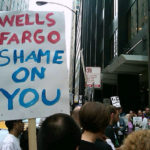
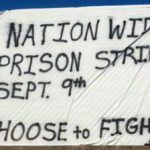
The fact that this is the same Wells Fargo that is among the primary financial backers of the Dakota Access Pipeline, and the same Wells Fargo that bankrolls the expansive private prison industry, has led activists to address the company as—not the only blameworthy financial industry actor—but a real crystallization of how banks finance racism.
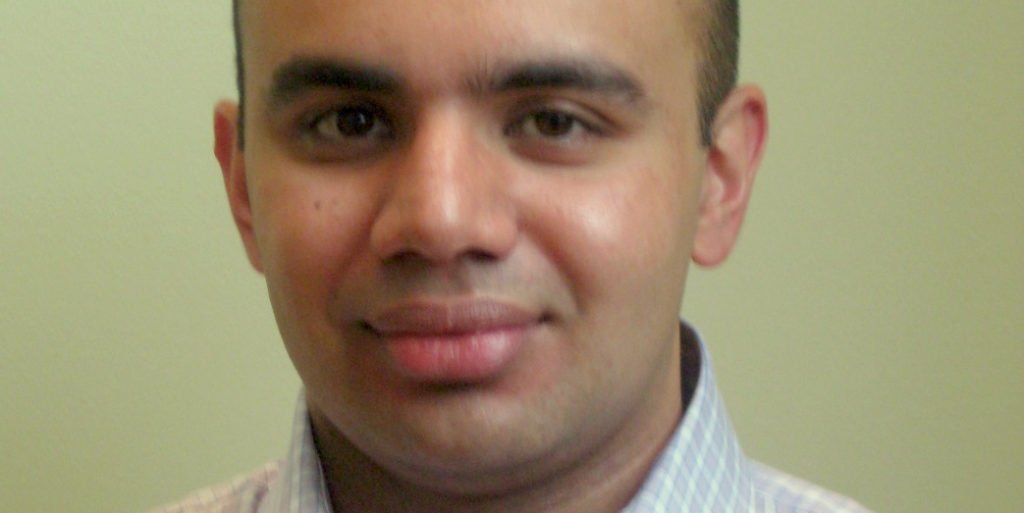
Saqib Bhatti is director of the ReFund America Project and co-executive director of the Action Center on Race and the Economy. He works on a campaign called Forgo Wells. He joins us now by phone from Chicago. Welcome to CounterSpin, Saqib Bhatti.
Saqib Bhatti: Great to be here.

American Prospect (4/13/17)
JJ: I’d like to start with the fraudulent accounts, though I know that that’s just one head of the hydra. Media accounts are presenting the decision to take back some millions in compensation from Wells Fargo former CEO John Stumpf and Carrie Tolstedt, who ran the community banking department at the center of the fraud—that clawback is being described as “epic,” the “biggest in industry history” and so on. But I saw a piece by Peter Dreier that suggested that media reports are leaving out some important bottom-up organizing work that played a role in getting to this development, but that is aimed, actually, at much more. Can you talk a little bit about the activism behind, whatever we may say, a still-rare example of any price being paid by higher-ups for this really devastating behavior?
SB: Yes. On that point, that’s actually very interesting that it doesn’t actually take all that much to be the highest fine ever paid by Wall Street, because actually it just doesn’t happen. The point, though, really at the heart of Peter Dreier’s article was a very important one, which is that the scandal around the fraudulent accounts—it was actually whistleblowers within the bank, who are bank workers organizing with the Committee for Better Banks, who raised a concern that as a matter of their employment, in order to keep their jobs, they were being forced to meet these aggressive sales goals, and in so doing, they were really being forced into opening fraudulent accounts.
There is a petition that the Committee for Better Banks launched three years before the scandal broke that got over 10,000 signatures. And so that’s one of the key things that’s actually very important, because the company cannot deny that they knew that this was happening, because, in fact, 10,000 of their own workers signed a petition and gave it to them three years earlier, saying, look, we’re being forced to do this, we know this is illegal, we know this is wrong, it’s unethical, we feel very bad about it. And the company continued to do those practices.
JJ: Yeah, and I think it’s really exciting to hear about employees and consumers being in coalition around these issues.
SB: Yeah, absolutely. This is one of the things that’s not as well understood in the United States, but in other parts of the world, bank workers are generally unionized. In places where bank workers are unionized, part of the role that the union is able to serve is to actually empower them to be whistleblowers, basically give them workplace protections so they can raise these issues and fight on behalf of consumers.
JJ: Wells Fargo, as listeners will know, is one of some 17 banks financing the Dakota Access Pipeline. They’re also deep in private prisons, which I heard an activist point out are targeted not because they’re worse than public prisons, though they may be, but because they’re expansionist, and they rely on banks to do that. There’s a theme here. You see a coherence in terms of the communities harmed by Wells Fargo, yeah?
SB: Absolutely. It is no mere accident that time and again we find that when there are issues that are harming communities of color, if you look at where the money’s coming from, it’s almost always coming from Wall Street, and right at the head of the pack you always have Wells Fargo. Racism isn’t just a side effect of what Wells Fargo does; it’s part and parcel of what it does, whether it’s, as you mentioned, funding the Dakota Access Pipeline, or funding these immigrant detention centers and getting ready to profit off of Trump’s heightened enforcement on immigration issues.
Or just going back to the fact that they were actually one of the leading banks when it came to mortgage discrimination, really targeting communities of color with predatory mortgages. In fact, workers from within the bank have come forth and said that within Wells Fargo, they referred to subprime mortgages as “ghetto loans,” and said that they were intended for “mud people.” This is a type of culture that you had within Wells Fargo. They also help finance the payday lending industry, which preys on communities of color. And even with the scandal around fraudulent accounts, one of the lesser reported stories, the workers also came forward and said that they were actually targeting Spanish speakers in particular, right? So what we found is, time and again, it’s black and Latino communities that are targeted for the worst of Wells Fargo’s racist practices.
JJ: It seems so important to say it’s not that it’s an indifferent, structural, capitalism problem that just happens to hurt black and brown people—it’s really targeted that way.
SB: Exactly.
JJ: When I look at media, I see a frame that bugs me, first of all, about how Wells Fargo was “engulfed in scandal,” you know, like it was a dust storm, and how executives “took too long to recognize problems,” when the fact is that they created the problems and called them “policy.”
SB: Uh-huh.

Truthout (12/4/16)
JJ: But the upshot is Wells Fargo is going “back on the offensive,” I learned, “after months of apologizing,” and that other banks are claiming that they would never. You know, nothing that really looks like change. And what I’d like to see more of is stories about, for example, Portland—I read a piece in Truthout by Mike Ludwig where folks, some of whom were coming back from Standing Rock, are using people power. Can you tell us about how communities are using this point of intervention that we do have around local government investments and contracts?
SB: Yes. Around the country, people are saying that we’ve had enough of Wells Fargo really doing everything it can to extract as much value out of our communities as possible, and we’re fighting back. And so the Forgo Wells campaign is really about getting cities, states, counties, school districts across the country to stop doing business with Wells Fargo.
So we’ve had some great victories. In cities like Seattle and Oakland, there’s resolutions that have already passed, saying that the cities will no longer do business with Wells Fargo, and to start exploring alternatives.
Separately from the resolutions, we’ve also had executive action in a number of places, like Chicago, Illinois, Ohio, where in some cases treasurers, in other cases governors and mayors, have themselves decided they’re doing what they can to unilaterally move their money out of Wells Fargo as a result of this fraudulent account scandal.
And so increasingly what we’re seeing is a movement from the bottom up that’s really putting pressure on local elected officials to stand up to Wells Fargo and say that actually, all banks are not the same. It’s also true that many banks are problematic; Wells Fargo is not alone in financing the Dakota Access Pipeline. But Wells Fargo is the worst, and so there is a grassroots movement to really hold Wells Fargo accountable.
JJ: Finally, I have heard the line that critics of divestment say, essentially, banks like Wells Fargo are so big that they’re involved in everything, and some of it’s bad, as if it were unavoidable. It sounds very close to, we can’t do everything, so let’s do nothing. But what you’re saying is we can do and are doing things, lots of things! What’s happening April 25?
 SB: April 25 is the day of the Wells Fargo’s shareholder meeting. This will be the first shareholder meeting since the fraudulent account scandal broke, since the resignation of the CEO. And so what we’re doing is, we’re calling for a national day of action. We have a petition that we’re circulating, that you can access from ForgoWells.org, that calls on the bank to divest from Dakota Access Pipeline, to stop investing in private prisons and immigration detention centers, to stop funding the payday lending industry, to stop its tremendous lobbying that it’s doing to try to influence our politics, to stop its predatory foreclosure practices, and a number of other demands that we raise.
The petition also stands in support of the shareholder resolution that Wells Fargo’s own shareholders are putting forth to try to change the bank’s behavior, which, again, called for it to fix its gender pay gap; it calls on the bank to adopt an indigenous rights policy. And we’re also, finally, calling for the resignation of the bank’s directors, the board of directors, who are supposed to oversee the bank. They were the CEO’s boss, and they were all asleep at the switch. They completely looked the other way while the bank made disastrous policy decisions that were blatantly illegal and blatantly racist, and we’re saying that it’s time for those directors to go as well.
So we have this petition, we have a sign-on letter, we’re having a day of action where people will deliver those petitions to Wells Fargo branches across the country and demand that Wells Fargo change at the fundamental level, that they adopt these policies, and to demand that they pass the shareholder resolutions and fire the board of directors.
JJ: We’ve been speaking with Saqib Bhatti of ReFund America and the Action Center on Race and the Economy. You can learn more about the Wells Fargo campaign online at ForgoWells.org. Saqib Bhatti, thank you so much for joining us this week on CounterSpin.
SB: Thank you.