

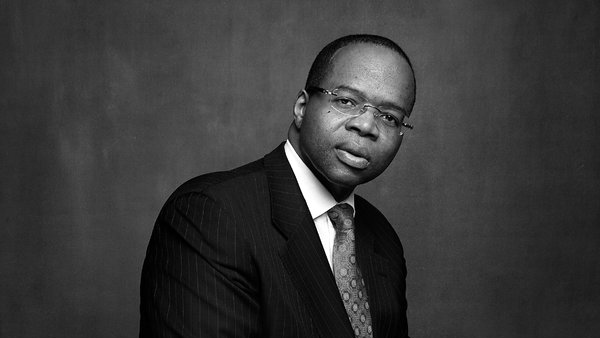
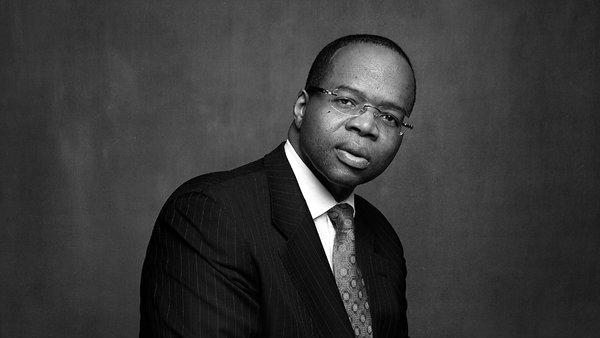
New York Times depiction of Brooklyn DA Ken Thompson: Though he recommended no jail time for a cop who killed an unarmed black man, “people who want a more just system should see him as an ally.” (photo: Jesse Dittmar /NYT)
When the New York Times editorial board weighs in on an issue, people take notice. The paper of record sneered this past Friday (“Critics of Brooklyn DA Miss the Big Picture,” 5/20/16) at a growing movement against Brooklyn District Attorney Kenneth Thompson, who is now being criticized for recommending—and getting—a no-jail sentence for the police officer who killed Akai Gurley in 2014.
Gurley, an unarmed black man, was shot in a Brooklyn public housing staircase and left to bleed to death in the arms of a friend. While Gurley’s killer, rookie Peter Liang, was indicted and eventually fired from the department, he managed to avoid jail time, thanks in large part to Thompson. The Times, which somehow didn’t mention the Gurley family as it pedantically refuted the anger of a “vocal band of critics,” defended Thompson:
It is fair and right to question how Mr. Thompson, and prosecutors everywhere, make their decisions. But his overall record and reform efforts show a far greater awareness of the justice system’s problems than many in his position. People who want a more just system should see him as an ally.
An “ally.”
The Gray Lady Timesplained that the good DA, who is black, has “taken extraordinary steps” around issues of justice and black lives. Critics here in the city who might want to push Thompson from his elected position, as has happened to officials in Cleveland and Baltimore, are “misguided.” In other words, the most powerful newspaper in the world was trying to make clear which public officials were and were not appropriate targets of protest.
The editorial board argued Thompson had stopped prosecuting low-level marijuana cases (marijuana has been decriminalized since 1977), launched a warrant-clearing program (a renaming of a similar program started under his predecessor) and pushed to reverse wrongful convictions (not including his convictions). Speaking to public defenders in Brooklyn, however, you’d be hard-pressed to find any who shared the sentiment that Thompson is anything other than an enforcer for a criminal justice system that still crushes people of color. Dozens of attorneys staged a protest in front of his office (another set of critics the editorial board ignored) to rail against Thompson and his aggressive prosecution of poor New Yorkers.
The Times editorial board acknowledged that “Mr. Thompson’s critics say he continues to seek unfairly harsh sentences for poor and black defendants, refusing to extend to them the leniency he offered Mr. Liang.” But, they countered, “the facts of every case are different, and need to be considered individually.”
They’ve obviously never spent much time in Brooklyn criminal court, which still looks and operates like a conveyor belt of punishment with an overwhelming amount of black and brown bodies being loaded onto it. One lawyer told me that her clients get worse plea deal offers under Thompson than they did under the former Brooklyn DA, Charles Hynes, whose record Thompson ran against. In fact, she said, Thompson might be the most hard-charging district attorney in the city when it comes to punishing low-level offenders, the majority of whom are poor people of color.
And yet Thompson, who received the endorsement of the powerful New York police union, the Patrolmen’s Benevolent Association, was praised by the editorial board as someone “working to reform the system from the inside.” The Times conceded that perhaps “reasonable people” can disagree about Liang’s sentence, but calls for Thompson’s job, now dangerously spreading on social media under the #ByeKen hashtag, were going too far.
It’s important to note that the editorial board was fighting back against criticisms the newspaper had spotlighted within its own pages. Earlier in the week, the Times (5/16/16) reported on the backlash against Thompson: “Liberal Brooklyn Prosecutor Faces Unlikely Foes: Liberal Activists.”
Apart from the fact that you’d have a hard time making a case for any prosecutor being a “liberal,” the article’s headline took the lazy step of characterizing his critics as “liberals” too. I was quoted in the story and felt pretty slandered being described as a liberal, though it wasn’t the first time (New York Observer, 10/29/15). More importantly, however, the article didn’t quote any black activists or black voices in a story touching on issues crucial to black lives.
Not one.
Instead, the article gave the final word to David Kennedy, a white academic who works closely with the police and receives millions in federal funding dollars. So even as the New York Times took a closer look at a burgeoning grassroots push against a “liberal” prosecutor, it leaned heavily on Kennedy’s analysis that much of the discontent in the streets and in the black community was due to a “confusing” conversation around the criminal justice system: “It’s very hard to sort out exactly what’s going on.”
Kennedy may not know what’s going on, but many of the activists who’ve been pushing the #ByeKen message could have explained—if they had been asked. Shannon Jones is an organizer with Why Accountability, a community and police watchdog group. She has protested Thompson and wasn’t happy with the editorial defending him, either. “To suggest black people should be resolute with Brooklyn District Attorney Ken Thompson’s Conviction Review Unit, the New York Times seems to define white liberalism at its worst,” she said:
The New York Times, regrettably, chooses to opine that a few released innocents is fair compensation to us and somehow salvages DA Thompson’s reputation and legacy. Denial of justice and the continued devaluing of black lives by black people in governmental positions is wholly unacceptable. Perhaps the New York Times should actually consult with black people on this issue…. Kenneth Thompson must not be reelected.
Gem Isaac, also with Why Accountability, has been involved with several actions in response to Akai Gurley. “The #ByeKen campaign rose out of the continued disregard for black life as shown by Brooklyn DA Thompson’s advocacy for Peter Liang to not do ANY jail time for the murder of Akai Gurley,” she told me. “The #ByeKen campaign is not just for Thompson but also for any public official that discounts black life and the justice that we deserve when we are victims of police brutality and murder.”
Nabil Hussein, an organizer with Millions March, a group that has organized mass protests throughout the city, took issue with the original Times article labeling protesters as “liberals”:
The New York Times is consciously lying to its own readers about the political differences that exist within New York City, advancing a false narrative that it is difficult to understand why grassroots groups in the movement for black lives would challenge an elected official who routinely jails black people for jumping a turnstile, yet advocates on behalf of a murderer of black people to never see the inside of a jail cell.
The shameful editorial supporting Ken Thompson continues the same pattern of deliberately obscuring enormous disagreements and omitting relevant historical perspectives. The New York Times editors use vague language to try to force us into line behind a DA who uses his “liberal,” reformist credibility to maintain and further entrench the racist criminal justice system. But we are not fooled by the dishonesty of the New York Times. We will continue to struggle for justice with Akai Gurley’s family and the families of all victims of the racist police brutality and murder that Ken Thompson is complicit in upholding by refusing to enforce accountability for killer cops.
Jason Woody is one of the seven activists, known as the “Akai Gurley 7,” arrested after protesting outside Thompson’s home the night of Liang’s sentencing. He was charged with disorderly conduct, obstruction, resisting arrest, assaulting a police officer and inciting a riot. He spent four days in Rikers Island, as Thompson’s office requested $25,000 bail.
“There needed to be a statement made,” Woody said. “He’s the one person in Brooklyn responsible for justice in Brooklyn. He’s supposed to represent the people, but we’re the people and we’re very dissatisfied.” Woody pointed out the painful irony of being locked up for speaking out against a cop avoiding jail. “Anyone who’s ever been to Rikers Island has spent more time in jail than Liang. I wasn’t even convicted, and I spent more time locked up than Liang…. I’m tired of police not being held accountable for their actions.”
While it may not surprise many that the New York Times would side with an establishment figure, misrepresenting the campaign against Thompson is a perfect example of why activists have always pointed to corporate media as part of a longstanding problem. Coddling prosecutors and politicians is an essential function of those who will do anything to keep power structures intact. Perhaps the goal of displacing the powerful from their privileged perches should extend to editorial boards as well.
Josmar Trujillo is a former columnist for Extra! who writes at the Huffington Post, Newsday and amNY. He is also an organizer with the Coalition to End Broken Windows and New Yorkers Against Bratton.
You can send a message to the New York Times at letters@nytimes.com (Twitter:@NYTimes). Please remember that respectful communication is the most effective.




As the upper-half of society hoards all the land and wealth, as they use democracy as a tool to enslave the laboring-class, the end result is all the legalized killing by legalized killer cops that we most now endure.
As best as I can tell, the New York Times’ thinking seems to be “Thompson is black, and a Democrat, so why should any liberals be upset with him?” This is an identical blindness to “Hillary Clinton is breaking the gender barrier, and a Democrat, so there’s absolutely no real reason liberals should oppose her.”
This is liberalism for people without anything really at stake. Liberalism for people for whom $15 per hour is just a number, not the difference between making the rent and not. Liberalism for people who will never face jail time and a career-ending drug conviction for half-an-ounce of pot. Liberalism for people who will never be killed by police for a minor offense or no offense at all.