

If you’re working for establishment media covering an official enemy of the United States, your main job is to convey to your audience that such places are dystopias, where everyone is miserable and whatever economic punishment Washington imposes on them can’t make things any worse.
The problem is that many of these enemies are tropical countries that often have sunny weather and lush greenery. If you run a realistic photo of such places, people might get the idea that things don’t look so bad there, and could even start wondering whether the living hell described in your text is a completely accurate portrayal.
That’s why corporate media have hit on a simple trick: If you want people to think that a country resistant to US leadership is a festering doomscape, just underexpose the hell out of your photographs.
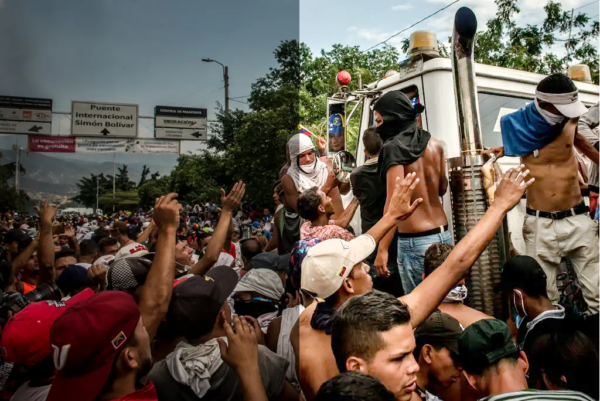
So when the New York Times (12/5/20) covers an election in Venezuela, it sets the scene with a photo that looks like this:

Whereas, when you take the same image and run it through the automatic exposure adjustment filter of a popular photo editor (in this case PicMonkey), you get this:

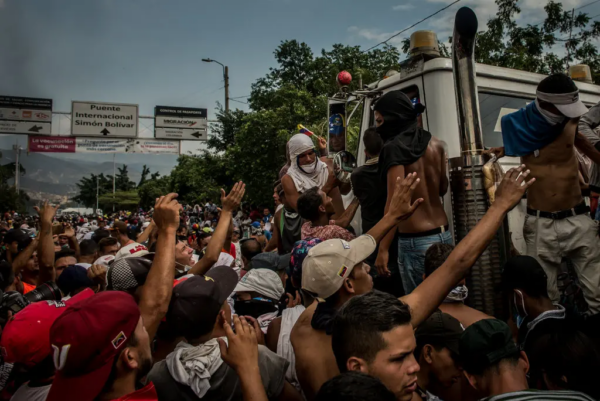
When the Times (4/3/19) showed Venezuelans protesting on a bridge to Colombia—a bridge that was the focus of heavy anti-Maduro propaganda efforts (FAIR.org, 2/9/19)—the photo would have originally looked something like this:
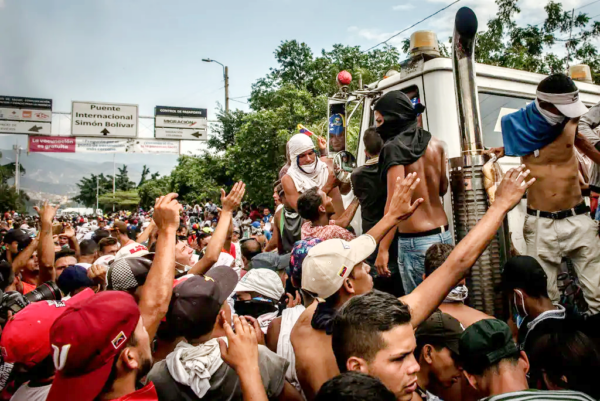
But thanks to the magic of digital editing, the sunshine-soaked protest could be drenched in shadow, the better to convey the oppression the demonstrators were struggling against:
Or say you have a photo essay (New York Times, 11/27/20) on a mother and son displaced from Colombia to Venezuela by the Covid pandemic. You want to run a photo of the boy in Venezuela with the caption, “
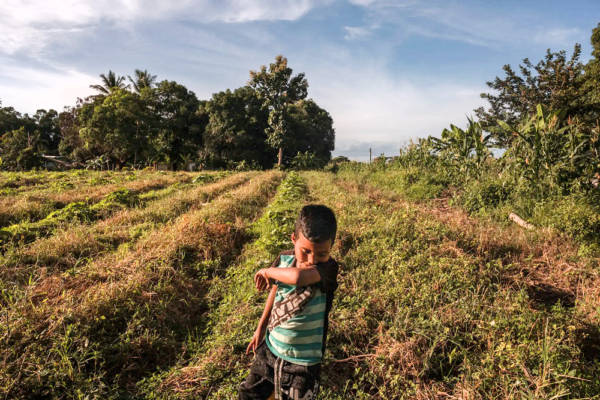
There’s an easy solution: Just turn down the brightness until it looks like the photo was taken during a total eclipse of the Sun, and you’ve got the image as it appeared in the Times:
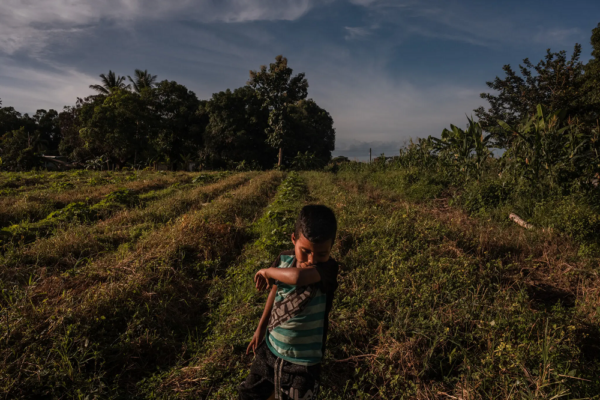
The Times uses this trick a lot in covering Venezuela (see FAIR.org, 3/26/19, 12/19/20), but it works just as well in other countries—either enemy nations, or maybe nations that just have enemies within them. Here’s the image that illustrated a Times piece (4/30/23; see FAIR.org, 5/12/23) on Brazil with the classic red-baiting headline, “If You Don’t Use Your Land, These Marxists May Take It.”
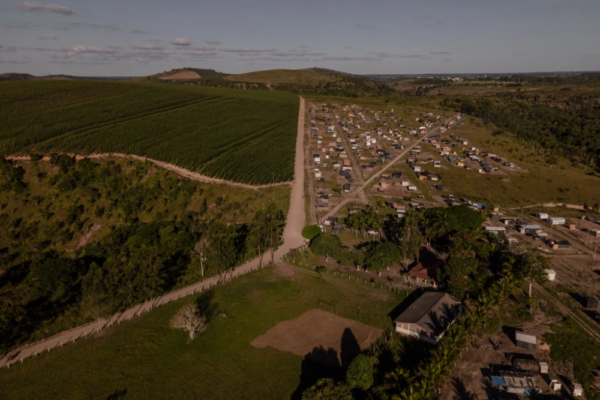
Naturally, you don’t want that photo with exposure properly adjusted, because that would give the impression that the (perfectly legal) land reform the Times is describing was taking place in a land that’s not under a Mordor-like permanent shadow:
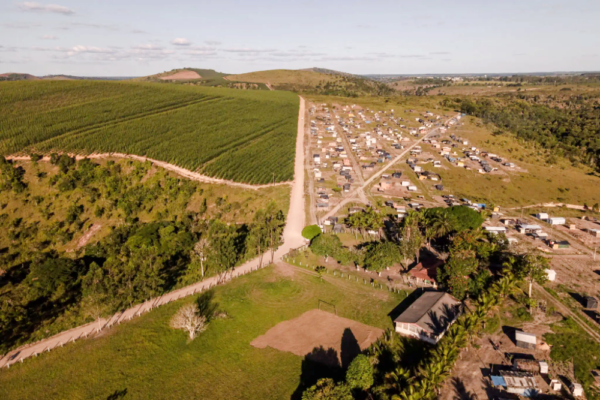
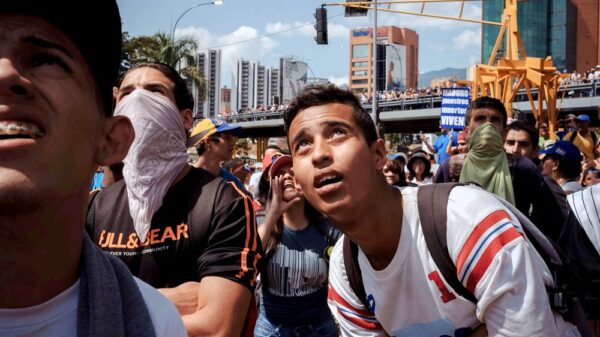
While the New York Times is the king of underexposed photos, it’s far from the only outlet to turn down the brightness in pursuit of propaganda. The Atlantic (2/27/20) ran a piece about Venezuela by Anne Applebaum, explaining how its “citizens of a once-prosperous nation live amid the havoc created by socialism, illiberal nationalism and political polarization,” that was accompanied by this photo:
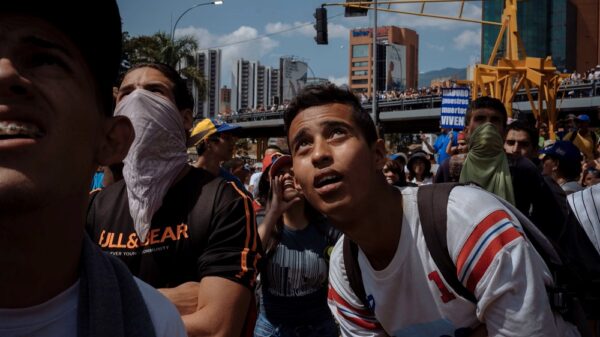
If it had run the photo with a normal exposure, Venezuela would have seemed to have at least 50% less havoc:
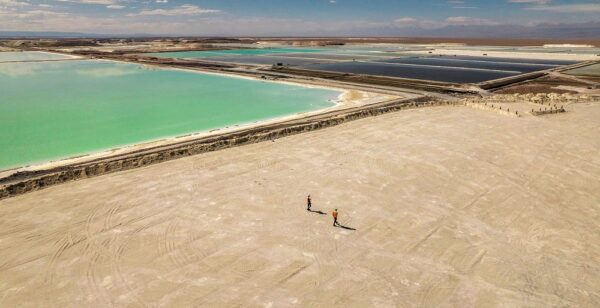
The Wall Street Journal (8/10/22) ran an article about lithium mining in Chile’s Atacama Desert, where serious concerns about the environment stand in the way of efficient extraction of resources by multinational corporations (FAIR.org, 8/23/22)—or, as the Journal put it, public companies “risk mismanaging the resource in a region where state-run firms have long been mired in corruption and nepotism.” The piece was headed by a photo of one of the evaporation ponds from which lithium is extracted:
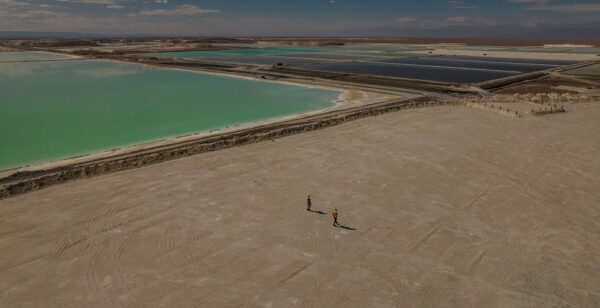
Deserts, of course, are typically bright, sunny places—but running a realistically lit photo of a lithium mine isn’t going to give the reader the proper image of a location “mired in corruption”:
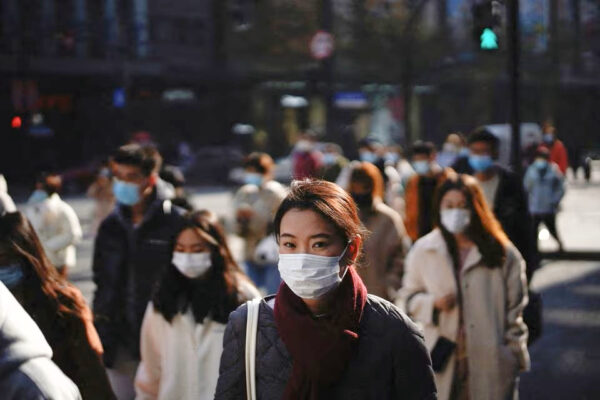
Back when China was still trying to wipe out Covid, Reuters (12/20/21) ran a piece about daily coronavirus cases in China falling from 102 to 81. Though this was a tiny fraction of the number of Covid cases at the time in the US—which recorded some 241,000 new cases that December 20—we were still supposed to read this as bad news, which you can tell because the accompanying photo looked like this:
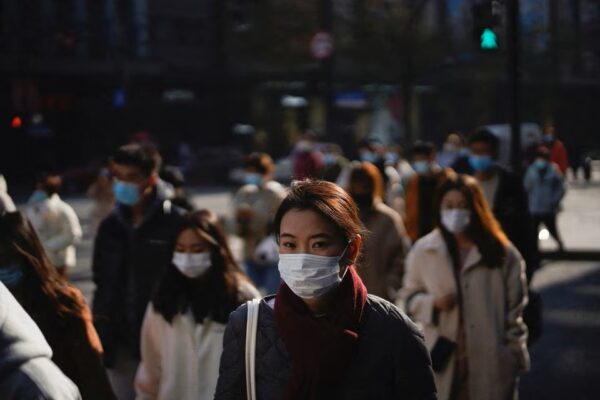
As opposed to a normally adjusted version of the photo, which has a much less ominous tone:
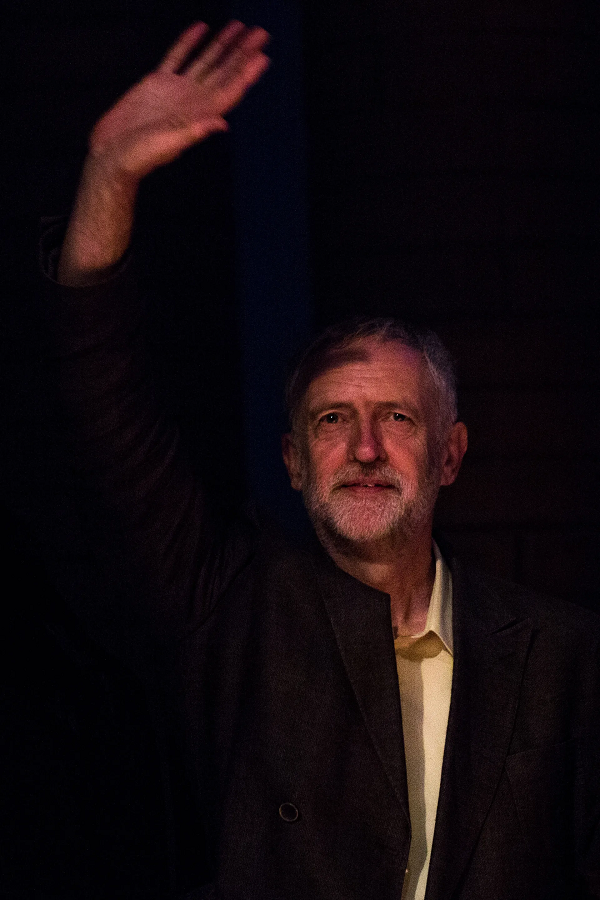
While the darkening technique is usually used on photographs from official enemy nations, it can also be used with internal enemies. When the New Yorker (9/13/15) ran a profile by film critic Anthony Lane of then–British Labour leader Jeremy Corbyn, which compared him to “the class grouch, making trouble but never headway,” someone who makes “you all roll your eyes whenever he raises his hand, because you know what’s coming next,” it was accompanied by this image:
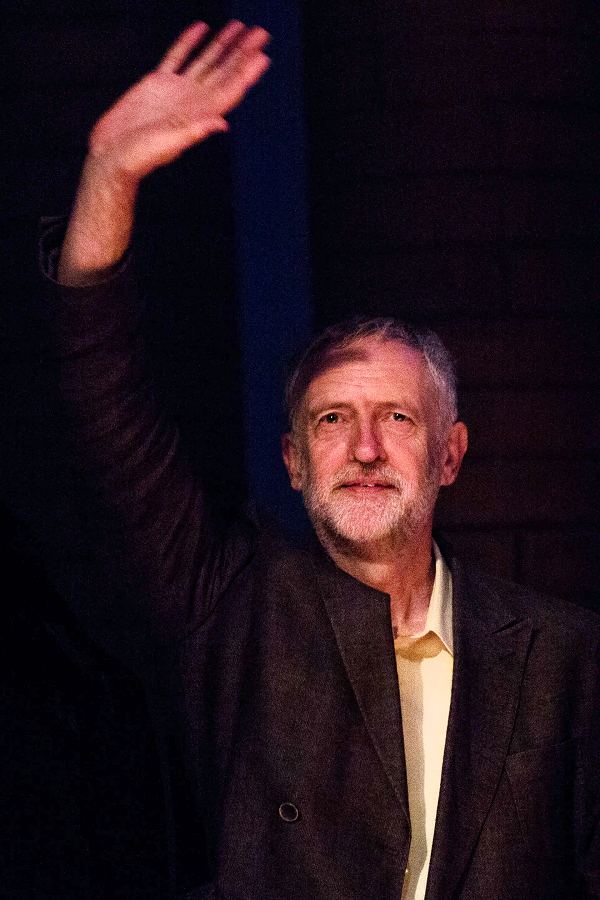
With an ordinary exposure applied to the photo, Corbyn doesn’t look nearly so much like someone whom you would naturally shun:
It’s easy to see how this basic processing of images serves these outlets’ ideological needs—exploiting the crude association between dark and bad. (Remember in 1994 when Time magazine darkened OJ Simpson’s skin when they put his mugshot on the cover after his arrest?) But applying this sort of distortion is inherently unethical, since the basic principle of photojournalism is that photos are supposed to convey reality and not political spin. As the Code of Ethics of the National Press Photographers Association spells out:
Editing should maintain the integrity of the photographic images’ content and context. Do not manipulate images or add or alter sound in any way that can mislead viewers or misrepresent subjects.
If ethics alone aren’t enough to deter establishment media from such distortion, they should consider how much uglier photographs are when they’re steeped in unnecessary murk. Again and again, when I adjusted the brightness on obviously underexposed photos, it rescued the images from the one-dimensional cartoons they were run as, revealing detail, atmosphere, humanity. The properly exposed photos provided views of real people in real places—but, of course, if your intention is to publish propaganda, that’s the last thing you want.




Photo-unrealism
Oh my, you sad paper from NYC—– Apparently you need to reframe the name of your paper. YOU, NYT, you are CHEATING and lying with both words and pictures!
It’s time for real and honest news—therefore I hereby give a bit of honesty to your sad attempt at journalism. And so New York Times, I now christen you with your true name: NEW YORK CRIMES!
Thanks to Jim Naureckas for exposing this propaganda scam — another example of why I subscribe to FAIR.
So tried of being manipulated by the moron media. Good points.
FAIR, you are the best. So glad you’re around to provide analysis of the media titans that serve the powerful.
Time magazine once caught a lot of flak for altering the O.J. mug shot into a dark and sinister look, and putting it on the cover. That was the early days of Photoshop, and that incident helped establish standards for news photography for years, i.e., no blatant modifying of images. I guess that’s gone.
The NYT has been modifying their images a lot lately, especially from Ukraine, since it’s a propoganda device for the war leaders. It’s a murky, unsaturated, underexposed look that, I hope, is jumping the shark. But, if you have seen the latest developments in AI that are now available in Photoshop, I wouldn’t believe anything you see from now on.
Could the “darkening” have to do with using less ink when printing on white paper? Some media companies still put out a physical product on newsprint paper. Also, black ink is probably cheaper than color ink (that’s true on my home printer). So this could be a way for companies to save money instead of a secret media conspiracy (a cabal amongst competitors) to make the third world look bad.
It could. But it isn’t.
They don’t do this routinely on all photographs–they do this when they have a particular editorial point to make.
Hello and a thousand times thank you dear Jim for this excellent analysis from a new angle of the disinformation system, like other FAIR articles on Venezuela, I translated it into French here : https://venezuelainfos.wordpress.com/2023/06/05/venezuela-une-sous-exposition-mise-en-lumiere-fair-org/
https://twitter.com/venezuelainfos/status/1665580819681890305
There’s noticeably a bundle to learn about this. I assume you made sure good points in options also.