[mp3-jplayer tracks=”CounterSpin Phyllis Bennis @https://eadn-wc04-3257648.nxedge.io/audio/counterspin/CounterSpin151009.mp3″]
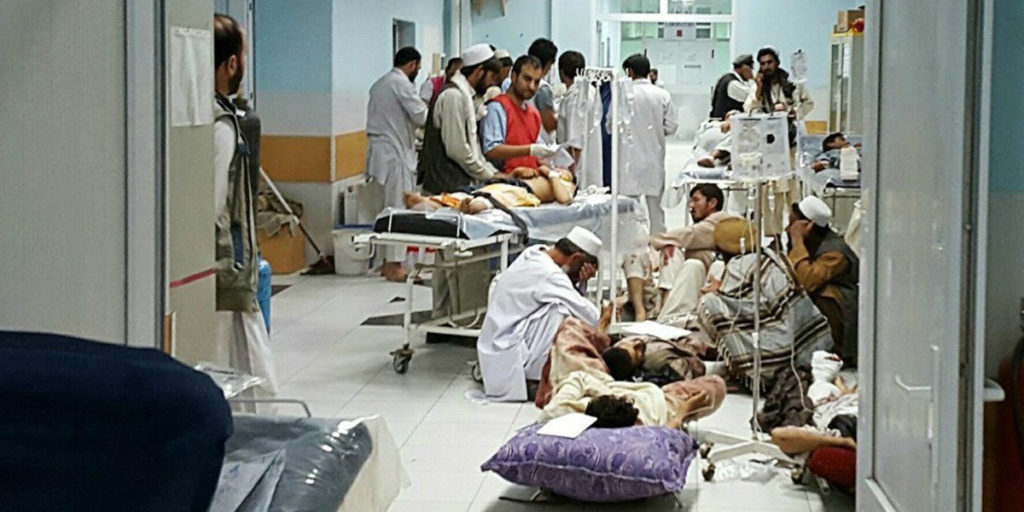
 This week on CounterSpin: The Pentagon has declared the bombing of a hospital in Kunduz, Afghanistan, a “mistake.” But it will investigate itself to determine how US bombs came to destroy the Doctors Without Borders facility, killing at least 22 people. Doctors Without Borders is calling for an independent investigation—and you would think journalists would, too, since who knows better than they the administration’s history of changing its story? The hospital attack is not the first of its kind, nor—if we are to understand the advice of generals that the incident means the US should increase its military presence in the country—will it likely be the last. After 14 years—as of this week—of war on Afghanistan, what has the US achieved? We’ll hear from Phyllis Bennis of the Institute for Policy Studies.
[mp3-jplayer tracks=”CounterSpin Phyllis Bennis @https://eadn-wc04-3257648.nxedge.io/audio/counterspin/CounterSpin151009_Phyllis_Bennis.mp3″]
And first we take a look back at the week’s press, including the Oregon shooting, TPP and the upcoming Democratic presidential debate.
[mp3-jplayer tracks=”CounterSpin Banter @https://eadn-wc04-3257648.nxedge.io/audio/counterspin/CounterSpin151009_Banter.mp3″]
LINK:
- “The Real Meaning of ‘Collateral Damage’: US Bombs Hit a Doctors Without Borders Hospital in Afghanistan, Leaving at Least 22 Dead” (Institute for Policy Studies, 10/5/15)