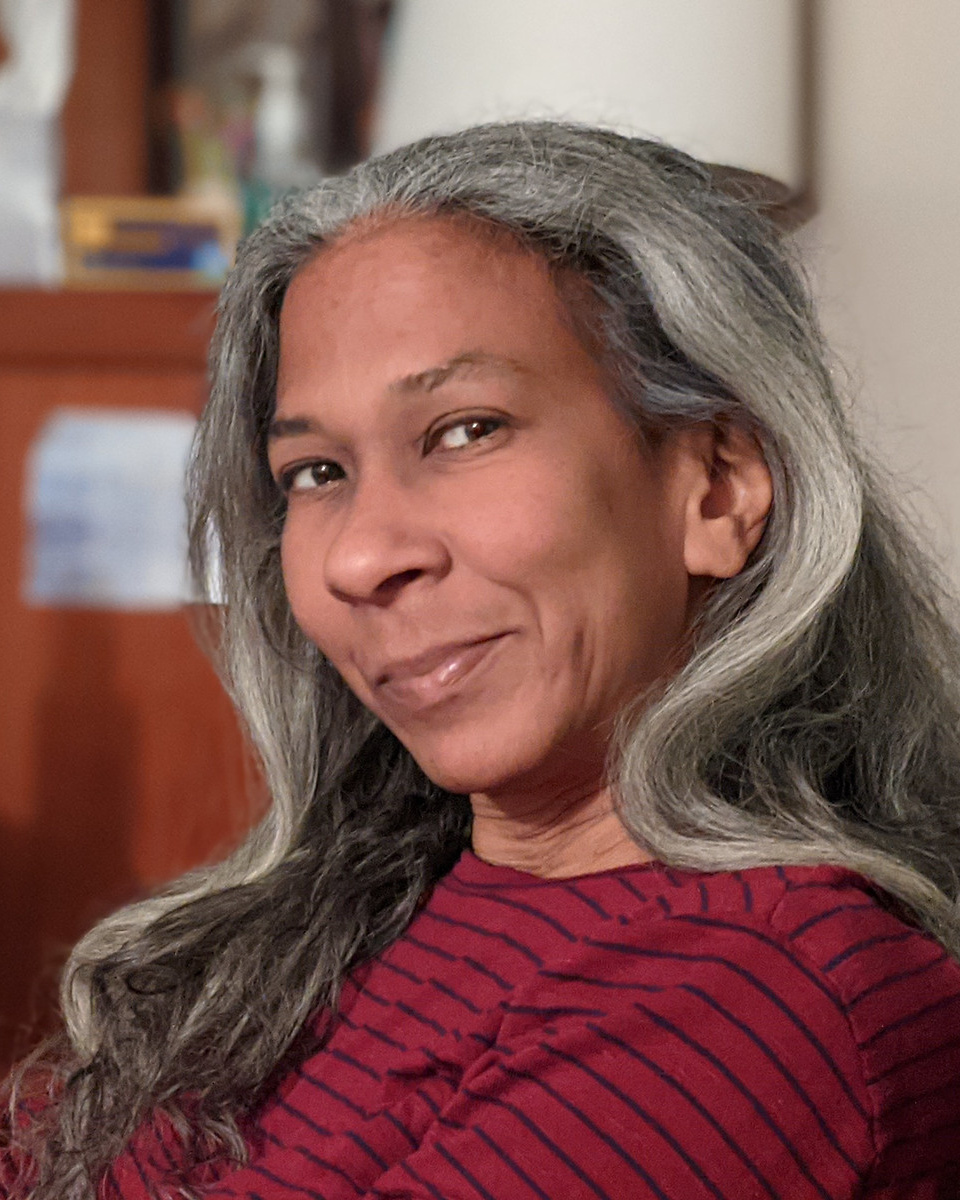
Janine Jackson interviewed Kevin Miller about the gender pay gap for the September 23, 2016, episode of CounterSpin. This is a lightly edited transcript.

Kevin Miller: “The fact is that the gap is substantial, and even if you account for things like occupation, that the gap is still there.”
[mp3-jplayer tracks=”CounterSpin Kevin Miller Interview @https://eadn-wc04-3257648.nxedge.io/audio/counterspin/CounterSpin160923Miller.mp3″]
Janine Jackson: Every now and again, media will release a list of “best places to work if you’re a woman,” citing companies that treat women, well, fairly. Surely meant to be a spotlight on good guys, these features give the dispiriting impression that fair treatment for women at work is a matter of noblesse oblige, and the onus is on women to shop around till they find a job where they won’t be discriminated against.
A fundamental reflection of that discrimination is, of course, the gender pay gap. The census data used to figure out the pay gap was released recently, and the American Association of University Women has put together their report analyzing it. Here to talk about where we’re at is Kevin Miller, senior researcher at AAUW and author of the new report, The Simple Truth About the Gender Pay Gap. He joins us now by phone from Washington, DC. Welcome to CounterSpin, Kevin Miller.
Kevin Miller: Thank you for having me.
JJ: Well, I can’t resist asking it this way: What is the simple truth about the gender pay gap?
KM: The simple truth about the gender pay gap is that it’s real, it’s substantial and it’s not going away on its own.
JJ: I think some people think it’s a straight-up comparison of men and women in identical jobs. It’s not really that. How do you sort out the pay gap?

From AAUW: The Simple Truth About the Gender Pay Gap
KM: The big number, the overall number that people talk the most about, is a comparison of women who work full-time year round and men who work full-time year round. And that number, this year, is 80 percent; women make 80 percent what men make in that category, so there’s a 20 percent gap.
JJ: We can talk more about how it plays out along various vectors, but I did just want to ask you: The fact that you titled the report “the simple truth” suggests that there are some ideas that call for dispelling with regard to the gender pay gap. And one of them, you seem to be saying, is simply that it exists?
KM: Yes. I think there are a lot of people who dislike the idea that there is a gender pay gap, for whatever reason. One source of confusion is that people think that this 80/20 number is a comparison of not just apples to apples but, you know, Gala apples to Gala apples. They assume it’s meant to represent a man and a woman working side by side in the same company in the same job, when that’s just not the case. A lot of people criticize the number by saying, accurately, that men and women are working in different jobs. And so the number includes doctors and nurses, it includes secretaries and their bosses, it includes parking lot attendants and childcare workers.
That is a big part of the gap, is that men and women end up in different jobs. But men and women end up in different jobs for a lot of reasons, including gender norms and gender roles, including gender bias. And so what we do in the report is talk about all these different factors. The fact is that the gap is substantial, and even if you account for things like occupation, that the gap is still there. And so some of the gap is, we’re pretty sure statistically, due to actual bias and actual discrimination.
JJ: That’s what they call the “unexplained” gap, isn’t it? After you account for these other factors, it’s what’s left over, that it’s hard to know what else to attribute it to besides—
KM: Exactly. So if you look at things like work hours, college major, occupation, industry, all these things that do explain part of the gap, if you look at all those things and statistically control for them, multiple studies by AAUW, by economists and by other researchers, show that there is a remaining unexplained gap, and that gap, we’re pretty sure, is due to various forms of bias or discrimination.
JJ: There’s a great piece by John Miller in Dollars and Sense where he talks about folks like the Independent Women’s Forum who tend to make the claim that, well, women just choose jobs that have less risk, and women choose jobs that have more flexibility. And it’s not only what we’re just saying, that the methodology accounts for that, but it’s also just not true empirically.
KM: Yeah. I mean, at this point, there’s a lot of what we call gender occupational segregation in the workforce, and so men and women are in different jobs, and there’s a lot of reasons for that. But even when they are in the same job, even when you compare doctors to doctors and lawyers to lawyers and parking lot attendants to parking lot attendants, there’s still a gap. In almost every occupation, men make more.
JJ: We know that it’s very hard to focus on problems that don’t get measured. Your research is breaking out some new categories with the data this time around that maybe shed light on some intersections. What’s new this time around, what was revealed?
KM: This time we wanted to really cast the widest net possible, to catch the statistics and the information that affect the most groups. And so we looked for the first time this year at issues of disabilities, so workers with disabilities, and also sexual orientation and gender identity. And what we find, unsurprisingly to me anyway, is that the gender pay gap follows women into all areas, regardless of exactly how you cut the data.
So workers with disabilities, unsurprisingly, make less on average than workers without disabilities. But whether you’re looking at workers without disabilities or workers with disabilities, men make more than women in those categories. And likewise, if you consider the effect of sexual orientation and gender identity, women still, again, overall tend to make less regardless of their sexual orientation.
There are some interesting effects if you look, at for instance, comparing gay or bisexual men to heterosexual men, where gay or bisexual men on average make less money than heterosexual men. So there are some interesting other factors to consider, but the gender pay gap is pretty universal.

From AAUW: The Simple Truth About the Gender Pay Gap
JJ: Well, and I don’t want folks to think we skipped over race, because I know that we’ve seen work indicating, I believe, that although the gender wage gap has narrowed between white women’s wages and those of white men’s over a longer period of time, black women have split off in a different direction, that that wage gap seems to be going the wrong way as well.
KM: Yes. And that’s something that a lot of people have a lot of critiques about how this issue is discussed. And one critique that you hear from the left, that I think is valid, is that if you look at this 80/20 number, that it really doesn’t talk about race or these other factors. And we do see that if you look at Latina women and black women, that their wages are much lower, especially than white men, but also lower than white women. And so I think it’s important to talk about the sorts of discrimination, and also life experiences and opportunities, that are resulting in these much larger gaps for some women.
JJ: Yes, and the data is there to be used in that way. It’s just data; we can put it together to show lots of things, and one of the things that it would also be connected to, of course, is we’re hearing, at the same time, a kind of qualified celebration about the new poverty numbers. But we can’t consider that in isolation from this either, can we?
KM: I think that’s right. The new numbers that came out this past week were really positive in terms of income and poverty. We saw that incomes were up and poverty was down, and I think that’s great news. But again, it’s important to talk about for whom the gains were largest, and who didn’t see gains. And I think, again, if you look at the gender pay gap by race, if you consider income and poverty and unemployment numbers by race and ethnicity, you see that there are very different patterns for some populations in the United States. So I do think it’s very much critical to bring up those topics and talk about them constructively.
JJ: Well, let me just ask you, finally, it all suggests a multi-front fight. You know, it can’t just be the Paycheck Fairness Act, you have to also talk about raising the minimum wage, family-friendly policies. A lot of the report has to do with recommendations, doesn’t it?
KM: Yes, absolutely. And I think that we want to see a multi-front fight for fairness for women in what they earn. As you said, the Paycheck Fairness Act and other laws are critical; AAUW fights for fair enforcement and strong enforcement of existing laws and regulations as well. But I think a lot of this also goes back to gender norms, social roles. We’re very much interested in making sure that women are supported and free from discrimination and harassment in all workplaces, whether those are traditionally female jobs or in more traditionally male jobs, like especially, for instance, the tech sector. And I think the more that can be done across the board, the better off women will be in the long run.
JJ: We’ve been speaking with Kevin Miller of the American Association of University Women. Find the new report, The Simple Truth About the Gender Pay Gap, online at AAUW.org. Kevin Miller, thanks for joining us this week on CounterSpin.
KM: Thanks so much.