American Deceptionalism
“Both sides” journalism set the conditions for the inevitable arrival of someone like Trump to the highest elected office in the land.
FAIR is the national progressive media watchdog group, challenging corporate media bias, spin and misinformation.


“Both sides” journalism set the conditions for the inevitable arrival of someone like Trump to the highest elected office in the land.

Some in the press pounced on Beto O’Rourke’s description of an Iraq war that is “27 years and counting.”

Fox News’ story on Alexandria Ocasio-Cortez’s polling conveniently left out the key role that the network itself has played in damaging the public reputation of the congressmember, thanks to a relentless propaganda campaign over the past six months.

The more one digs into Trump’s border wall funding request, the more arbitrary and phony it appears.
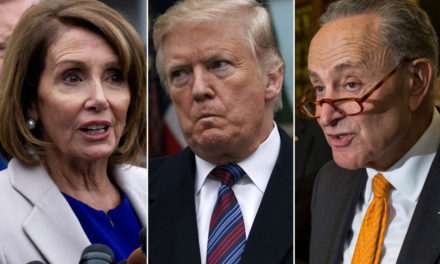
Both the AP and New York Times factcheck stories following Trump’s immigration speech included just a single example from the Democratic response. Perhaps not coincidentally, both of those strained, scrounging-for-anything examples turned out as flaming journalistic failures.

Time and time again, major news organizations have fallen victim to the trap of taking whatever was the latest thing to come out of Trump’s mouth and reflexively turning it into a stenographic, town-crier-like “Trump says…” or “…tweeted Trump” headline.

Precisely because of President Trump’s unprecedented propensity to lie, there can be a latent urge among factcheckers to find similar examples of dishonesty among the left, to provide some semblance of “fairness.” And, at times, these efforts can devolve into obtuse, bad-faith examples of nitpicking and false equivalence.

To emphasize the power of rural white voters in Mississippi—and elsewhere—without explicating that state’s long, sordid past as the lynching capital of the country does a disservice to the facts.

The political press dutifully chased Trump’s rhetorical tail as Election Day neared, and repeatedly ceded its editorial judgment and newshole to the nativist fearmongering he used to stoke the Republican Party’s base.

It doesn’t take much to turn supposedly “objective” data journalism into flawed, rank speculation, as anyone closely following the whipsawing Election Night media narrative on Tuesday can attest.

The New York Times apologized for allowing one of its reporters to work on a story that no one has claimed contains a single inaccuracy.

Lost amidst the deluge of who-is-Anonymous? speculation was a Trump administration story that will have deadly, far-reaching consequences long after the New York Times op-ed is forgotten.

Corporate media have routinely given platforms to those who claim that Trump’s election and his steady (though historically low) popularity are all partly if not wholly the fault of liberal smugness and left-wing political correctness run amok.

The New York Times and Wall Street Journal stand apart as the most rarefied of perches in our nation’s news ecosystem. It’s at these outlets that class distinctions are the most glaring—and most problematic. Just how elite these papers have become is the subject of a new study.

The statewide teachers and school staffers strike in West Virginia—just concluded earlier this week with a stunning victory by the union—offers an ominous case study of the state of labor coverage in the national press.

While the mainstream US press has been mainly focused on the Trump administration’s woeful institutional response to Hurricane Maria, it has barely noticed a much more radical political transformation of Puerto Rico, and the potentially disastrous long-term consequences for the citizens who live there.

Michael Wolff’s book reads like the inverse of much of the daily coverage of this White House by the corporate media—for both good and ill.

Repealing net neutrality has drawn a huge amount of public visibility—and rightly so—but that decision is just the latest in a string of ominous, industry-friendly giveaways by the Trump administration’s FCC.

If an elected official had tried to orchestrate this kind of obvious, contrived damage control, the New York Times would be the first to cry foul—one hopes—and deservedly so.

Tragically, one of the most honest rhetorical tools that journalists have in the fight for truth has been struck from the lingua franca of US journalists. Within the stilted framework of mainstream news “objectivity,” the simple act of calling out “lies” or “lying” by a politician—especially a president—is now taboo.

