Nicaragua’s Drug Connection Exposed as Hoax
The media showed little interest when subcommittee chairman Hughes recently disclosed he had new evidence that the entire Sandinista connection was a US intelligence fabrication
FAIR is the national progressive media watchdog group, challenging corporate media bias, spin and misinformation.


The media showed little interest when subcommittee chairman Hughes recently disclosed he had new evidence that the entire Sandinista connection was a US intelligence fabrication

The day after a Soviet interceptor plane blew up a Korean passenger jet, a New York Times editorial was unequivocal: “There is no conceivable excuse for any nation shooting down a harmless airliner.” Confronted with the sudden reality of a similar action by the U.S. government, the New York Times inverted every standard invoked with righteous indignation five years earlier.
As the presidential campaign marches on, certain media themes have become as stale and repetitious as the candidates’ stump speeches. Extra! looks at some of the more familiar frames, examining what reporters choose to highlight and what they ignore. Democratic Party ‘Captured by Special Interests’ In traditional political parlance, the term “special interests” referred to […]

A key money-launderer for the Medellin cocaine cartel told Congress in February that he worked with the Central Intelligence Agency, but this information was not reported by the New York Times, the Washington Post, or the three major networks, even though all covered the hearings.
Addressing the American Society of Newspaper Editors (4/13/88), President Ronald Reagan asserted that criticism of Jesse Jackson had been muted because of concern that it “might be misinterpreted into some kind of racial attack.” The president seemed to be adding his voice to the popular media refrain: When will Jackson’s “free ride” with the press […]
On Jan. 23, 1988, FAIR sent a questionnaire — excerpted below — to senior New York Times editors and correspondents covering Central America. It challenged Times coverage following the signing of the Esquipulas (“Arias”) regional peace accord, which required all Central American countries to respect human and political rights, and called for an end to […]
US media themes for the summit were established well before Mikhail Gorbachev arrived in Washington. Despite the pretense of “objective reporting,” coverage of the arms race has often resembled “rooting for the home team.” This was all too evident in the summer of 1985, when Gorbachev declared a unilateral moratorium on nuclear weapons tests and […]
The Red Scare of the 1950s gave birth to a fast-rising right-wing movement, the John Birch Society. Its rise was aborted when the society’s leader, Robert Welch, made a statement that was deemed so outrageous by the media establishment as to place the Birchers beyond the pale of respectable discourse: Welch called President Dwight Eisenhower […]
How is the world ruled and led into war? Diplomats lie to journalists and believe those lies when they see them in print. –Austrian scholar Karl Kraus In March 1982, Congressman David Bonior (D.-Mich.) spoke fervently about Reagan’s Nicaragua policy on the House floor, warning of “a highly orchestrated propaganda effort by the administration, […]

Edgar Chamorro was a Contra leader and press spokesperson from 1982 until 1984, when he resigned. The following year he testified against the United States in Nicaragua’s case before the World Court. FAIR interviewed him in early October as he prepared to visit Nicaragua. Chamorro is the author of Packaging the Contras (Institute for Media […]
On July 17, 1984, the Washington Times broke a story alleging that leading Sandinista officials were involved in cocaine smuggling. The New York Times, the Washington Post, the major wire services and TV networks immediately gave the charges prominent coverage, invariably citing anonymous “senior administration officials.” These officials, according to Newsweek (10/12/87), were Office of […]
A previous issue of Extra! (8-9/87) noted, “It’s taboo in the media to question the motives of American foreign policy.” Case in point: “Nicaragua Over the Years,” a column by New York Times editorial writer Karl Meyer (8/24/87). Meyer reminisced about Major General Smedley Butler, describing him as the US Marine hero who tried to […]
Seemingly surprised when told that many readers consider his reporting sympathetic to the Contras, New York Times Managua correspondent Stephen Kinzer told Esquire (11/86): In Washington, they talk about putting pressure on the Sandinistas, and it sounds so antiseptic. But the reality of that pressure is babies with their arms blown off, the maiming and […]
Although rigged elections during the Somoza era raised hardly an eyebrow in Washington, Nicaragua’s November 1984 election was pilloried by the White House and the mainstream media. Pre-election reporting was hostile, coverage of the actual balloting was hijacked by hysteria over phantom Soviet MIG jets in Nicaragua, and a few months later many journalists seemed […]
“Reagan Reports New Latin Danger” was the headline of a front page New York Times article (1/25/85) in which the President defended his contra policy as “an act of self defense,” citing a Sandinista terrorist link. Juan Tamayo of the Miami Herald (3/3/85) further developed the theme of Nicaragua as a terrorist haven, while a […]
Journalists have documented, through firsthand testimony and confirmations from government officials, that Nicaraguan rebels either participate in or profit from cocaine traffic into the US. But this news did not appear in the influential media outlets that set the bounds of political debate. The New York Times, the Washington Post and even the Miami Herald […]

Executives of America’s leading broadcasting companies have made a startling admission: Free speech, widely cherished as an American value, has not been practiced on television. What has stifled freedom of expression? The media moguls pin the blame on the Fairness Doctrine, which required TV and radio stations to air opposing viewpoints on controversial issues. (In […]
In June, 2,700 members of the National Association of Broadcast Employees & Technicians (NABET)—one third of NBC’s workforce—went on strike against the network over the issue of job security. FAIR spoke with Calvin Siemer, Secretary-Treasurer of NABET Local 11 in New York, about the dispute with NBC and its corporate parent, General Electric. As Extra! […]
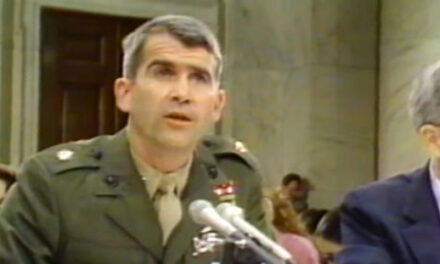
On media coverage of the Iran/Contra hearings: “Those media that reported the government’s lies as facts are obliged to assign someone to scrutinize the conflicting evidence and correct their previous misstatements.”
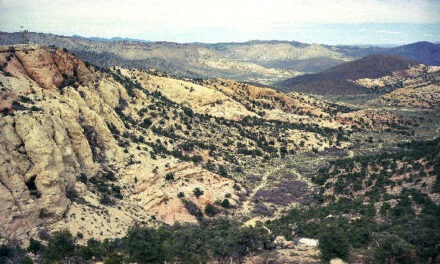
UPI Washington staffer John Hanrahan subsequently expanded upon Norman Solomon’s report that the Nevada test site’s top official lied.

