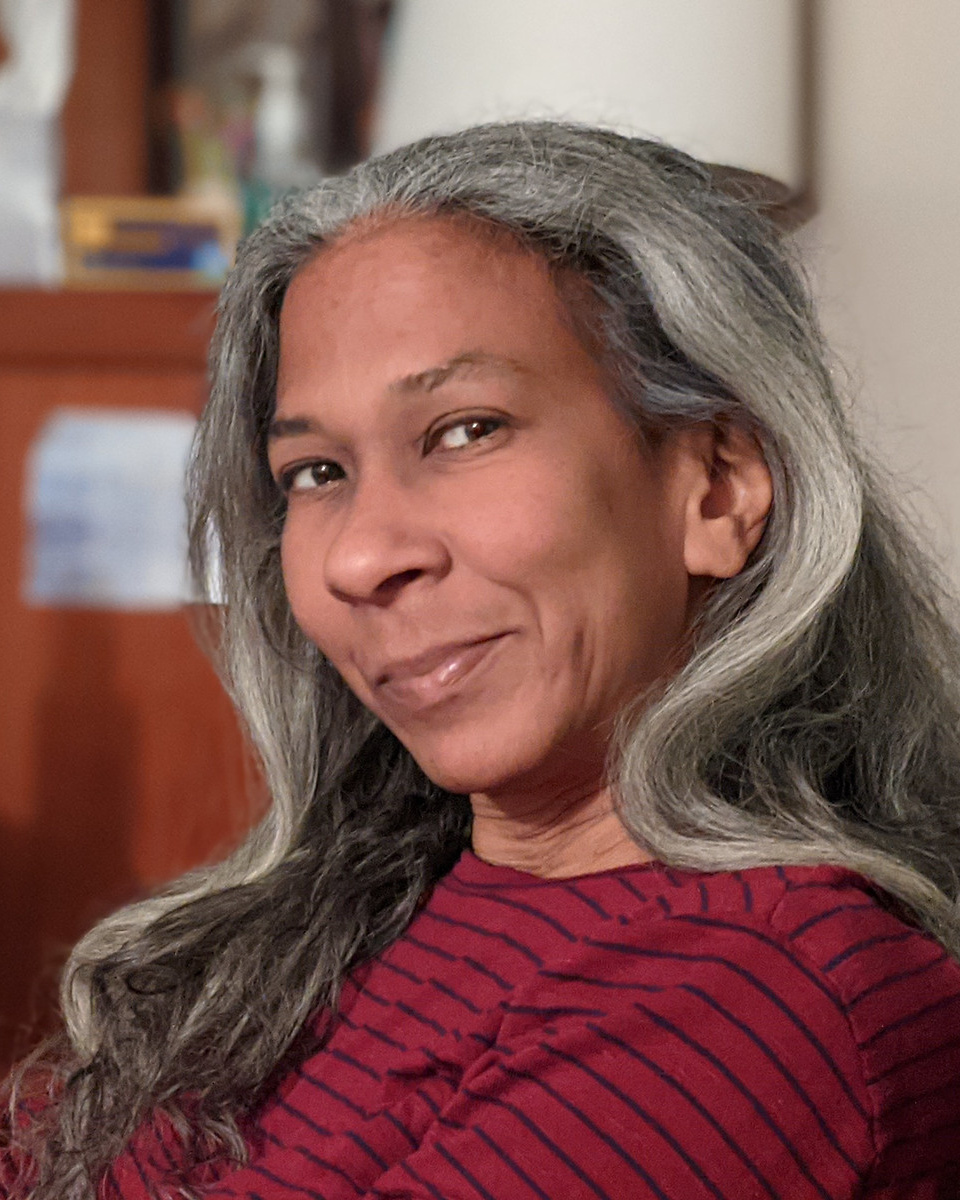
Janine Jackson interviewed Talia Buford on the Environmental Protection Agency’s enforcement of laws against environmental racism for the February 5, 2016, CounterSpin. This is a lightly edited transcript.

Talia Buford: “What we see in Flint is a failure on a number of different levels, a failure from the city level to the state level to the federal level.”
[mp3-jplayer tracks=”CounterSpin Talia Buford @https://eadn-wc04-3257648.nxedge.io/audio/counterspin/CounterSpin160205Buford.mp3″]
Janine Jackson: It was lost on few that Flint, Michigan, is a predominantly African-American and predominantly poor community. Some say that had nothing to do with the series of decisions that led to the poisoning with lead of Flint’s water. But the work of our next guest explores the undeniable reality that across the country, there are environmental problems that disproportionately affect communities of color. Talia Buford is a reporter on the environment and labor team at the Center for Public Integrity. They are producing a series called “Environmental Justice, Denied.” She joins us now by phone from Washington, DC.
Welcome to CounterSpin, Talia Buford.
Talia Buford: Thank you.
JJ: When news came out about the crisis of lead in the water in Flint, maybe not the first question, but the third or fourth question for many people was, where was the EPA? You know, where was the public advocate, if you will, in terms of preventing this situation, or responding to it? What, in theory, would be the role of the EPA? Would they even have a role in such a situation as what we saw in Flint?
TB: I think that what we see in Flint is a failure on a number of different levels, a failure from the city level to the state level to the federal level. EPA had a role, of course, as an overseer of the Michigan Environmental Agency. The Michigan department should be probably the one that has a bigger responsibility than the federal agency, since they are working in conjunction with the state, but I think that everyone here had something that they did where they fell off the job.
Our series specifically looked at the EPA Office of Civil Rights, and that’s a very specific program within the agency that looks at cases of environmental discrimination under Title VI of the Civil Rights Act. They really are called into action when a complaint is filed to them. So for them, they almost have to wait—they don’t have to, they can wait until someone raises their hand and says, hey, there’s a problem here, you should look into this. But that doesn’t mean that there shouldn’t have been someone else, at either EPA or at the Michigan Environmental Agency, saying, hey, these people are raising concerns, we should at the very minimum look into them.
JJ: A headline of a piece that you co-wrote recently was “Environmental Racism Persists and the EPA Is One Reason Why.” Well, those are strong words. You’ve talked about the Office of Civil Rights. What did your investigation turn up about the actual track record of that office?

Environmental racism complaints filed at the EPA (Center for Public Integrity, 8/3/15)
TB: In our investigation, we looked at more than 15 years of complaints that citizens had filed to the EPA Office of Civil Rights. These are minority communities, often low-income but not always, who are saying, we live next to a sewage plant that makes it horrible for us to sit outside on our porches, or there are pesticides being sprayed on the fields next to our schools. So what we found is that over the 22-year history of the office, the agency had only had about 300 complaints, and they’ve never made a formal finding of a Title VI violation. They’ve made one preliminary finding and there have been some investigations, but they’ve never come out and said, Texas or Indiana or, you know, whatever state, you are violating Title VI of the Civil Rights Act.
And that struck us as something—especially over a decades-long history—that you can’t find one bad actor, when we know that there are so many of these cases; we hear about them all the time. To hear that there’s been no wrongdoing, it struck us as kind of odd. So in our investigation, what we also found is that only 12 of those cases that the EPA has found, they’ve closed with any actual official action. That means they’ve either negotiated or had some sort of informal settlement. The rest of them were all resolved among the complainants or the agencies or dismissed. And that even beyond that, there are several cases, almost 20, that have been just waiting in limbo, waiting for EPA to act in some way. In some cases, they’ve been waiting more than a decade.
JJ: On one level, it’s a story of red tape, you know, blah blah, but on the hand, it really is having real-world effects on people.
TB: Sure, definitely. And I think that part of the problem becomes that it’s very hard sometimes to prove a direct link between the cancer you get five years from now and the plant you lived next to when you were a kid, or the facility that you worked at when you were just out of high school. That’s one of the challenges of the environmental justice movement, having that scientific base and being able to prove that direct link between some of those health effects and the environmental factors that are surrounding, really, all of us.
JJ: Yeah, or being able to change the conversation towards one of a precautionary principle, you know? Maybe you shouldn’t have to wait until 20 years later and people have carcinomas, you know? Maybe we should kind of get out in front of it. And it’s interesting, because the EPA, it’s not that they don’t talk the talk. They do talk about, as you found, environmental racism, and that is out of keeping with their actual inaction on the issue.
TB: Well, I think that, to be fair to EPA, they have made some changes in response to our series, and then also just kind of on their own examination. The director there, Velvetta Golightly-Howell, the director of the Office of Civil Rights, she’s released a strategic plan that says, hey, we have this new case management system to track complaints and investigations, and here is how we’re going to investigate claims and here’s a timeline we have for stepping up proactive reviews.
On that same token, though, not all of the changes that they’re proposing are welcome. Advocates are really worried about a rule that EPA is proposing—or may propose, rather—that would eliminate a lot of the deadlines for responding to cases. And obviously one of the problems that we have here is that cases are sometimes stuck in limbo for a very long time. And a lot of the advocates are concerned that if you remove the one statutory stick that citizens have to move the EPA into action, that it won’t necessarily mean that the agency will be more nimble or more responsive, but that it just will cause more delay.
From our interviews with people who are in the EPA or recently left, the people who work there, I don’t think any of us doubted their actual sincerity, or their commitment. I think that it’s really a matter of the structure that they have to work within, just being in the agency and in this political climate. I mean, EPA isn’t necessarily a popular agency within the administration.
JJ: And I doubt that the Office of Civil Rights within the EPA is the most popular entity in the government, or the best resourced or supported.
TB: One thing the EPA has said is that they want to make sure that environmental justice is not just relegated to the Office of Civil Rights or the Office of Environmental Justice, and that it really should be an agency-wide priority. And I think that that’s a valid point. You really need buy-in from all levels of the administration, of state regulators, of everyone from top to bottom, to really make the system work.
JJ: Your thoughts on journalistic coverage of this.
TB: I’m thinking about it kind of in the context of Flint, and I think that a lot of the local news media is paying attention, and there’s been some amazing reporting and watchdogging that’s been coming out of the Detroit Free Press and the Flint Journal. But a lot of this really comes down to people not being listened to—either by state officials and, in some cases, by the national media.
There is so much information that’s just out there if you look for it. Our series was built on data that we pulled from the EPA that was publicly available. We were able to get it through a FOIA request. We actually created a database and made it public on our website so that people can tell their own stories using our data as well.
So I think that these stories like Flint or other stories out of the Office of Civil Rights can be a jumping off point for us to just start asking more about our communities and asking more about the world that we live in, and looking for the data to back those questions up.
JJ: We’ve been speaking with Talia Buford. You can find her work and that of the whole “Environmental Justice Denied” series at the Center for Public Integrity’s website, which is PublicIntegrity.org. Talia Buford, thank you so much for joining us this week on CounterSpin.
TB: Thank you.