

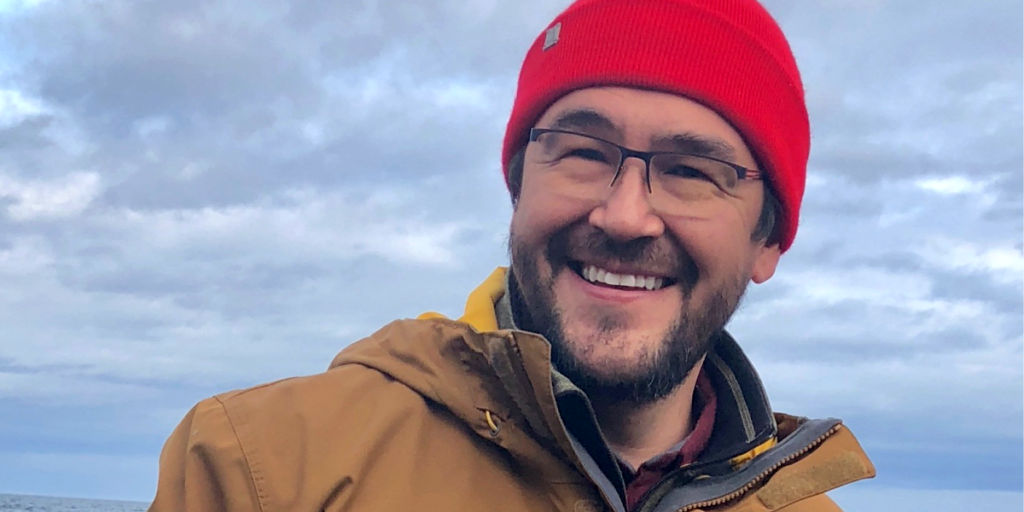
Janine Jackson interviewed the Wilderness Society’s Karlin Itchoak about drilling in the Arctic National Wildlife Refuge for the August 21, 2020, episode of CounterSpin. This is a lightly edited transcript.
[mp3-jplayer tracks=”CounterSpin Karlin Itchoak Interview @http://www.fair.org/audio/counterspin/CounterSpin200821Itchoak.mp3″]
Janine Jackson: “With Arctic Refuge Drilling Approved, Focus Shifts to Legal Battles and Market Forces,” ran one headline, and it’s true: The Trump administration’s push to open the Arctic National Wildlife Refuge to oil and gas drilling—reflected in a so-called “record of decision” this week from the Interior Department, approving oil leasing in the refuge’s Coastal Plain—is meeting with legal resistance. A number of environmental groups are ready to go to court to prevent incursions into the refuge, federally protected since Eisenhower.
True, also, analysts question how popular leases will be, given the fact that the Covid-era oil market ain’t what it used to be, and major financial institutions, like Citigroup and Goldman Sachs, have said they won’t finance any development in the area.
But what’s lost if legal and market frameworks are the only ones we use to see what’s at stake here, or to tell the story? Karlin Itchoak is Alaska State Director at the Wilderness Society; he joins us now by phone from Anchorage. Welcome to CounterSpin, Karlin Itchoak.
Karlin Itchoak: Hello! Thanks for having me today.
JJ: To be clear, I have read a number of valuable and interesting political and legal accounts about the fight over the Arctic National Wildlife Refuge. But I wondered if you could orient us a bit differently, and talk a little about the meaning or significance of this piece of land, and the life it supports.
KI: Yes, absolutely. And what brought us to this conversation is that the BLM has recently issued a bad record of decision, resulting from a fundamentally flawed final environmental impact statement. And what’s significant about the Arctic National Wildlife Refuge in the Coastal Plain, Janine, is that the Gwich’in and the Inupiaq Indigenous people, who depend on the [caribou] herd for their survival, and, frankly, all of us, all of us Americans who have a stake in the public land in the refuge, deserve better.

Arctic National Wildlife Refuge (cc photo: Dusty Vaughn)
JJ: You say BLM, that’s the Bureau of Land Management. Interior Secretary David Bernhardt, essentially the boss of that, he’s now going around saying, “Well, Congress mandated this leasing process in 2017, we’re just meeting our obligations.” But it isn’t as though Congress, responding to the call of the people, upended this decades-old policy of protection; how did this happen, legislatively?
KI: Congress was not listening to the call of the people. In fact, in a 2016 survey conducted by Hart Research for the Center for American Progress, two-thirds of the respondents said that they oppose efforts to open the Arctic Refuge to drilling, a majority of Americans oppose opening the Arctic Refuge to drilling.
And it was unconscionable that the Republicans hijacked the federal budget process and used the 2017 Tax Cuts and Jobs Act to force Arctic Refuge drilling over the objection of the majority of Americans.
JJ: So they snuck it into the tax bill, and if asked about it, they’d say, “Yeah, all the resources that we get from it are going to offset these tax cuts.”
KI: Yeah, they snuck it in in the dark of night, without following the public process.
JJ: Let’s come back to that process just for a second. You sort of wonder why you have to do environmental impact statements for fossil fuel production at all, at this point; I mean, we know what the impact is of fossil fuel production, and it’s unacceptable. But in this particular case, I take it your sense is that the review process, such as it was, that the Bureau of Land Management did was not thorough, or was not substantive?
KI: Right, it was not thorough and it was not substantive, and the timing was horrible, as you mentioned at the top of the interview, that all of this is happening during the pandemic. And when the federal government was conducting the public process for the final environmental impact statement, they were trying to conduct it online and virtually. And many of the Indigenous people who live in the Arctic, or in rural areas in and near the Arctic Refuge, don’t have that great of connectivity, are unable to maybe participate fully. And also, the timing is horrible, because folks were focused on keeping themselves and their families and loved ones safe from this pandemic, which is adversely impacting minorities, as we know, and Indigenous people. So the timing was bad, and the process was completely flawed.
JJ: And as much as they had a statement, it didn’t deny that there would be harmful impacts, it seems to me, as far as I could tell, but they sort of said, “Well, we’ll limit the use of heavy equipment during the caribou’s calving season.” It just doesn’t seem like it’s at all taking seriously the idea that these would be harmful impacts.
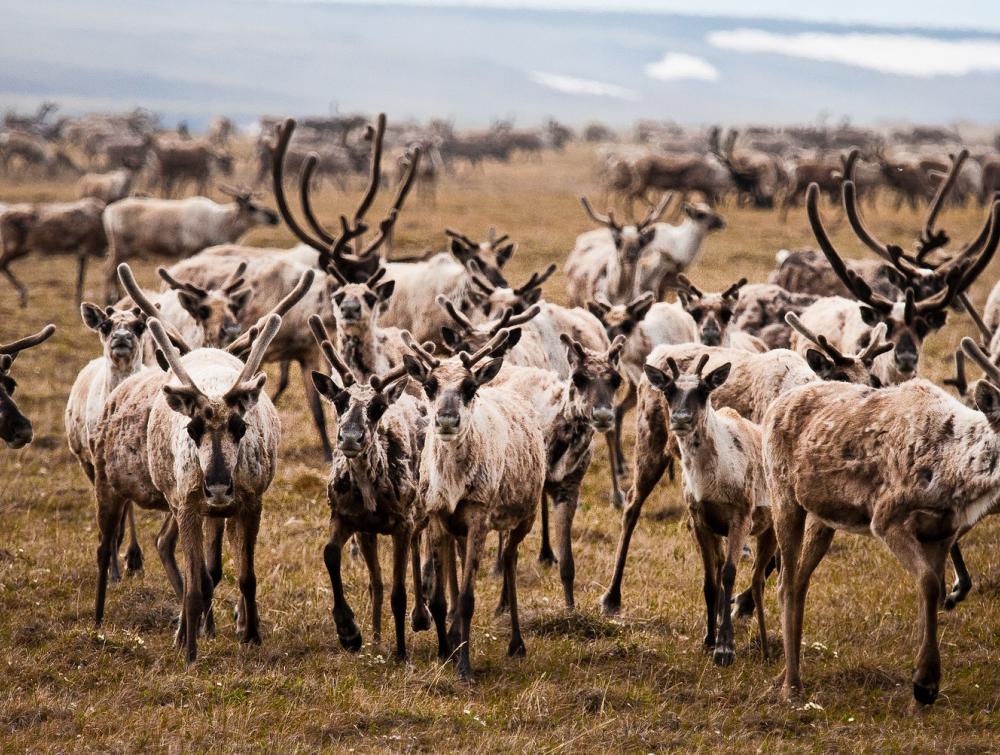
KI: That’s correct, and the Coastal Plain of the refuge is the birthing grounds of the Porcupine caribou herd, which helps sustain the Indigenous Gwich’in and Inupiaq people, who occupied this region for thousands of years.
And, as we know, oil and gas drilling would have devastating impacts on this pristine and fragile ecosystem, caused by the massive infrastructure needed, as you just mentioned, to extract and transport the oil.
And this is a remote area of the Arctic, and drilling in the Arctic is very, very risky. Chronic spills of oil and other toxic substances onto the fragile tundra and ice would forever scar this now-pristine land, and disrupt its wildlife.
And, as we all know, we’re facing a climate crisis, and burning more fossil fuels, the process of flaring, and even introducing more fossil fuels into the economy and into the atmosphere, would be counterintuitive—especially in the Arctic, where it has seen most of the impacts of climate change.
It would be like trying to put out a house fire by lighting the other side of the house on fire. It makes no sense.
JJ: As just a large wild space, the refuge plays a role in mitigating climate change beyond itself, doesn’t it, if you will? Just because of the fact that it is a large wild space.
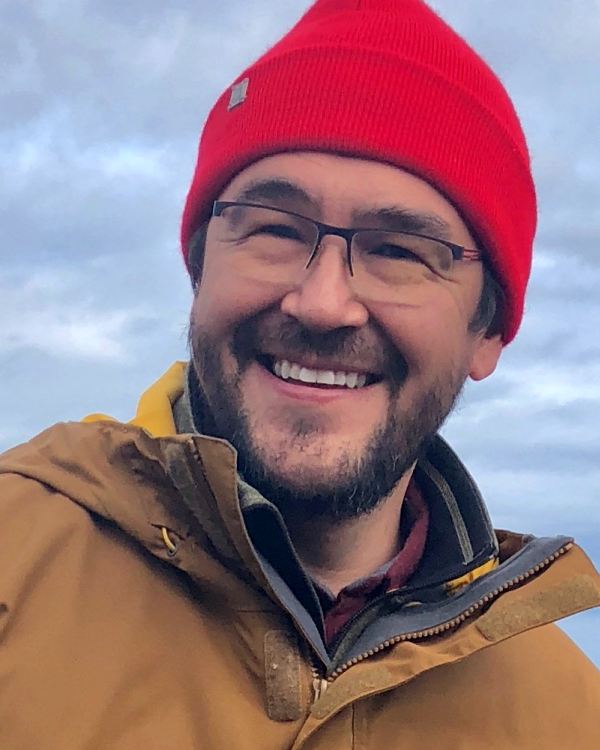
Karlin Itchoak: “We need to be protecting large swaths of land like the Arctic Refuge, and using them for the future preservation and mitigation of climate change.”
KI: Yes, in the time of the climate crisis, we need to be protecting large swaths of land like the Arctic Refuge, and using them for the future preservation and mitigation of climate change, and recognizing them, not only for their beauty and important ecological value, but also the important sequestration value that they play in mitigating climate change.
JJ: I wanted to say, it isn’t that in reporting, Indigenous communities are entirely unmentioned. Sometimes it feels a bit as though they’re kind of tossed into lists, you know: “caribou, arctic fox, Indigenous people,” a list of potential “obstacles” to development. When those Indigenous voices are included, they don’t all say the same thing. I wonder what you make of an argument that I have seen, that says that opposing extractive industry is actually the anti-Indigenous position, that it’s for outsiders who don’t understand that people in the region need jobs that the industry provides. How do you respond when you hear that?
KI: Yeah, I think that it’s not lost on me that not all of the Indigenous people are on the same page when it comes to developing the refuge, and that’s true for any issue.
But you have to look at what are the interests of those people that are taking a particular position. After the Alaska Native Claims Settlement Act of 1971, where Congress created 13 regional village corporations in Alaska, in the last 60 years now, we’ve had a new type of development and ownership of these corporations, many of which are multi-million-dollar and billion-dollar corporations, and some of them have a vested interest in the development of the refuge. And that’s created differing opinions and ideas on whether or not the refuge should be protected. And so it’s important to look at who is making what argument.
And also, many of the Indigenous people that do want to protect the refuge—such as the Gwich’in steering committee, led by Bernadette Demientieff, who is the executive director—have been leading the fight to protect the coastal plain, which is the sacred calving ground of the Porcupine caribou herd, and is so sacred that the Gwich’in don’t even step foot on the calving ground.
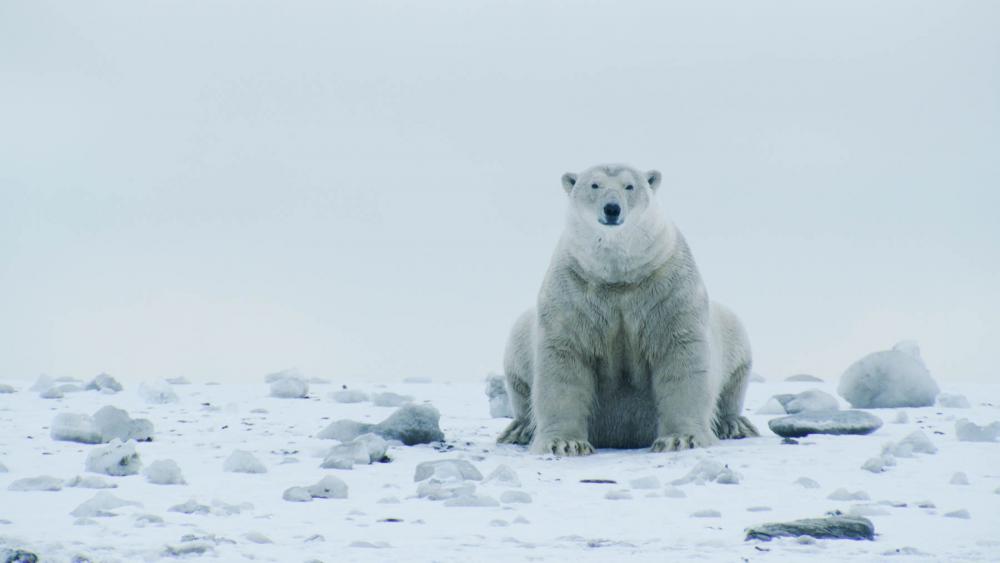
Polar bear in the Arctic National Wildlife Refuge (Wilderness Society photo: Florian Schulz)
But then you have folks like Inupiaq elder Robert Thompson, who lives in Kaktovik, in the refuge, and has been fighting for much of the last 40 years to protect the caribou herd, and also the polar bears, who are losing their denning, with the snow and the ice melting.
So there are numerous other Inupiat folks and Indigenous people who have been fighting to protect the refuge, and I think it’s important to see what folks’ motivation are. And most of the Indigenous people agree that we are in a climate crisis, and that we need to do everything we can to mitigate the climate crisis.
JJ: And I think, as folks in other communities, just reject the tradeoff of “jobs for nature,” you know? We shouldn’t be having to make that choice to begin with—it’s too difficult a corner to put someone in.
I just wanted to ask you, finally—I did want to note legislatively that I understand that the House has since voted to block drilling in the refuge again, but the Senate won’t take up that bill, so that’s what’s happening there. But just, finally, you read that “Oh, well, it’s gonna be tied up in court for years, and if drilling happens, it won’t be for years and years,” but that doesn’t mean that we can be passive about it, it doesn’t mean that “exploring” wouldn’t be disruptive.
So what are you at the Wilderness Society and other organizations doing to resist this just so backward-looking plan, and what can folks do themselves to get involved?
KI: That’s a great question. Pressure on the banks; as you mentioned, five of the largest banks have decided not to fund drilling in the Arctic Refuge. We’re working on putting the pressure on Bank of America to join that group.
Listeners can help convince Bank of America and their board of directors to not lend any money for drilling in the refuge; that would be wonderful.
Also I would encourage folks to learn as much as they can about the issue and get involved locally. Community-led conservation goes a long way—even though you may feel far away from the Arctic Refuge.
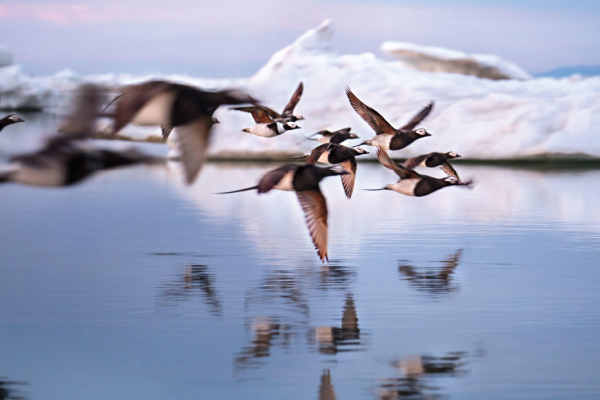
Long-tailed ducks at the Arctic National Wildlife Refuge (Audubon Society photo: Peter Mather)
When I was just up in the refuge a few weeks ago, I was there with the executive director of Audubon, and they’re pointing out that over 250 species of birds migrate to the refuge; they come from all 50 states.
And so we are all impacted by what happens in the refuge—not just through the birds, but also through the climate impact. And so I encourage people to learn as much as they can about the issue.
Contact your congressmen and -women; we need to join together. And the Wilderness Society and our conservation partners are going to use every legal tool that we can to stop the oil and gas leases from happening.
JJ: We’ve been speaking with Karlin Itchoak, Alaska state director for the Wilderness Society; they’re online at Wilderness.org.
Thank you so much, Karlin Itchoak, for joining us this week on CounterSpin.
KI: Thank you, Janine. Much appreciated.


I wonder if Janine takes a cab, owns a car, takes a bus, takes a train, eats food that she didn’t grow, wears clothes from plants or animals that she didn’t raise, or uses electricity that wasn’t 100% from solar? These environmentalists really need to look at how their life would be supported if it weren’t for oil. There are very few people who don’t care about the environment. Many of us know that we wouldn’t be alive if it weren’t for oil. Still hard to grasp? Ask the people in California how much they liked the rolling blackouts due to the closure of power plants.
Hi Tim, well the gas, electric and oil companies in CA get away with murder. Literally. However comparing a state’s utilities with Nature seems a bit odd. Perhaps you missed that part pf the article which spoke of 250 bird species from around the world which use the Arctic Refuge . And too. think of how many creatures , how many creatures are presently safe from Trump’s grip—–but who knows what will disappear if Trump wins again.
Sadly the Native Americans will no doubt get screwed again. Remember, Trump is a man who wants his face on Mount Rushmore! Of course, he probably has never read the history of building that monument and even know much exploding of rock happened before they could even begin any of the presidential heads —-your comparing of Nature with corporate needs is quite sad, but I am very much afraid that the HUMANITY of Earth will be gone , and perhaps GAIA will improve the other species if Gaia decides to do re-do on humans. : )
Literally? They are murdering people? I can see you thinking that they might be killing people but murder? Who is comparing nature to corporate needs? I am stating the obvious fact that without energy, you and I would probably be dead by now. You certainly wouldn’t be typing on your computers with it’s plastic parts, mined silicon, mined steel, all delivered to your house by a train, truck and then car. Nobody is saying that the land should be raped. We are simply saying that cheap energy is vital to millions of lives. Yes, I put human lives above animal lives.
F*ckin’ awesome things here. I am very glad to see your article. Thanks a lot and i am looking forward to contact you. Will you kindly drop me a e-mail?