


The results are in: Nate Silver won the election.

538‘s final state-by-state projections.
The New York Times‘ polling/stats wonk was projecting an Obama victory, and it looks like he basically nailed it. Of course, this outcome thrills Silver’s many fans, and has shown pretty clearly that the people the corporate media rely on to make election predictions aren’t really good at the thing they’re supposed to be good at doing.
This is revealing, and should raise the usual questions about why some of these people continue to appear on television as election experts. But since it’s very hard to lose your Pundit License, it’s hard to imagine a dramatic shuffling of the ranks.
The bigger question to me is the relationship between what Silver does and what campaign journalism is supposed to do. There are political reporters who really don’t like Silver’s approach, or believe that his modeling pretends to have perfect knowledge of the future. Whether this reflects a failure to understand probability or just professional jealousy is anyone’s guess.
But here’s the thing: I don’t think many people who have criticized campaign journalism over the years have ever really said, “Boy I wish the horse race coverage more accurately predicted the outcome of the election.” Journalism arguably doesn’t need to spend too much time placing bets on the outcome of an election.

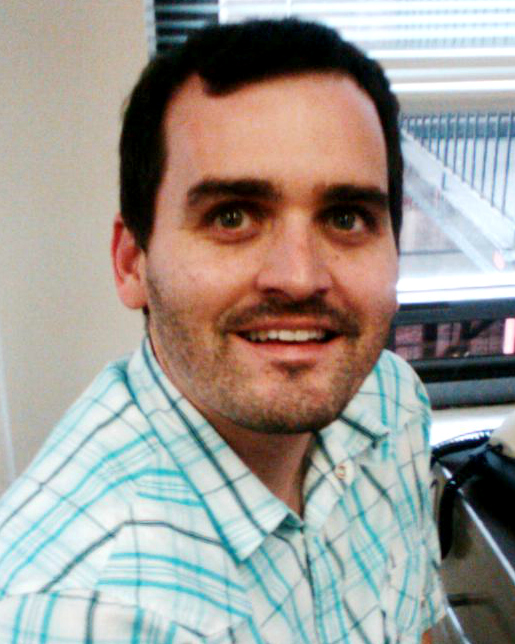
Nate Silver (photo: JD Lasica)
If anything, Silver’s presence in the campaign discussion (and, to be clear, he’s not the only one doing what he does) should be seen as a relief to journalists. Now they don’t need to spend so much time on forecasting and the horse race; the presence of reliable projections should free them to do the kind of issues-based reporting that could actually help voters comprehend the policies offered by the politicians trying to win their votes.
Of course, these are not things that most campaign reporters want to spend a lot of time doing. And that’s the real problem. Washington Post columnist Michael Gerson (11/5/12) went after Silver right before the election, arguing that Silver’s model is “not an innovation; it is trend taken to its absurd extreme.” He added:

Michael Gerson (photo: Terek Rizk)
The main problem with this approach to politics is not that it is pseudo-scientific but that it is trivial.
Gerson went on:
The problem with the current fashion for polls and statistics is that it changes what it purports to study. Instead of making political analysis more “objective,” it has driven the entire political class—pundits, reporters, campaigns, the public—toward an obsessive emphasis on data and technique. Quantification has also resulted in miniaturization. In politics, unlike physics, you can only measure what matters least.
And so, at the election’s close, we talk of Silver’s statistical model and the likely turnout in Cuyahoga County, Ohio, and relatively little about poverty, social mobility or unsustainable debt.
Gerson has something of a point. It’s not really true that campaign coverage didn’t talk about the debt, but he’s right that there was little about poverty and class in the discussion.
Is this Nate Silver’s fault? Of course not. Are horse race reporters really too focused on data? Perhaps. But often they’re focused on the wrong numbers (like the national polls).
The real issue is that too many campaign pundits know the numbers—and think you can’t just trust the numbers. Consider this exchange on CBS‘s Face the Nation (11/4/12) on the eve of the election:
PEGGY NOONAN: I have got to tell you, I feel like Romney is coming up. I feel like very quietly so many things in his campaign have come together. He has sort of come into his own. He’s having these big rallies. I keep watching them on TV, they’re very strong.
DAVID GERGEN: Those are signs, too.
Peggy Noonan (photo: Kyle Bogucki)
NOONAN: His—yes, case has become—the case he makes is cogent. It’s together. His commercials have gotten very good, even as we’re all tired of commercials, they’ve suddenly gotten very good. There’s stuff going on there.
GERGEN: Right. I think picking up from on where Peggy is, I don’t think it’s too close to call. I just think it’s impossible to call. And if you look at the polls from afar, clearly, the president has the advantage. He’s ahead in most of the battleground states. If he wins the states he’s ahead in, he’s going to easily get the Electoral College.
BOB SCHIEFFER: But they’re in the margin of error.
David Gergen (photo: Steve Terrell)
GERGEN: But they’re in the margin of error.
But the other thing is if you go on the ground—I was in Ohio this week, and you hear a different story than what you hear on the polls, you hear a lot of enthusiasm on the part of Republicans. They think they can take this. I think there’s a—you can’t look at this from 40,000 feet only.
NOONAN: Yes.
GERGEN: You’ve actually got to be there and get the fingertip feel for it.
NOONAN: There’s a passion gap among the Republicans and the Democrats. I feel that a lot of Obama supporters I talk to are somewhat resigned. They mean it, but they’re resigned. The Romney people in the past six weeks have gone from “I am anti-Obama—therefore, I’m for Romney”—to “I like Romney.” They have become very pro-Romney.
JOHN DICKERSON: That’s what the first debate did. And you look, you look at the national polls. It’s tied. And the general rule of thumb is if you’re a challenger and and incumbent are tied, you’d rather be the challenger. Plus, Romney has an advantage with independents and on the economy. Really big factors.


That’s an illustrative take. No, they don’t say, “Nate Silver is wrong,” but there is a sense here that the “pros” know best: If you want to know how the election’s going, go to a Romney rally and see for yourself. The numbers don’t tell you enough about the momentum that cannot be quantified.
In this case, that approach gave reporters—and voters, and viewers—a false sense of what was happening in the race. So it was lousy at predicting the outcome, and equally lousy as journalism, since it only managed to misinform people.
So what if campaign reporters stopped trying to be good at reading the polls, and started doing journalism about those neglected issues? Nate Silver could run some numbers about the likelihood of this happening. I’m sure it’s a long shot. The real question, then, is why high-profile reporters don’t do enough of that kind of campaign coverage. It has nothing to do with a polling whiz, and has plenty to do with what owners and corporate advertisers would think of that kind of journalism.


Two weeks ago James Fallows wrote….”on the one side are the Republican partisans and political “pros” who say that Romney is on the certain road to victory, and on the other the quants who say No he is not. They can’t both be right……Among the many things we’ll learn two weeks from now is which of these approaches to political analysis has revealed a profound flaw.”
We now all know the answer: The old way is hopelessly flawed. The math based writers won.
ABC News commented on how the country is younger and less white…then we see the ABC News team that consisted of 10 white people and one black woman. The people in the field were are white males.
So, the country may be changing. the the corporate media is still very, very white.
The problem media pollsters have is that they are using polls to the same effect that push polls do, such as asking leading questions, then testing the use of these questions in different sequences in order to get a desired response.
The CIA has the same problem when one office provides misinformation to a population and then another office later attempts to gather valid information from that population. They find, afterwards, that information gathered to be contaminated by their own propaganda as promoted, unbeknown to them, by another office of the same agency.
Elections and polls are means of testing the efficacy of propaganda dissemination. Children are often shown in media broadcasts when they display a certain well developed sense of world events, apparently beyond their years; they are to be credited with absorbing that which is present in their environment, however, more than with the formulation of the ideas they express.
The parent child relationship is replicated in the media-viewer relationship: issues are not presented in a manner the permits a thorough examination, but in a manner that encourages recitation back as the disseminator desires.
The main-stream media, including corporate NPR national anchor news broadcasts seemed to continuously push Romney-victory speech–the same way they did in 2010 for tea-party candidates. It was annoying and continued to lessen my interest in supporting them, except for those stations that carried serious journalism and less fluff. I don’t expect corporate broadcasters to honestly ask the folks who voted for Obama, why they did so. The polls and pollsters were wrong. Silver was right. I don’t expect the news-personalities to simply say, “the majority of the electorate decided to ‘stay the course’ and take the time that is necessary to rebuild our country.” I wish it, but I don’t expect it, haven’t heard it and am sad about the hand-wringing and fear-baiting about the darkening of America and white-washing the Republican loss. Geesh!
It’s fitting that Mr. Silver cut his teeth in Baseball analysis. I can’t remember any of the exact quotes, but the reaction of opinion celebrities is almost exactly like the scene in “Moneyball” where the old guard are trying to counter the new kid’s numbers with a bunch of hackneyed cliches and gut feeling pablum.
The irony is that if the punditocracy quits ordering (and most importantly paying for) polls to use to drive election storytelling, the Nate Silvers and Sam Wangs of the world will have less raw material for their meta-analysis and it could suffer. I’m a big believer in the math (!), and relied on Silver and Wang when I discussed the election with colleagues and friends but there’s a bit of a gravedigger’s dialectic at play – when individual polls are discounted, their value decreases, perhaps to the point when other things become seen as more valuable tools in the pundit’s arsenal.
BTW if you’re counting, this marks the third or fourth North American election in a row that polls were significantly incorrect in their predictions – we’ve had several elections in Canada where the results diverged quite a bit from the results the polls suggested.
Re Michael Boyel,
Unfortunately, the audience for earlier poll forecasts were not given data to determine if the respondents and the questions were legitimate for the broadcast. Was it two weeks ago, what waas asked, how many responded, and who were they? Never were listeners given a website address to look at all of the results such as: what question was asked and the breakdown of respondents. How many chose “I don’t know?”. Frankly, I stopped listening to the Gallop polls awhile ago. I was told about Silver’s poll on Tuesday, while calling to ask or thank folks for voting. Silver seems as nerdy and dedicated to his method, as they come and as long as his polling is impartial, the value is priceless.
@Michael Boyle
“polls were significantly incorrect in their predictions”
I’m not so sure…if the polls had been bad than Nate and Sam and websites that simply average like RCP or Pollster would have all been off too. They weren’t.
This isn’t to say that Gallup and especially Rasmussen didn’t produce bad work this cycle, they clearly did.
He is a scientist. He is a target in the Evangelical/Libertarian race to neo-Feudalism. We’d rather see our ‘journalists’ swing the broadswords than sit sown to a game of chess.
Demography was really more of a clue than policy or Polls of white men. I sensed there would be this change, but I thought it would be two or three cycles down the pike. One pollster commented they had a hard time reaching the “new players on the street”. Now that the corporations are people it will be a little harder to even know how white men are headed. In the meantime demography will march on. Nate Silver will be under more pressure now, but if he can work the changing demography into his model he will be the man.
How could all the major media get the election so wrong? What’s ahead for the major media outlets that got the election so wrong. How about looking at the media? They said over and over it was too close to call – but it was a blowout. How could the media – all the major media – get it so wrong? How about the media talking about that as part of the election results?”
How credible is media that puts fake drama and entertainment ahead of facts?
I remember Democrats talking about the Kerry momentum and the shock that followed the bursting of their bubble. I have heard a lot of these people going back and expressing gratitude for Silver and surprise to look back at the selectivity of their vision in 2004. Let’s hope that the next election will feature realistic coverage and a focus on issues, but I would not bet on it. The press far prefers wishful thinking when it serves their purposes.
Most of the mainstream meadia is more interested in campaign strategy and poll numbers than it is in the issues. The Romney campaign was almost entirely made up of lies, yet except for MSNBC, the media did little to separate Romney’s claims, from the truth. Instead of so many polls, even accurate ones like Silver’s, we need unbiased fact-checking. THAT ultimately should have a telling effect on the poll numbers.
I am sick of the horse race. I want actual reporting of the issues. It is time to end the reporting by press release and to ask the hard questions and point out when they are ignored.
Speaking of hard questions, I wonder who David Gregory will have on for the Republicans to talk about the Democratic victories and explain how they were actually Republican wins. Doesn’t matter what the outcome of the election is, Meet the Press, or with Gregory in the chair – Meet the Republican Mouth piece – will have a prominent Republican making their case.
“Has Nate Silver ruined campaign journalism?”
One can dream. Sadly, the media moguls will never let that happen.
“There are political reporters who really don’t like Silver’s approach”
Because they know they’d be out of a job if we were to give Silver the credit (and publicity) he so deserves.
“the presence of reliable projections should free [journalists] to do the kind of issues-based reporting that could actually help voters comprehend the policies offered by the politicians trying to win their votes.”
In a Utopian world, it would. Sadly, we live in a very greedy world. The so-called “horse race” journalism is simply a racket.
“The main problem with this approach to politics is not that it is pseudo-scientific but that it is trivial.”
Oh the irony.
“you hear a lot of enthusiasm on the part of Republicans. They think they can take this.”
Because they blindly believe what Fox tells them. Baaaaah.
With the exception of Silver, they all a bunch of meatheads, and the people who listen to them are meatheads.
My God, breath-taking stupididity and self-centeredness on the part of the Pundits. Simply put, people like Noonan wanted Romney to win, and so it should have been so. It odesn’t matter, though. You think a liar and a bonehead like Dick Morris will lose his job? Or that Noonan and Gergen and the rest of them will try a little introspection, maybe try to find out, for once, what goes on outside the Beltway?
The war on math.
The corporate media depends on close races for their earnings.
If the battleground swing states were shown to be foregone conclusions they would receive as little money for ads as the other 40 or so other states do.
Making the horse race look closer than it is encourages the parties spend more money on ads.
Great article.Look Nates numbers were right on.People like Rove and Dick Morris and even people on the presidents side of the coin were wrong.Period.Will it change things to the point that changing dynamics and silvers point spreads …….coupled with peoples intransigence make all these speeches ,debates,and campaigning a waste of time.Most people vote their pocket book.As long as they need government support they will vote for more government.People who do not need government support and want less government interference will vote the other way.Problem with a Nanny state is the tipping point.Once it happens you never get it back.Soon two people are living on what one person makes.Then ten,then 100.Like a drug you need that will in the end kill you.I was taken in by this election.I never thought we were really there yet.We are.And Im sad about that.
Peter Hart: You said in this article, “The bigger question to me is the relationship between what Silver does and what campaign journalism is supposed to do.”
For me, really, the bigger question is what campaign journalism is supposed to do — as in, why? What does the public need close to 2 years worth of prognostication 24×7 over projections of who might become the next lucky person to use the royal commode on 1600 Pennsylvania Avenue?
About the only “value” these endless rant/rave cycles bring is the short, meme-ing, factoid kind of information that the public consumes and promptly forgets so that by the time the election does come around, the public has forgotten how many times they got punk’d for the last 4 years.
My suggestion: Campaign Journalists should find something else more productive to do.
Incidentally, if anyone here is really interested in genuine informative background on the candidates and, more importantly, surrounding context and nuance of the issues before us, check out the Real News Network. There, you will find a more progressive slant with only a minimum of Leftist apologism (thanks to their new foundational funding approach, which is really too bad, but I guess that is the way it must be…)
Thanks a bunch for sharing this with all people you really recognize what you’re talking about! Bookmarked. Kindly additionally consult with my website =). We will have a hyperlink trade arrangement between us!