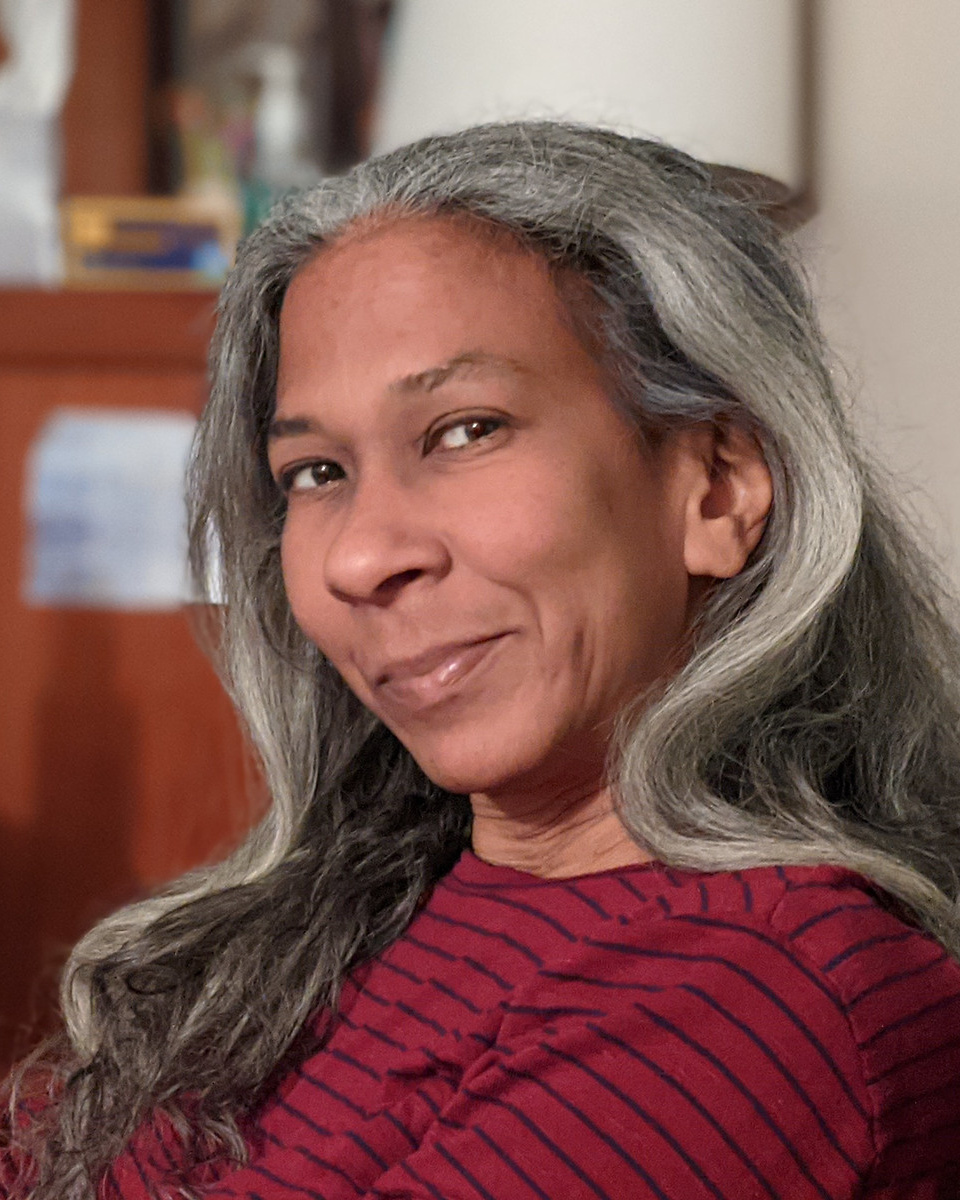
Janine Jackson interviewed Janet Redman about grassroots organizing at the UN climate conference in Paris for the November 20 CounterSpin. This is a lightly edited transcript.

Janet Redman: “Climate change impacts all of us…from where we can live to the food we have access to, our safety in our homes and our communities.”
[mp3-jplayer tracks=”CounterSpin Janet Redman @https://eadn-wc04-3257648.nxedge.io/audio/counterspin/CounterSpin151120Redman.mp3″]
Janine Jackson: Coverage of the upcoming UN conference on climate change has shifted to concerns about security in Paris and resulting clampdowns on activism. But before that, the conference itself was billed as pivotal on global action on the issue. Barack Obama recently declared the US global leaders in the fight against climate change–but is that really true, and what should we actually expect from the conference itself? Janet Redman is director of the Climate Policy Program at the Institute for Policy Studies. She joins us now by phone from Washington, DC. Welcome back to CounterSpin, Janet Redman.
Janet Redman: Thank you so much for having me on.
JJ: Your recent column on the issue, at least on Common Dreams, was headlined: “Will the Paris Climate Talks Deliver the World We Need? Not Likely.” Why do you say that?
JR: I think we have to look at what the Paris talks are. I mean, there’s what we want the Paris talks to do, which is to deliver an agreement between the 196 countries who signed the Climate Convention in order to really reduce greenhouse gas emissions, to reduce climate pollution. And to provide support, particularly, to the poorest countries who are most impacted by climate change, both to adapt to a warming world and to move off of the dirty energy development pathways that they’re right now projected to stay on. That’s what we want it to do, that’s actually what we need it to do, but unfortunately that’s not what it’s set up to do that at this point.
Right now, the conversation we’re having—we’re seeing the conversations between the heads of state as saying: “We’ll see how far we can get, we’ll see what we can do, based on where our circumstances are, what our economy is in the US and what our Congress will accept. We’ll add those all together and see where that gets us.” Unfortunately, we already know, based on what countries have submitted as their intended contributions to this conversation, that it doesn’t add up to what the science says we need in order to avoid catastrophic climate change.
JJ: Often the news of these conferences seems to come from the counter-narrative provided by the activists who aren’t actually in the building. Is that the case with this conference as well?
JR: Yeah, I mean, there are a couple of sets of messages that I think are important for us to listen to. Certainly there are folks inside the conference center who are part of delegations, governmental delegations, who are actively observing the various conversations that heads of state and political leaders will be having, and that’s an important space. Those are the folks that are following whether there is a shall, or a must, or a comma or a semicolon, and all that of course is really important and has material consequences on the way that then our governments work on climate.
But I think what’s really important, as you mentioned, are the messages that are coming from outside. And while it looks at this point that we will not have the large mobilizations that were planned both before the COP and for after the summit itself, there’s still going to be a lot of spaces, and the folks that I’ve talked to are still planning on going to Paris and having those “outside” conversations. Those conversations are really focused on what we actually need, so a lot of the conversations are: How do we move past a fossil fuel-powered world? How do we make sure that renewable energy is not just clean power, but democratic power, so we are shifting control out of corporate hands and into communities’ hands?
And then, of course, all the different ways we need to build resilience in our communities. So not just in the energy sector, which of course is critical, but also: How are we going to deal with flooding? How are we going to deal with new food systems? How are we going to make sure transportation not only works, and is nonpolluting, but is actually accessible by those people who have the lowest income? That’s the important set of conversations that I’m excited are still going to go on at the climate conference, but often times outside the official hallways.
JJ: I sometimes think that media frame climate change poorly. It’s presented as a political issue or as a kind of a partisan issue, rather than a life-or-death proposition.
JR: Absolutely. I mean, what in some ways has been exciting about the rise of climate change as an issue that people are even thinking about at all, is that it’s a real unifying issue. Climate change impacts all of us. It impacts both the poorest of us and the wealthiest of us in multiple aspects of our lives: from where we can live to the food we have access to, our safety in our homes and our communities.
But I think what’s also been really important about climate change is how it raises up other issues. So putting the political issues aside—and, really, we can unpack that later in terms of who’s interested in making sure there’s a denial voice around— but what’s been interesting about the climate conversation I think recently is that it’s really starting to connect to issues of inequality.
Inequality, of course, is always on our minds in this kind of Piketty moment where here in the United States, where we’re feeling the crunch of inequality in terms of economic inequality and racial inequality. And then, globally, while GDP is rising, the disparities between the have and have nots is also rising.
So what’s been interesting is how folks in the climate community are starting to think harder about not just how climate change impacts people who are in developing countries, who are in Global South countries or who are in low-income communities and communities of color, more harshly, first and worst, but also how the different solutions we propose—so if we propose carbon trading, which allows the dirtiest sources of pollution to keep on polluting, that actually impacts people of color and low-income communities disproportionately. And that has huge stakes here at home in the United States, where we are seeing the rollout of the clean power plant and other domestic policies that we’re bringing to Paris as our contribution to the global conversation.
JJ: Well, let me just draw you out further on that, because when Barack Obama rejected the Keystone XL pipeline, he said that allowing that to happen would undercut the US’s global leadership on the issue of climate change. How does that resonate with you–the idea that the US is the pace car on this issue?
JR: I think that’s a tough role to sell to the rest of the world. I was part of this conversation; I was at the UN climate talks when, for the first time, the representatives of the Obama administration came to the climate talks. People were so excited that they were seeing the George W. Bush regime of climate denialism and being obstructionist in those climate talks leave. The US got a standing ovation in that moment, the first time the new representative of the Obama administration arrived at the talks. So there was a lot of hope that the US would actually provide leadership.
Unfortunately, what we’ve seen is that while the rhetoric has become softer, the positions haven’t changed a whole heck of a lot. The US is actually taking the position that we need something called “pledge and review” in the climate talks, which is basically the idea that in the past we’ve had scientists tell us, “Listen, we need to set a cap on climate pollution. Above this level we are going to see really bad stuff happen, there’s just too much pollution in the air. So we have to make sure that everyone, totaled together, doesn’t go above that cap. Because the atmosphere really doesn’t care where the greenhouse gas pollution comes from.”
The US has said: “Geez, that’s going to be really hard; we all have different circumstances. What we should instead do is just each of us bring what we can do to the table, let’s add that up and we’re gonna really hope that that equals a total that keeps us in the safe zone. And if it doesn’t, we’ll just keep reviewing it and try to ramp that up.”
That’s the worst interpretation of grassroots that I’ve ever heard before. So that kind of bottom-up approach doesn’t work when what’s on the line is making sure we don’t add so much pollution to the atmosphere that we trigger catastrophic climate change.
JJ: Yeah, it sort of seems as if it’s discussed in the media as well as though it is something that we can negotiate, when in fact the science is pretty clear about what we need to do avoid triggering that catastrophic change.
JR: That’s right. I think what does need to be negotiated in Paris is, where does the burden fall? Whose responsibility is it to do what? So part of the big conversation there, and part of the controversy there, is whose role is it to cut emissions the fastest, cut pollution the fastest? Whose responsibility is it to support those countries who are low-income or who have large populations of people under the poverty line to move off of dirty energy pathways? Whose responsibility is it to pay for losses and damages that have already happened—that are already locked in because of the pollution that has historically been put into the atmosphere?
For example, we see almost every year now, sadly, during the climate talks a typhoon hits the Philippines. We saw the worst one three years ago, when the climate talks were in Doha. We saw it last year. It’s devastating.
That kind of loss and damage is locked in, because those emissions are already in the atmosphere. The question is, who is responsible for paying for that? Is it the Philippine government? The population of the Philippines, who’s largely low-income? Or is it the countries that have been responsible for 150 years of cheap fossil fuel pollution?
We’ve gotten rich here in the United States on cheap coal in the past, and countries like India say, “Hey, we have a huge population that still doesn’t have access to electricity and basic needs, so it’s fair for us to want to develop in the cheapest way as well,” and of course that means coal.
So what we really need to say here in the United States to our government is, OK, India obviously can’t produce the kind of global emissions we have, using the cheapest and dirtiest fossil fuel sources, so what kind of support do we need to provide, both financially and through technology, to make sure that India has the cleanest kinds of fuel, to meet and develop their electricity needs, as possible? How can we be providing money, technology, resources, capacity to make sure that folks in India have access to renewable energy?
And then how can we do that here at home also, because we deserve clean power here in our communities in the US as well.
JJ: We’ve been speaking with Janet Redman, director of the Climate Policy Program at the Institute for Policy Studies. They’re online at IPS-DC.org. Thank you very much, Janet Redman, for joining us this week on CounterSpin.
JR: Thanks so much for having me.