

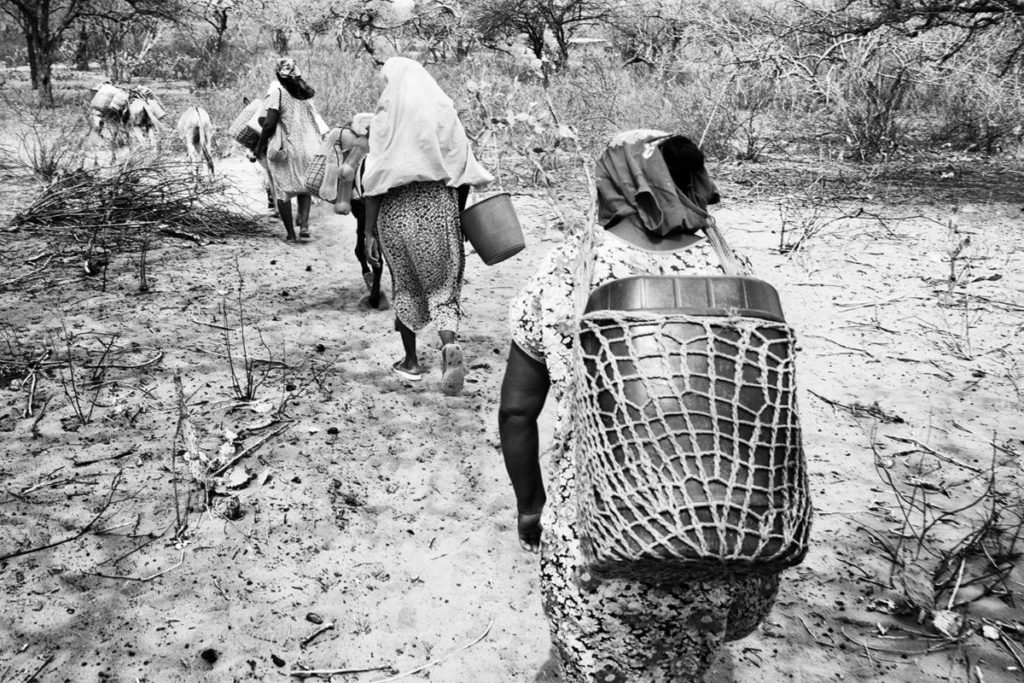

A Huffington Post piece (8/2/16) called attention to the lack of media coverage of the plight of Colombia’s Wayuu people.
Colombia’s Supreme Court has ordered the government to ensure that the Wayuu, the largest indigenous community in the country, have access to basics of survival, including drinkable water. Last year, the Inter-American Commission of Human Rights called attention to the crisis, noting the documented deaths of more than 4,700 Wayuu children in just the last eight years—although the Wayuu themselves say the number is closer to 14,000 children who have died from preventable disease, thirst and malnutrition. It’s a humanitarian nightmare, but as human rights lawyer Dan Kovalik noted in a piece for Huffington Post, corporate media appear unmoved.
The Wayuu are suffering not just from climate change–driven drought, but from the loss of access to the Rancheria River, drained by a dam built in 2011 for the coal mining company Cerrejon. Cerrejon Mine, at first a joint venture between Colombia and Exxon, opened in 1983 and has been displacing indigenous and Afro-Colombian communities ever since. Kovalik reports that Cerrejon now uses 17 million liters of water a day, while residents of the region have an average of 0.7 liters a day to live on.
The area’s dryness was noted in an article last December on CNN‘s website (12/8/15) that told how “Colombia’s wild northeast is slowly making its way onto the tourist map. But patience and a fair dose of discomfort are required to enjoy this barren outpost.” The Wayuu are mentioned; readers are warned they’ll be pestered by them for money and candy, so bring “a bagful of gummy bears.”

An Al Jazeera photo essay (2/3/16) addressed the Wayuu water crisis.
And that was one of the vanishingly small number of media mentions of the group. Indian Country Today has done reporting on the Wayuu crisis; Al Jazeera had an informative photo essay; some papers ran an op-ed by Jim Hightower.
But in, say, the New York Times—which, Kovalik notes, has a lot of time for shortages and privation in neighboring Venezuela—the story of the displacement and deaths of indigenous people just over the border doesn’t seem to make the cut. One Times piece last September, about Venezuela closing its border, did mention the group, when the paper informed readers in the final paragraph that “many Wayuu have long relied on smuggling to earn a living.”
Janine Jackson is FAIR’s program director and the producer and host of CounterSpin.


The unnotable “savage”