

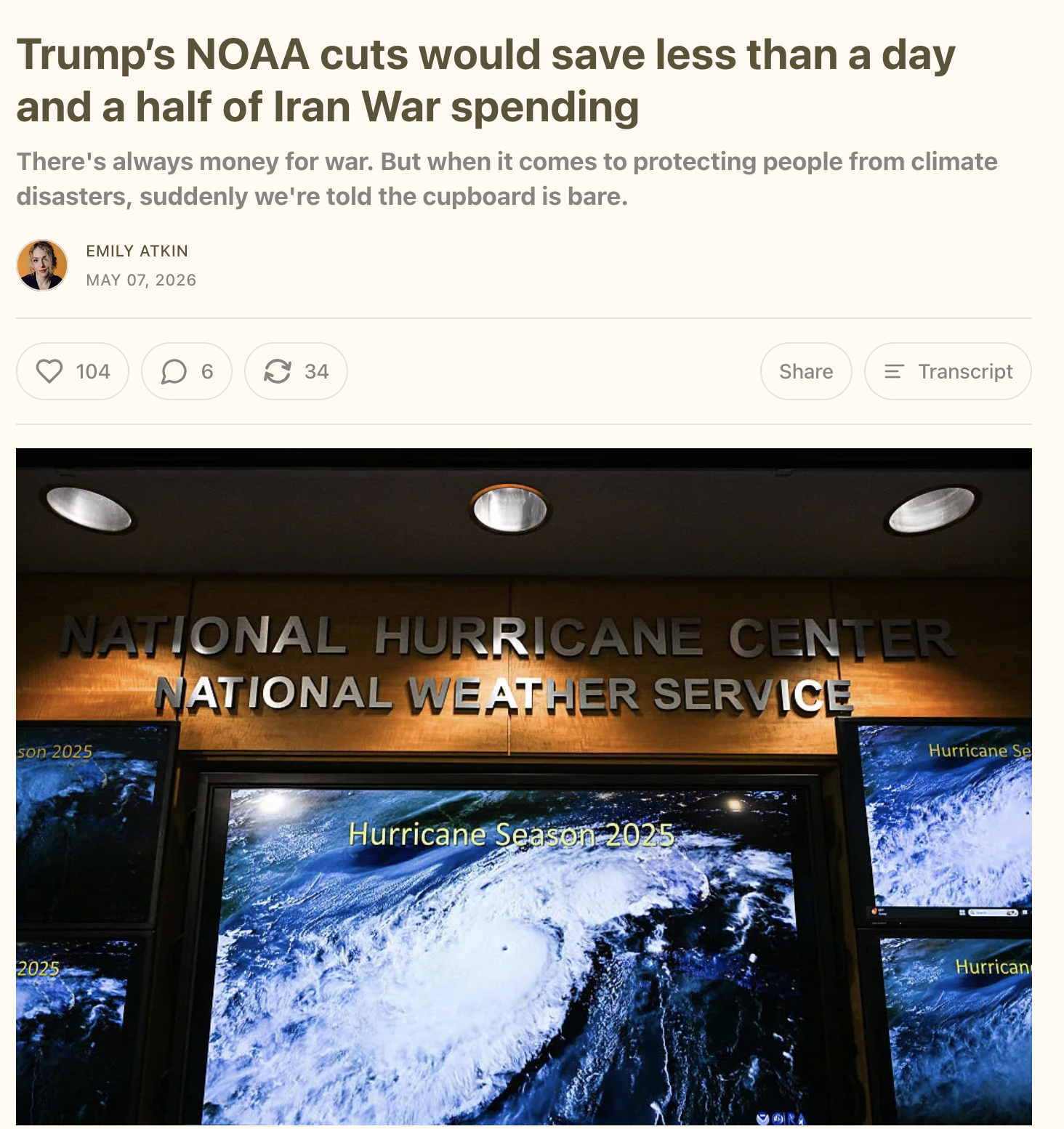
Emily Atkin of Heated (5/7/26): “The numbers are revealing, in that they show the Trump administration is perfectly capable of finding money when the goal is destruction. But when it comes to protecting Americans from fossil-fueled extreme weather, suddenly we’re told the cupboard is bare.”
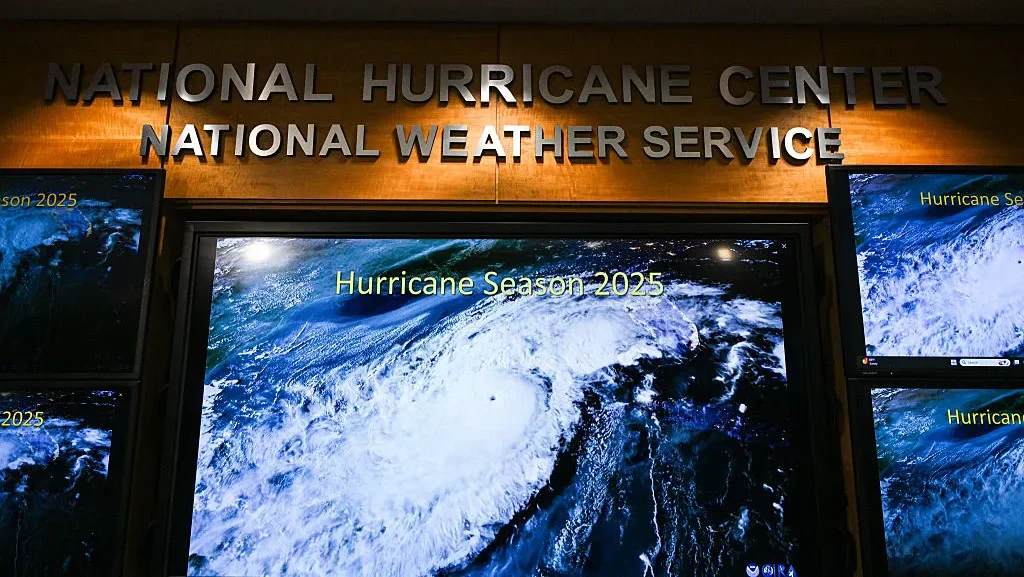
The recently proposed budget from the Trump administration includes a $1.6 billion cut to the National Oceanic and Atmospheric Administration. The reduction would eliminate NOAA climate, weather and ocean research labs; zero out grants aimed at improving rainfall and flood prediction; and cut the Integrated Ocean Observing System, which monitors what’s happening in the ocean, where hurricanes strengthen and where coastal flooding begins. This comes on top of the 2025 DOGE layoffs of some 880 people from the agency.
Some lawmakers are pushing back, either because they don’t think climate change is fake news, or they’re from flood-prone regions. But a detail being missed, as noted by Emily Atkin at Heated (5/7/26), is that while these cuts would substantially harm the agency’s work, the proposed “savings” of $1.6 billion is equivalent to the cost of 1.3 days of the war on Iran—which Popular Information estimated to have cost $72 billion in its first 60 days.
That figure is much higher than the one you will likely have heard in the news. The acting Pentagon comptroller put the figure at $25 billion when talking to Congress at the end of April, and he raised that number to $29 billion in widely covered hearings this week (USA Today, 5/12/26). CNN (4/29/26) said anonymous officials suggested the $25 billion figure was actually closer to $50 billion, once repairs to US bases in the region were included.
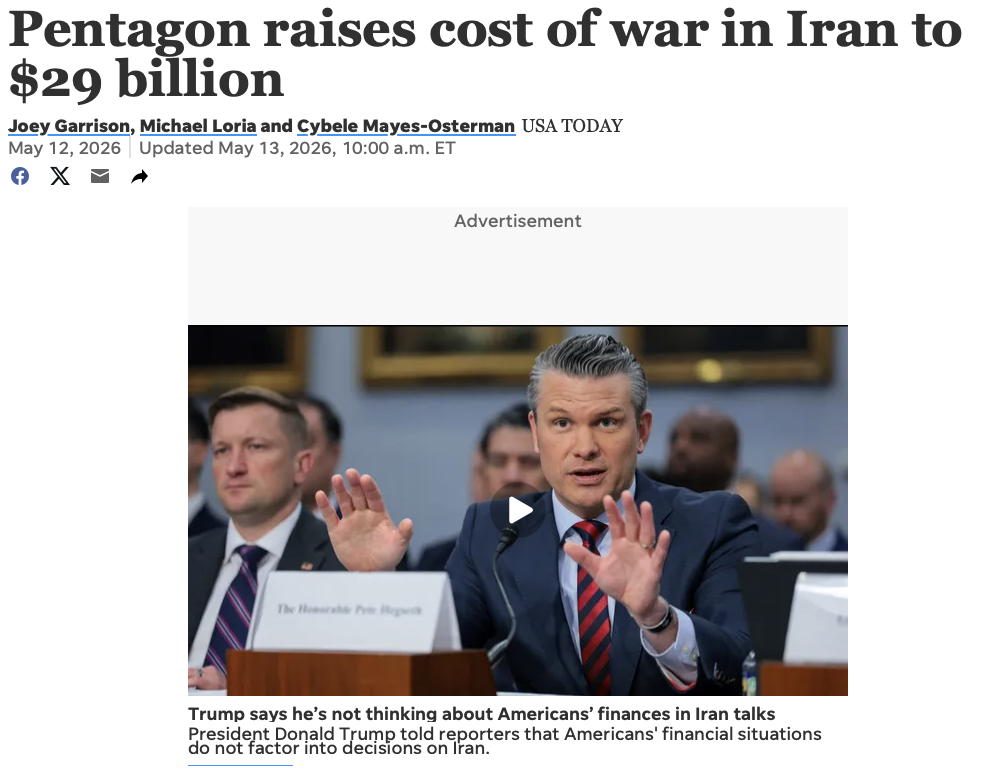
You’re likely to see lowball estimates of the true cost of the Iran war in corporate media (USA Today, 5/12/26).
But Popular Information (5/6/26) did a cost estimate of the Iran War based on officials’ statements, military procurement and operations data, and reporting on deployments and armament use. It considered direct war costs—expenses for military operations, munitions and the like—but not indirect costs, including broader economic impacts, interest on the national debt and longer-term expenses like veterans’ care. It also corrected the flawed Pentagon method for tracking munition expenditures, which reflects historical costs rather than the much higher replenishment costs.
Harvard public policy expert Linda Bilmes (Fortune, 4/15/26) estimated that once indirect costs like lifetime disability benefits to US troops are included, the costs will run far higher: “I am certain we will spend $1 trillion for the Iran War.”
You can find Popular Info‘s methodology on their Substack, and Bilmes’s detailed interview on Harvard’s website. But in the meantime, you can question lowball estimates of the costs of this illegal, reckless war.




Leave a Reply