


 No Criticism Allowed for Trump’s Court Pick
In the first 48 hours after Neil Gorsuch was nominated to the Supreme Court by Donald Trump (1/31/17–2/2/17), the Washington Post published 30 articles, op-eds, blog posts and editorials on the nomination. Thirteen were explicitly positive, while 17 could be construed as neutral—but not a single one was overtly critical or in opposition to Gorsuch (FAIR.org, 2/2/17). Apparently editors thought columns like “Ignore the Attacks on Neil Gorsuch. He’s an Intellectual Giant—and a Good Man” (2/1/17) required no balance.
For NYT, Snitching on Immigration Violators Is the Right Thing to Do
 The New York Times “Ethicist” (1/25/17) had some advice for a reader who had been told in confidence about an immigration violation:
States have a right to regulate who crosses their borders. You may disagree with one feature or another of our system, but over all it is fairer than many others. And if someone abuses it by the sort of fraud you have described, they are not only breaking the law, they are jumping a queue that millions of other people have formed by applying properly and then waiting their turn….
You’re not obligated to report what you know. But provided you are morally certain about your conclusion, it would be a good thing if you did. US Immigration and Customs Enforcement has a website where you may report anonymously.
First they came for the immigrants—and the New York Times said you should secretly turn them in to the government.
When ‘Factchecking’ Is a Big Lie

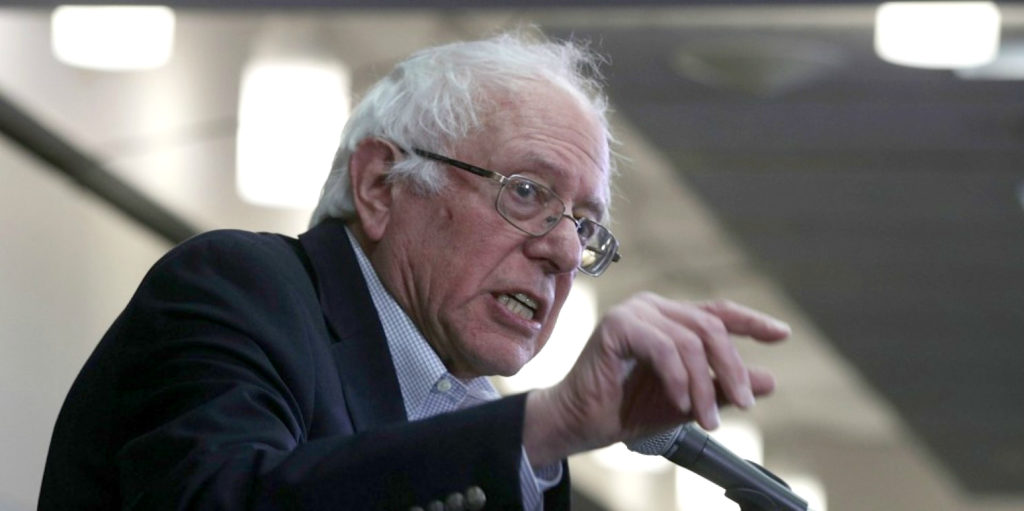
Yes, Sanders had an academic study to back up his claim–but he didn’t footnote his tweet properly.
Washington Post “Fact Checker” Glenn Kessler (1/14/17) gave “four Pinocchios” (the highest score, reserved for “whoppers”) to Bernie Sanders’ warning on Twitter that “as Republicans try to repeal the Affordable Care Act, they should be reminded every day that 36,000 people will die yearly as a result.” Sanders’ number came from Think Progress (12/7/16), which in turn derived its forecast of how many people would lose insurance under Obamacare from an Urban Institute report, and its estimate of the effect of insurance on mortality from an Annals of Internal Medicine study (5/6/14).
But Sanders’ tweet didn’t include all the academic qualifiers that occurred in the original Annals study. (It was a study of Massachusetts, not the whole country!) And his warning was based on the “pretty big assumption” that the ACA will not be replaced with a brand new GOP-designed program—the barest outlines of which have yet to be described.
This kind of “fuzzy math” generally merits three Pinocchios, Kessler said—but the fact that Sanders said that people “will die” rather than “could die” is what “tips this claim into four-Pinocchio territory.” Since every statement about the future is necessarily uncertain, presumably every politician who uses the future tense from now on will be awarded an extra Pinocchio.
About a week later, the Post published an op-ed (1/23/17) by Steffie Woolhandler and David Himmelstein, two of the nation’s leading public health experts, under the headline, “Repealing the Affordable Care Act Will Kill More Than 43,000 People Annually.” No word from Kessler on how many Pinocchios that deserves.
Less Victims, More Coverage —When Attacker is Muslim
Just as the United States began debating Donald Trump’s Muslim ban, six worshipers at a mosque in Quebec City were murdered on January 29, allegedly by a white supremacist who “liked” Trump on Facebook. But the massacre got relatively little coverage in the US; by comparison, a 2014 terror attack on Ottawa’s Parliament Hill that killed one person got six times as much coverage with one-sixth as many victims (FAIR.org, 2/4/17)—the difference being that the assailant in that attack was a Muslim convert.
Conservatives ‘Defend Best of Our Principles’: WaPo
“Martin Luther King Jr., conservative. That description of the civil rights leader whose birth we celebrate today might surprise or even offend many of the people coming to town to celebrate the inauguration of a new president and the supposed triumph of conservatism in some form or other…. But in his way, Dr. King did a lot to preserve, protect and defend the best of our principles and values.”
—Washington Post editorial (1/15/17)
Don’t Worry About Keystone —This Oil Consultant Doesn’t

New York Times assures that the Keystone pipeline is not a “significant” environmental issue–based on the assurance of an oil industry consultant.
Donald Trump’s orders to “revive” the Keystone XL and Dakota Access pipeline projects are much ado about nothing, the New York Times (1/24/17) reported: “The pipelines were more about symbol than substance but generated enormous passion on both sides of the debate,” wrote the Times’ Peter Baker and Coral Davenport, who explained:
Studies showed that the pipeline would not have a momentous effect on jobs or the environment. … The government concluded that Keystone’s carbon emissions would equal less than 1 percent of the total greenhouse gas emissions in the United States.
For confirmation, the Times turned to David Goldwyn, who’s been in and out of government but now works as an oil industry consultant: “Keystone has never been a significant issue from an environmental point of view in substance, only in symbol,” he assured.
According to Scientific American (4/17/13), Keystone XL will ship enough oil to add 181 million metric tons of greenhouse gases to the air each year—3 percent of total US emissions. But even if it were “less than 1 percent”: If Keystone increased employment by a little less than 1 percent—a million jobs, in other words—would the Times ever say that was not “momentous”?
‘American Values,’ NYT Style
“Elliott Abrams, a neoconservative who has long argued for an activist foreign policy that spreads American values around the world”
—New York Times description (2/6/17) of a Reagan administration official who defended Central American death squads and conspired in the illegal Contra war against Nicaragua



