

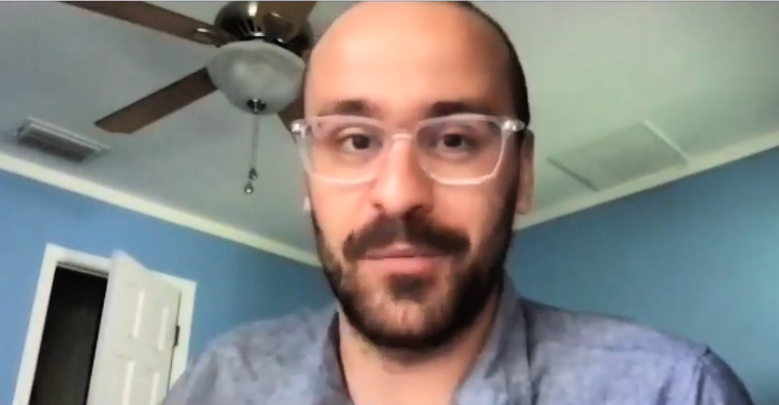
Janine Jackson interviewed Clean Creatives’ Duncan Meisel about oil industry greenwashing for the June 11, 2021, episode of CounterSpin. This is a lightly edited transcript.
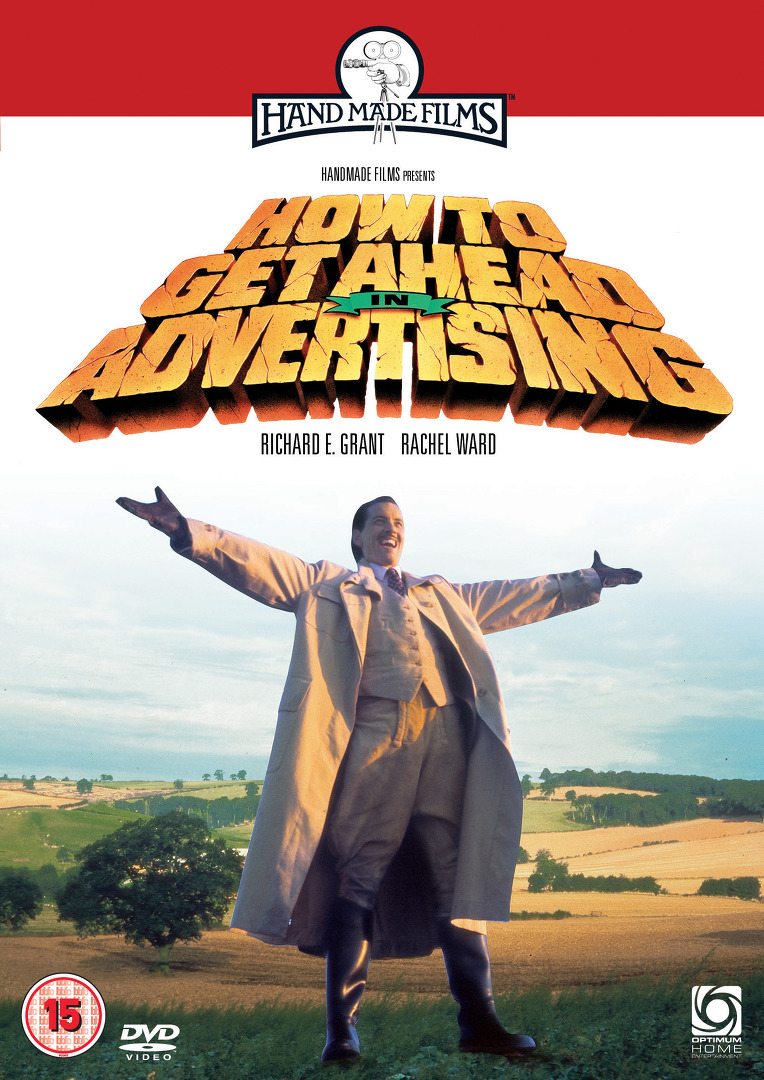
1989
Janine Jackson: Humorist Dave Barry once wrote that
the value of advertising is that it tells you the exact opposite of what the advertiser actually thinks. For example, if the ad says, “This is not your father’s Oldsmobile,” the advertiser is desperately concerned that this Oldsmobile, like all other Oldsmobiles, appeals primarily to old farts like your father.
Different but related is a line from the movie How to Get Ahead in Advertising, in which a character explains: “Everything is high in something. And if it’s not, it’s low in something else.” (That explains popcorn packaging declaring it “gluten free,” for example.)
Advertising is about redirecting thought and emotional energy away from what someone doesn’t want you to think about, and onto what they do. It matters if it’s potato chips or car insurance or sneakers; it matters tremendously if it’s the fate of whole communities, and the planet.
But although we have a general understanding that fossil fuel companies are invested in their public image, inasmuch as it affects regulation they might face and their ability to do business, we don’t often hear about the role of advertising in greasing the wheels of climate disruption, of sheltering polluting extractive companies from the worldwide, time-constrained effort to get them to stop.
That’s where our next guest’s work comes in. Duncan Meisel is campaign director at Clean Creatives, a group of PR and ad professionals who see the threat of climate disruption and their industry’s role in it. He joins us now by phone from Austin, Texas. Welcome to CounterSpin, Duncan Meisel.
Duncan Meisel: Thank you so much for the chance to talk.

JJ: Let’s start with the most recent thing: Clean Creatives released an ad mocking an ad from the big ad agency WPP. Could you fill listeners in on their ad, and what made you feel it was ripe for some explanatory satire?
DM: For context, WPP is the world’s largest holding company of advertising firms. So they’re basically a conglomerate of many, many ad firms themselves. And inside WPP, they have a number of clients who are Big Oil companies: BP, Exxon, Chevron, Shell. And WPP does all kinds of work for them—recycling their image, sharing misleading advertisements—and they do include some PR companies, so doing the PR inside game as well.
And so WPP, on Earth Day this year, made a pledge to bring their operations to net zero, and they said that they would save 5.4 megatons of carbon dioxide by taking this pledge. And if they were a manufacturer of cars, or widgets, or really anything, that would be extremely meaningful: Bringing your operations to net zero is basically what we are asking the world to do in the Paris climate agreement. The problem is that they are doing this advertising for fossil fuel companies that are the biggest polluters on the planet.

And so they released a very snazzy video—they are very good at what they do—talking about “zero,” just the power of the idea of zero.
JJ: Mmm-mm.
DM: And we thought it was very interesting that they were also doing “zero” about fossil fuels. And their executive CEO, Mark Read, was asked about their work for fossil clients when they made their pledge, and he said, “Oh, no, we’re not going to look at that. We’re not going to deal with that. We’re not going to change anything about our relationship with them.”
And so we thought, if you’re really pledging zero, to do zero, that’s something that we should talk about. And so we actually went and we did the math on the amount of carbon dioxide that their fossil fuel clients produce. And while WPP may be saving 5.4 megatons of carbon, the fossil fuel companies that they work for produce over 2,000 megatons of carbon.
And so when you think about it: You’re an advertising company; your job is to increase the sales of your clients. And the point at which they are increasing the sales of their clients by essentially any amount, they are wiping out the impact of that 5.4 megatons of carbon that they have saved. So that’s kind of the math and the big picture, and why we thought this was an important conversation.
JJ: Just in case folks missed it in there: WPP was saying they, themselves—as an advertising conglomerate—were going to get to net zero, like within their offices, within their company; that’s what they were saying in that ad.
DM: Exactly. So, like, fewer flights, renewable energy in your offices, reusable cups, you know, all stuff that’s good….
JJ: Sure. And then you’re going to go to work doing an ad for Shell, you know?
DM: Exactly.
Duncan Meisel: “Every time there’s a real challenge to their power, they say, ‘Oh, we’re ready to change, things are going to be different this time.’” (image: act.tv)
JJ: OK. Well, I think of that Dave Barry thing whenever I see an ad for a polluting company, and it features fish swimming in sparkling water, or the sun rising over a field of flowers: These companies are really encouraging us to think of their impact on the world as the opposite of what we know it to be.
And Clean Creatives has been on to this, and you say that this is actually a messaging effort that’s more than 100 years old, which blows my mind—the idea that fossil fuel companies are part of the solution. Can you talk a little bit about that?
DM: Yeah, this has essentially been the message that fossil fuel companies have been sending since public relations even existed. The person who invented the press release worked for Rockefeller and Standard Oil. And Rockefeller, Standard Oil, was a huge, huge monopoly conglomerate. And they were involved in a coal miners’ strike in Colorado, where dozens of coal miners ended up being murdered; they were killed while on strike, and it was a huge scandal. (This was about 1914.)
And Ivy Lee, the guy who invented the press release, told Rockefeller, “OK, here’s what you’ve got to do. Don’t call them radical, don’t call them extremists. Just go there and talk to them and say that you’re ready to make change.”
And that’s what he did. He went to Colorado, and he sat down, and he says, “Well, we’re very sorry, we feel this is terrible.” And then he went back, and just kept doing the same things he was doing before, making the money the same way he had previously. And so that’s kind of been the story ever since then, is that every time there’s a real challenge to their power, they say, “Oh, we’re ready to change, things are going to be different this time.”
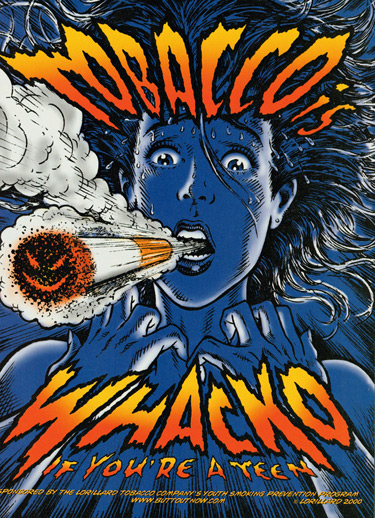
Lorillard Tobacco, 1999
And I think there’s a really important parallel also here to the tobacco industry and the liability and legal challenges they faced up until the ’90s, when it really came to a head. And the same thing happened; they’re playing from the same playbook.
I found this great ad from 2000, or something like that, from Lorillard Tobacco, and it was this huge, stylized, sort of psychedelic poster; it says “Tobacco Is Whacko.”
And what they found was actually that showing these ads to teens increased teen smoking.
JJ: Right, right.
DM: They actually were counterproductive. And the same thing is happening now; they are showing off these ads where they say, “Oh, we’re ready to move past our business model. We’re ready to change.” And the goal of these ads is to distract from the impact of their actual business model, and to delay action that would otherwise regulate their ability to make profits on pollution.
JJ: It also dovetails with a corporate media message, a kind of implicit message, which is: Leave it to the experts.
Some folks get outraged when we learn that gas companies are advising the government on pipelines, for example. But then other people are saying, “Well, but they’re the ones who know it. They know the business, right?”
The corporate PR fits in with a media responsiveness that says, “Well, if you’re talking about an industry, you should include an industry expert.” So there’s kind of a “frictionless where there ought to be friction” relationship between advertisers and media, I think.
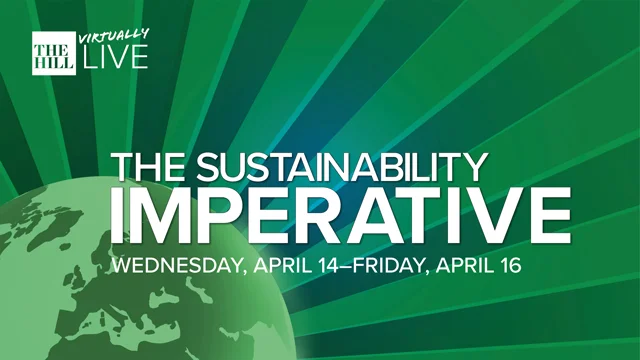
DM: I think that’s the case. And there was an interesting example of this, where Washington, DC, publication The Hill was hosting a conference—it’s part of their business model; they invite people to come get together and talk—and it was about the clean energy future. And I was curious about it, so I went.
They had a bunch of government people there, Gina McCarthy from the White House, and some senators. And I was looking at the sponsors, and the sponsors were the American Petroleum Institute, the private equity front group and then Philip Morris. And I was like, “Why is Philip Morris part of this conversation about clean energy? This is a really strange thing.” And what I realized is, not only are these, of course, Big Oil borrowing the strategy of Big Tobacco, but if Philip Morris tried to sponsor a conference about tobacco and smoking cessation, no one would come.
They would know it was corrupt. They couldn’t; they’d say, “Absolutely not.” But somehow the American Petroleum Institute, despite being this multi-decade effort to deny climate change, defer climate change action, they still have some veneer of credibility, that they can show up to a conference about climate transition and still be seen as legitimate.
JJ: Yeah, and the only folks left out are us, the public.

Finally, there’s a new report from Friends of the Earth International, Corporate Accountability and the Global Forest Coalition that’s called “The Big Con,” and that’s talking about how companies like Shell and Microsoft and Nestlé are lobbying for net zero targets that don’t actually reduce their emissions, that they’re using distraction techniques to give the impression that they’re reducing emissions and getting to net zero, when they actually are not.
So there’s a reason to keep a sharp eye on what’s even meant by the language, because if corporations can get the term defined down, then ads can use it and have people think it means something it doesn’t. There’s just a lot of pieces to this machinery of public opinion that we don’t often hear about. And one of those, I guess, is what do we even mean by “net zero”?
DM: Yeah, and “net zero” is an important concept. And I think it is important to, in a way, defend the integrity of it…
JJ: Yeah.
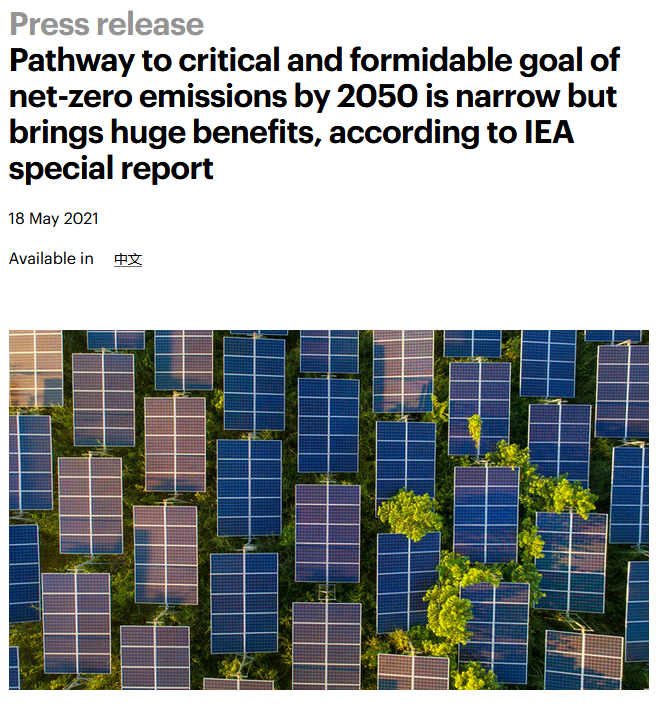
DM: …because the International Energy Agency did a really great study that came out a week or two ago, where they talked about what is the best pathway to achieve the net zero climate goals laid out by the Paris climate agreement. And they had a line in there that said, “There is no need for any fossil fuel infrastructure to be built beyond what we already have.”
“There is no need.” And the most important building block of achieving net zero, of doing the Paris climate agreement, is to rapidly reduce the amount of fossil fuel emissions; this is the biggest driver of the problem.
And so, when you have these fossil fuel companies saying, “We want to have net zero by 2050,” there’s several layers of problems there. One is that they may be relying on things like offsets, where they’re like, “Yeah, well, we’re going to keep burning oil, but we’re going to plant a bunch of trees,” and there’s a lot of questions and dangers there.
JJ: Right.
DM: But then, often, even that, they’re not even really planning to do that! You know, Shell had this amazing disclosure—when they actually had to disclose to their investors what their plan was—they said, “Shell’s operating plan and budgets do not reflect our net zero by 2050 goals.” And so sometimes they’re not even planning to do the “bad”version of net zero…
So there’s a lot of layers there that I think need to be examined. And I think it’s really important for there to be really ripe debate about what net zero means, to make sure that it is a concept that is essentially protected.
JJ: And transparency about what folks are actually doing versus what they say they’re doing.
DM: Yes. Precisely.
JJ: We’ve been speaking with Duncan Meisel. He’s campaign director at Clean Creatives. You can learn more about their work online at CleanCreatives.org. Duncan Meisel, thank you so much for joining us this week on CounterSpin.
DM: Thank you so much for the chance to talk.




The truth never ads up
Some people can’t eat gluten. There are no other health benefits to gluten free products beyond for those who can’t digest it or whatever. But I’m still glad my niece knows what kind of popcorn she can buy at the store and doesn’t have to experiment to find out. I guess this offends you though.
BTW can’t wait for your massive take down of all Greenwald’s nonsense about the integrity of Fox News. I actually wrote about Glenn’s devotion to Fox News over 7 years ago and used FAIR’s reporting to make my point. Perhaps you can use this in your forthcoming piece about how Greenwald is a literal neo-Nazi:
“So far in 2014 Glenn Greenwald’s twitter account has tweeted 28 negative tweets about cable news network MSNBC. By comparison he tweeted 1 negative tweet about Fox News. The lone negative tweet about Fox was regarding a segment asking if a journalist who sells leaked material should be arrested for selling stolen property – so he kind of had to call them out for that, didn’t he? Don’t worry though. Glenn and Fox have made up and he’s back to praising Fox for the high integrity news organization it is.
28 tweets or retweets may not seem like much but it’s actually one tweet every 90 hours. With all that’s happening in the world Glenn has felt it necessary to publicly criticize or simply mock MSNBC every 3 to 4 days while doing so to Fox once in over 100 days. By no means am I trying to say one shouldn’t criticize Comcast’s news division MSNBC. Of course you should! But a 28 to 1 score in favor of Fox News is too much for even us pot-smoking liberals to ignore. Glenn’s main point is that MSNBC is too pro-Obama, too pro-Democrat. I’m not going to argue with that. But again, let’s consider their competition…
From Fairness and Accuracy in Reporting:
__________
Fox News president Roger Ailes was an adviser to three past Republican presidents—Richard Nixon, Ronald Reagan and George H.W. Bush—and reportedly secretly advised George W. Bush while running Fox News
Fox News executive vice president John Moody regularly handed down memos cheering and defending Bush administration actions. For instance, following a 2003 Bush Mideast initiative, Moody wrote to staffers, “His political courage and tactical cunning [are worth] noting in our reporting through the day.”
Fox News senior vice president for programming Bill Shine referred to Fox as “the voice of opposition” to the Obama administration.
As noted by the Columbia Journalism Review, several former Fox employees “complained of ‘management sticking their fingers’ in the writing and editing of stories to cook the facts to make a story more palatable to right-of-center tastes.”
__________
Anyway, you get the point. But what’s Glenn’s point? That MSNBC is, in its own way, as bad as Fox News? No, that’s not his point. His point is Fox News is a much more reliable source of news for Americans. And he tries to make this point publicly on average twice a week. Well Glenn’s an Ayn Rand loving douche but that’s not my point. My point is it’s past time people I admire and respect on the left stop pretending he’s something else.”
Seven fucking years you professional media critics have pretended not to notice this. Seven fucking years and the election of a white supremacist. I think I’ve asked you all this before but how do you sleep at night?
Fossil Fuel companies are truly OILY characters! They take my breath away! I wonder what air is like in their neighborhoods?
Probably alot like yours. If you drive, take an Uber, take the bus, ride a train, fly, buy groceries, buy anything – you buy oil.
You are the demand (as am I). They are responding to YOUR demand (and mine). You are OILY. If they point a gun at you and force you to do those things, please let all of us know.
Who does not need to go to work, eat, etc? The structure creating the demand was created by the oily companies with the blessing and aid of govt. Did WW really want oil companies to buy up streetcar companies and dissolve them, or make it impossible to walk or bike anywhere, etc, etc, etc? A lot of concerned individuals struggle to not participate in this forced demand, and it is difficult, and not everyone can avoid what has been gradually imposed by the oily companies. Think about that before you make people complicit.
You have options. You’re just blaming others for your hypocrisy. It’s so much easier to blame a big oil company than to say, I don’t like the end product, but I am as much of the problem as all the others I’m lecturing.
You really think street cars would solve this problem? People moved to suburbs to get away from the city. The big bad government didn’t do this.
I know you libs like to pretend supply and demand don’t exist, but unless you live on a farm in total isolation and never use modern medicine, YOU are part of the problem. Don’t blame oil companies for your demand. How do you think that bike gets built? How does that iron or aluminum get mined? How does it get shipped? I’d say ride a horse, but I know how you guys are on cow flatulent. Of course there would be a tractor burning oil for the hay. A truck burning oil to bring you the bails of hay. Earth moving equipment to mine the iron to bail the hay. More mining to make the truck to bring the hay. I can go on all day how your demand is the cause, not the oil company.