


Janine Jackson interviewed IPS’s Karen Dolan about Build Back Better for the October 29, 2021, episode of CounterSpin. This is a lightly edited transcript.

Janine Jackson: Things are up in the air as we record on October 28. But it seems that paid family and medical leave, among other things, has been cut from the Build Back Better legislative package, which today’s New York Times describes as “considerably more modest than initially envisioned.” A recent Washington Post editorial, “Build Back Better Is Getting Worse and Worse,” said that Democrats are “at risk of producing legislation that is so compromised and slapdash that it would amount to a tragic missed opportunity.”
Poignant words, that would land differently had not the Post and the rest of the elite press corps delivered months of coverage on the safety net, climate and infrastructure package that so overwhelmingly focused on its costs over its contents that proponents, including Sen. Bernie Sanders, were driven to produce a webinar called “What’s in the Damn Bill?”
Joining us now to talk about Build Back Better and the struggles around it is Karen Dolan. She’s a fellow at the Institute for Policy Studies, where she directs the Criminalization of Race and Poverty project. She joins us now by phone. Welcome back to CounterSpin, Karen Dolan.
Karen Dolan: Thank you, Janine. Wonderful to be here.
JJ: I admit my heart sank to see the Times this morning: “Biden Announces $1.85 Trillion Framework for Climate and Safety Net Plan.” Both because it represents such a material reduction in what was looking like a plan to begin to confront this country’s climate and human health crises, not to mention to respond to the public will to do that. But then also because it seems like media are going to continue to reduce this plan about people to a price tag.
What are your broad thoughts today about how the White House and lawmakers have so far handled what is, once folks know about it, a very popular plan?
KD: I agree with you, Janine, that the media has not done its job, and by not doing its job has done a great disservice to the American people. So you look at the latest polls, where about 35% of people feel that there’s anything in the bill that will help them, when in reality, even this pared-down bill will help nearly everyone who isn’t a millionaire and billionaire. And millionaires and billionaires aren’t going to be hurt very much.
Additionally, the investments in this bill are more than paid for. In fact, they go to pay down the deficit, because two senators have pared down the ways in which the dollars could be spent to help the rest of us.
So there’s actually still an awful lot of good in this package, but you wouldn’t know it from headlines like you announced today from the New York Times or the Washington Post. Or, as you rightly said, over the summer, I think that the Progressive Caucus, Bernie Sanders, some of the lawmakers, even Joe Biden, have tried to make clear the ways in which the proposals in the bill will help most of us, and especially poor and low-income children and people of color, who are most adversely affected by the pandemic. But, as you say, the concentration has been on the price tag, when in reality the price tag is zero.
JJ: I know you’ve been particularly interested in the fate of the child tax credit. And that Washington Post editorial lamented that Democrats might expand the child tax credit for perhaps only a single year. But in doing that, they said, “A long-term expansion should take precedence over a federal pre-kindergarten program or expanded housing aid.”
We all know that choices have to be made, but I find that media sometimes just throw around this tough talk about what we have to jettison, and what’s in competition with what. And you’ve just indicated that in terms of cost, particularly when we’re talking about family-supporting measures, that invidiousness is just off base.

Karen Dolan: “These numbers, these programs, these policies, as far as we’ve gotten, all come…from decades of social movements.”
KD: Yes, I think it is. I think it’s very harmful. I think, also, the reality around the child tax credits: That is indeed a tax cut for middle-class families. But it also reaches 27 million children who were not receiving any of the tax credit, or just partial tax credits. And that is what we call full refundability. And that has been made permanent. So that is a permanent benefit for the very poorest and low-income children among us, and that’s huge. That will have lifelong effects for them.
And because of Joe Manchin, the extensions were only able to go for a year without work requirements or means-testing, in a way that would have been extremely harmful. So what we’ve got is one year of an extension of the expansion of the child tax credit, for everyone up through $150,000 a household. But the full refundability is permanent. So those are really very important.
And this bill is not what we had hoped. I think progressive movements would say we needed more like $10 trillion, which we could have paid for. Because, remember, the revenue raises are permanent. And we easily could have paid for the $3.5 trillion. And we more than pay for this pared down $1.75 or $1.95. We have to look at it as a foot in the door, as a down payment, but one that is critical, one that will improve the lives, especially, of poor and low-income children. And that can’t be ignored.
JJ: Let’s take a brief detour, because Joe Manchin did bring up this idea of work requirements. And I just wonder if we’re ever going to retire that narrative. Can you speak briefly to that whole storyline?
KD: Yes, well, I think even this agreement, even as pared down as it is, has retired that, temporarily.
JJ: Good.
KD: So we lived to fight another day. And that’s why we only have one year of the extension of the full child tax credit expansion that we had under the American Rescue Plan. So that is without work requirements.
It’s completely baseless. There’s no evidence, and never has been, that imposing a work requirement on receiving these benefits for the poorest children makes any difference in terms of workforce participation. So that is, many of the arguments, if not all—I would submit all—that have been posed by Manchin, obstructionist arguments, have no basis in reality. And he cannot produce credible research that points that he’s correct, whereas there is much evidence that he is incorrect.
So that’s really, I think, where if the media insists on focusing on infighting among the Democratic Party, which I also don’t think is helpful nor truthful; it’s really all of the Democrats against Joe Manchin and Kyrsten Sinema. Also, not one Republican is for helping the American people. That’s also a message that gets lost. So talking about moderates versus progressives is not only unhelpful, it’s untrue.
And there’s nothing moderate about Joe Manchin’s position, nor Kirsten Sinema’s position. They’re both extreme outliers when you look at the popularity of the proposals, from the billionaire’s tax to paid family leave. You have upwards of 75%, 80% in some cases, popularity among the voting public for these things. And some of them are bipartisan. So there’s nothing moderate about the opposition: It’s extreme. It’s fringe. And it’s two people. And the entire Republican Party, which also is never mentioned.
JJ: Exactly. Well, extending that kind of distortion is when we hear media describe progressives who are holding the line and continuing to fight for measures that the public overwhelmingly supports, those people being described as “holding the bill hostage.”
KD: That’s right. They are not the people who are obstructing it. And keep in mind the Congressional Progressive Caucus is about half of the Democratic Caucus, so about a hundred members of the Congressional Progressive Caucus. And they’re simply holding a principled position. There was a tacit agreement that both the physical infrastructure bill, the roads and bridges, and the so-called human infrastructure bill—the child care, the safety net, the hearing for our seniors, the home care for our seniors and disabled people—that these would all advance together. And they’re simply trying to make sure that there’s the best deal possible for the American people.
JJ: Finally, the process unfolding before our eyes might seem to some to reflect a kind of brokenness of the connection promised by a democratic society, that the will of the people would be reflected in public policy. Here we see elected representatives cutting away at this, for what are being described as “political” reasons. And it makes it seem like a kind of funhouse mirror idea of how democracy should work.
And I know that you think about the relationship of policymaking to social movements. It just seems critical to hold in mind right now that, as important as electoral politics are, and how we cannot cede that ground, they’re not the only arena for action. We don’t want people to say, oh, look how they’re not doing what we elected them to do, therefore I step out of the whole process. We have to see that la lucha continua, whatever happens this week.
KD: Yes, I think that’s right. And I think it’s also when people really look at the bill and see how the Congressional Progressive Caucus, or the entire Democratic Caucus except for two members, isn’t holding the line simply for political reasons and their own political ambitions. These numbers, these programs, these policies, as far as we’ve gotten, all come from social movements. It’s from decades of social movements. We’re not getting everything that we’ve fought for. But we’re getting more than we’ve gotten in decades. And things like, although the reports are paid leave has been stripped out of the bill, the legislation hasn’t been written.
JJ: Mmhm.
KD: We still have power. People can still call their members of Congress. They can still tell their stories online. They can still do social media.
It is we who push our elected representatives. It is social movements. It is getting out on the street. It is picking up the phone. That’s why we’ve gotten where we’ve gotten. And what is in this bill is the result of social movements, and it’s terrific.
It is not everything it could have been or should have been. And we must build on it. But we can’t walk away from what we have just spent decades of blood, sweat and tears to get to this point.
JJ: We’ve been speaking with Karen Dolan, director of the Criminalization of Race and Poverty Project at the Institute for Policy Studies. Thank you so much, Karen Dolan, for joining us this week on CounterSpin.
KD: Thank you, Janine. It’s been my pleasure.
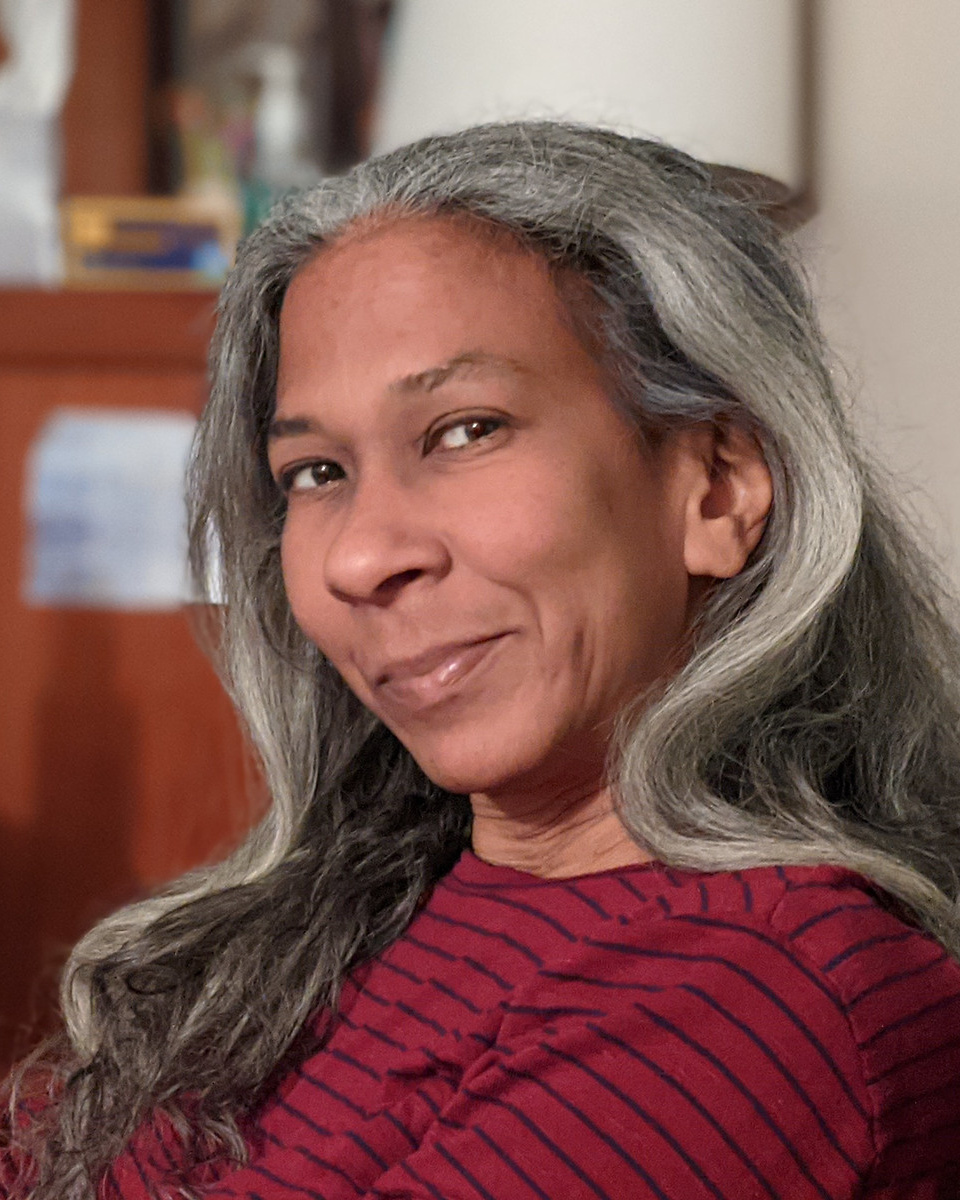


“So that’s really, I think, where if the media insists on focusing on infighting among the Democratic Party, which I also don’t think is helpful nor truthful; it’s really all of the Democrats against Joe Manchin and Kyrsten Sinema.”
Who are Democrats. And assuming King and Sanders would vote to remove the filibuster, and vote otherwise with Democrats, there is not anything at all that Republicans could do to prevent Democrats from passing anything they want. If “the Democrats” [plus King and Sanders] wanted to pass anything, they could do so in one day and there’s not a thing any Republican could do about it.
If you don’t want the media focusing on infighting among Democrats, then you should want Sinema and Manchin kicked out of the party. Until that happens, this and every other boondoggle in Government is 100% the responsibility and fault of Democrats. This is the truth.
p.s. $175 billion a year is a pathetic disgrace. Less than a quarter of the war budget. It isn’t momentous or transformative or anything like FDR or LBJ.
Please stop saying $1.75 trillion. It’s $175 billion. A pathetic pittance and distraction and kicking the can down the road.
This self-contradictory, incoherent narrative (“it’s good, but it’s bad, but it’s a start, but we have to keep pressuring politicians who already promised they would do these things, etc.”) is a perfect illustration of the cul-de-sac of two-party politics. The D-aligned think tanks and professional activists are entirely complicit in this abject failure and they can’t explain it away. But they have to keep spinning this failure as a win, because they can’t face the fact that their attachment to D party commits millions of people to preventable misery.
“We all know that choices have to be made…”
We do? Only because their whole “revolving villian” scam used to consist of Joe, Hillary, Joe… Come to think of it, they’ve pulled this exact same tired ass “Look, over HERE!” “Kick the friggin BALL Charlie Brown!” “Just ignore that man, pulling the knobs and twisting the levers behind the curtain!” since Andy Jackson dun’ took’d all de’ Cherokees’ slaves for his pals?
https://www.dailyposter.com/democrats-betrayals-are-jeopardizing-american-democracy/
https://readsludge.com/2021/08/06/manchin-bailed-out-plant-that-pays-millions-to-his-familys-coal-company/
https://www.resilience.org/stories/2021-11-02/racial-justice-climate-justice-and-capitalism-in-the-u-s-a-contradiction-in-terms/
https://m.youtube.com/watch?v=y6VQJjvNxj4
https://www.propublica.org/article/toxmap-poison-in-the-air#1157308
WOW , I am horrified , of much of the press in America. So many of your OPINIONS are dissing Biden BUT WHY? WHY are you against what is good for the American people??
OMG, look at the criminal work of Trump???? Does ignoring that sell more papers for so many of you?
And NY TIMES, when did you ever advertise so consistently??? No one read one you now? You need to set up a political boxing match here???
Oh wait—it appears that we have no press in the U.S ,as TV, radio etc are limping along. WHY not do your job? There are things Biden should fix, but we need a FREE PRESS NOW with real viewpoints that are backed by research and not just OPINION—
Oh— to so many of you American journalists —–, when did your truths turn into lies and silliness –as America sinks into the corporate slime!
Thank You FAIR for your work, but OMG—where are the journalists in America???????? WE NEED MORE JOURNALISTS interested in CREDIBILITY for a functioning future for all of us in America!