

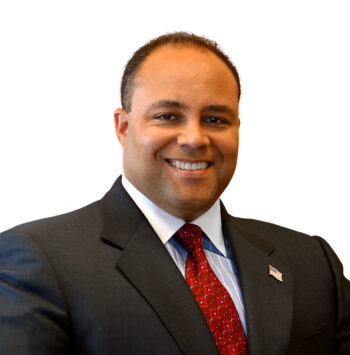
Michael Powell: No more Mercedes divide for him
As chair of the FCC, Michael Powell tried to do for broadband Internet what his father did for Iraq.
One of the first things George W. Bush did after he was installed in the Oval Office was to put the younger Powell, who was fond of saying things like “the oppressor here is regulation” (Washington Post, 1/23/01), in charge of the agency that regulates media. His blithe attitude toward the consequences of his beloved market was perhaps best expressed by his dismissal of concerns over the digital divide (Chicago Tribune, 2/7/01): “You know, I think there’s a Mercedes divide. I’d like to have one; I can’t afford one.”
An industry analyst (Chicago Tribune, 1/24/01), asked what he anticipated from a Powell FCC, said “more of a free-market approach, perhaps less attention to consumer groups and more of letting companies do more of what they want.”
And one of the most critical things that Powell did to let companies do more of what they want was to reclassify broadband cable as an “information service” rather than a “telecommunication service.” Basically, telecommunication services transmit information whereas information services process it. They’re regulated very differently, because while information processors are allowed to process as they see fit, it would be very difficult to have anything like free speech in an advanced technological society if those who controlled the means of transmitting information were allowed to pick and choose what information could be transmitted.
Giving the cable companies more power and control–and hence wealth–was precisely the point of Powell’s reclassification; it’s neither coincidental nor surprising that he’s now the president of the National Cable & Telecommunications Association lobby–a position that no doubt allows him to purchase all the Mercedeses that he desires.
The mischief that Powell did at the FCC lingered on, however, so that even after the commissioners came to realize that treating information equally was a key aspect of the Internet, their attempts to regulate Net Neutrality were rejected by the courts. If cable broadband was an information service, as officially it continued to be deemed, then the FCC was, in effect, telling the cable companies how to process information–something it lacks the authority to do.
That’s why current FCC chair Tom Wheeler’s announcement that he will restore the common-sense classification of broadband as a telecommunication service–making it “Title II,” in regulatory jargon–is such a big deal. As Free Press’ Candace Clement and Matt Wood put it (Common Dreams, 2/4/15):
Title II doesn’t just restore the principles of nondiscrimination that have served as the bedrock of two-way telecommunications policy in the US. It also gives the FCC the authority it needs to preserve universal and affordable access, competition and consumer protections for broadband users. Like Net Neutrality, these foundational principles are at the core of our communications needs for the next century and beyond.
It’s unlikely that Wheeler would have come around on reclassification–he had been pushing a much more corporate-friendly ersatz version of Net Neutrality–without one of the most intense grassroots media activism campaigns in memory. It’s a victory for popular organizing–and a loss for letting companies do whatever they want.





What’s been so interesting to me regarding this discussion and the many different media portrayals of the issue is that “net neutralities” goal is to ensure and insure that the internet remains an open and an even “playing” field..
It seems strange to me that this was painted and portrayed by some business interests and media outlets as negative “regulation”, when net neutralities intent is to not allow certain large businesses from “regulating” the internet for their own monetary gain.
I worry that the Net Neutrality win could be short-lived if Obama’s “trade deal,” the TPP, is passed. Has anyone else looked into this?
http://www.ragingwisdom.com/will-the-net-neutrality-victory-be-wiped-out-by-the-tpp/
@ Robert Oakley.
The FCC classifications ARE REGUALTION. That’s only confusing because the wealthiest and most powerful in American have been waging a 40 year long attack on civil society by means of a campaign to delude people about what is and is not in their best interest. I have a fairly simple rule, if it is in the best interest of a corporation or a wealthy plutocrat, it is almost certainly NOT in my best interest or that of my family and neighbors. We ARE NOT “in this together” and the plutocracy knows this better than most, even if they try hard to convince the rest of us otherwise.
@ wise father
Yes the fight against the TPP is probably the other biggest grassroots campaign of our time..it needs to be won. The TPP, like all other so called “free trade” agreements is an undemocratic POS. A monstrous piece of graft and backdoor skullduggery that needs to be finished off. JOIN THE FIGHT AND SPREAD THE WORD
http://stoptpp.org/
Prime example of corporate owned government. Government for the corporations by the corporations.
When the big corporations and wealthy bought the government and courts, why are we surprised when they used it to their advantage.