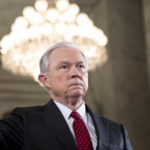
The attorney general-to-be lying to Congress under oath.
When the Washington Post (3/1/17) broke the story of Jeff Sessions meeting with Russia’s ambassador, it framed its scoop to minimize the political damage to the attorney general:
Sessions Met With Russian Envoy Twice Last Year, Encounters He Later Did Not Disclose
But the problem was not that Sessions “did not disclose” his meetings with Ambassador Sergey Kislyak; it’s that he lied about them under oath.
As the Post’s story noted in its sixth paragraph, when asked during his confirmation hearings about contacts between the Trump campaign and the Russian government, Sessions replied, “I have been called a surrogate at a time or two in that campaign and I did not have communications with the Russians”—an unqualified denial of the kind of meetings he now acknowledges that he had.
Given the impact of media perception on DC reality, if the Post had accurately headlined its story “Sessions Lied Under Oath About Meeting With Russians,” he might have faced far more political (not to mention legal) jeopardy—but that kind of forthrightness was reserved for partisan outlets (e.g., Think Progress, 3/2/17).
Likewise, the Post piece reported in the third paragraph that Sessions “has so far resisted calls to recuse himself” from a hypothetical investigation into alleged Russian interference in the 2016 election. In the 22nd paragraph, though, we learned that calls have gone far beyond recusal: “Several Democratic members of the House on Wednesday night called on Sessions to resign from his post”—including House Minority Leader Nancy Pelosi.
It’s a mistake to think that the era of online news has eroded the power of the traditional media establishment. The fact is that with monthly visitors surpassing 80 million, and 90,000 websites linking to it, WashingtonPost.com’s reach far exceeds what the print-only Post ever dreamed of. The spin the outlet that breaks a story puts on that story can be replicated across social media with the speed of a mouse click. And in this case, the spin seemed designed to limit the threat to Sessions’ job—let alone the threat of prosecution for perjury.