

Janine Jackson interviewed Ash-Lee Woodard Henderson about “A Vision for Black Lives” for the August 5, 2016 episode of CounterSpin. This is a lightly edited transcript.

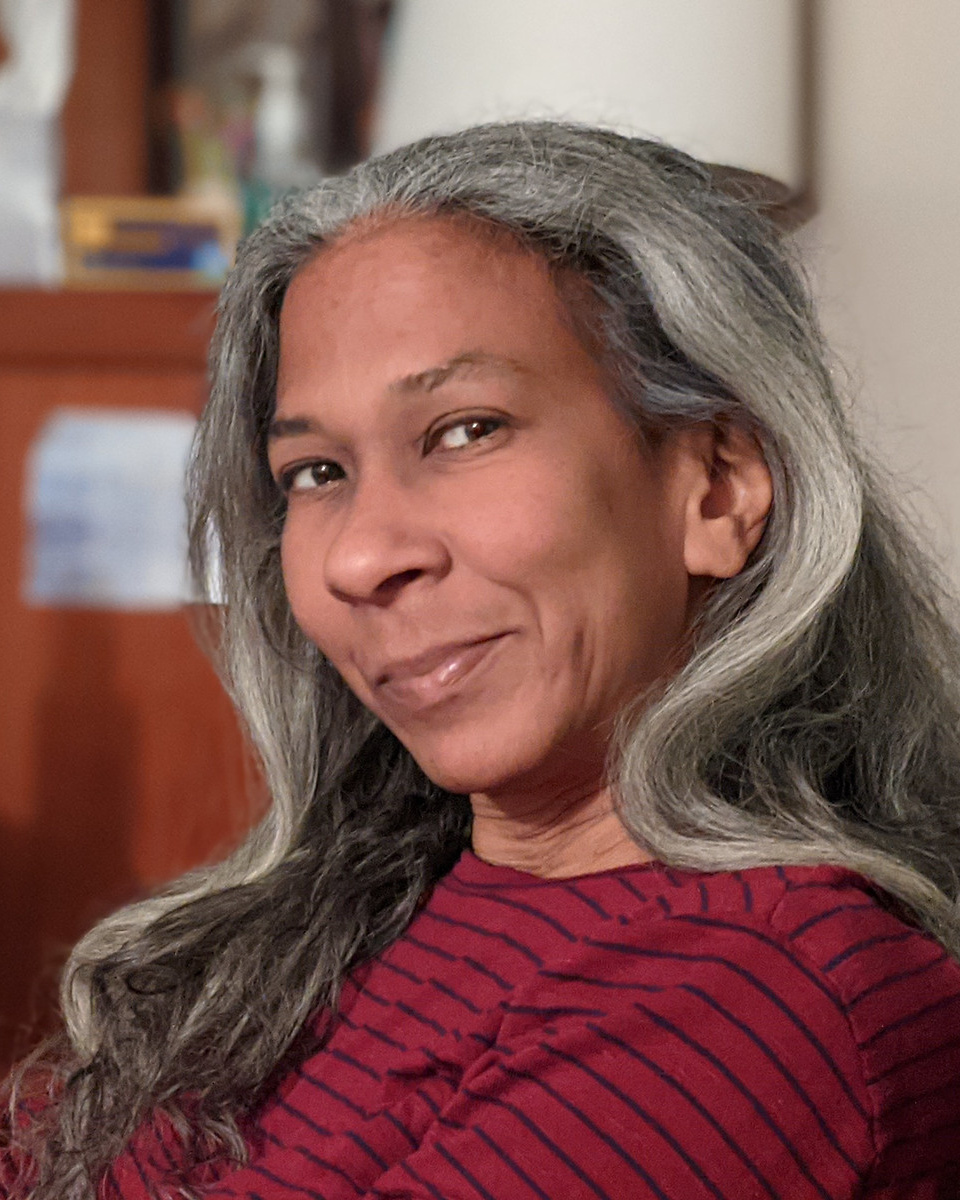
Ash-Lee Woodard Henderson: “We have always said that state violence was bigger than just police murdering black people.” (image: Healthy and Free Tennessee)
[mp3-jplayer tracks=”CounterSpin Ash-Lee Woodard Henderson Interview @https://eadn-wc04-3257648.nxedge.io/audio/counterspin/CounterSpin160805Henderson.mp3″]
Janine Jackson: The constellation of activists fighting racist police violence, especially visibly in the last few years, has seemed to confound corporate media. Who’s really a member of Black Lives Matter? Why isn’t there a single leader? What are they for, and why won’t they channel their concerns through the electoral political system?
Even before the likes of Bill O’Reilly declared that the killings of police officers meant that anti-brutality activists constitute a hate group, media elites have used such questions as reasons to dismiss the Movement for Black Lives as not politically serious. The newly released policy platform, “A Vision for Black Lives: Policy Demands for Black Power, Freedom and Justice,” calls media’s bluff on the idea that they would engage these concerns if only they could see them articulated.
But whatever media do or don’t do, the platform is designed with bigger purposes in mind. Here to tell us more about it is Ash-Lee Woodard Henderson. Ash-Lee is part of the Policy Table Leadership Team of the Movement for Black Lives; she’s a regional organizer with Project South, and with Concerned Citizens for Justice. She joins us now by phone. Welcome to CounterSpin, Ash-Lee Woodard Henderson.
Ash-Lee Woodard Henderson: Hey, thank you.
JJ: What is this platform? Tell us about what went into it and what it does.
AWH: Sure. And thank you again for having us on, so that we could talk about this really transformative document that folks from all over the country and internationally have had conversations about for over a year now. We really created the platform, the “Vision for Black Lives” group, for three key reasons, one being to articulate and elevate a shared set of priorities that reflect the ongoing work of our people, and serve as a tool for groups and individuals that are organizing for dignity and power of black people in the US and abroad. Secondly, we wanted to make sure that we were advancing a radical but really clear vision of the world that we want for our people, and not just for reforms that might be band-aids on the gaping wounds that our communities are facing.
JJ: Right.
AWH: We think that this platform really lays out steps that we can take to get us to the liberated communities that we want, and that we’re trying to build. We’re trying to transform these communities, we’re trying to transform how policy looks in the 21st century, and we do not want a tweaking of these existing systems, or policy changes that don’t address the root causes of the issues that we’re facing.
And then, finally, we really wanted to make sure that we were intervening in the current political moment with an agenda that resists state and corporate power that increases the criminalization and surveillance of our people, who are seeing that happen dramatically across the United States. And we recognize that it’s going to take a grassroots movement to save us, not just individual political parties or candidates.
About a year and some change ago, back in July of 2015, we had a big Movement for Black Lives national convening that you and many of your listeners probably will remember, and we had about 2,000 black people from all over the world show up. And it was really powerful, because we asked if folks wanted to prioritize organizing and base building, if they wanted to prioritize direct action, political education, or talking about policy, creating and fighting for policy change. And what we were told by an overwhelming majority of those people is that they wanted us to prioritize all of them.
JJ: Uh-huh.
AWH: And so we created some strategy sessions within the convening for folks to talk about the different issue areas that they wanted us to be highlighting and lifting as we continued to collectively build — not individually or in silos or individual organizations but collectively as a united front — build in this transformative movement.
And so there was about 2-, 3-, 400 people in the policy strategy session, and they started the process of building the information that is now in this document. Over 30 organizations participated in the initial crafting of it, and I believe we’re at 60 to 80 organizations that signed on to it since. Thousands of people are signing on to endorse it. And really what we did as a leadership team, and then as the full Policy Table, was synthesize all the information that we had heard from people at the convening, that our individual organizations were working on on the ground, either on the local, state or federal levels, and then looked for any gaping holes that we had missed, that people were already doing on the ground.
JJ: Right.
AWH: We by no means think that this policy platform is going to be the one path to liberation, but we definitely believe that it is a strong, holistic first step. And we’re looking forward to continuing to be engaged with communities, as people use this as a tool to fight for really transformative change in their communities and, where we left things out, create even newer documents that are uplifting transformative policies that can be modeled in other communities.
JJ: One of the things that is so powerful about it is the way that it uplifts existing organizations. It’s not about making something new or reinventing the wheel. I think that’s good to know.
AWH: Yeah, absolutely. We clearly don’t want to be alone in this work, and we don’t have to be. And I think the Movement for Black Lives as a whole, and the Policy Table in particular, is a manifestation of that desire. You know, Project South and the Southern Movement Assembly say that we’re stronger together, and it’s not just a slogan, it is a fundamental fact.
 And so we’re seeing that manifested, in the Movement for Black Lives and the Policy Table, in the “Vision for Black Lives.” It would not have been the same document had there not been activists and organizers and lawyers and economists and human rights activists and youth, immigrants—all these different communities of people that were represented by the organizations coming together, representing thousands of black people across the US, and for some of us internationally, to define and articulate a comprehensive visionary agenda.
I think that we have been encouraging more and more people to see themselves as the Movement for Black Lives, right? We have never been trying to create something new. And, in fact, this very platform is a manifestation of ongoing work that’s been happening in the black radical tradition, in the black liberation struggle, before many of us were even born, right? It builds on the legacy of the black radical tradition, including the work of the Black Panther party, the Black Radical Congress, the Black Consciousness Movement out of South Africa, many, many others. And we see ourselves in the tradition of the freedom fighters that came before us.
JJ: Let me just ask you, finally, I saw in one report the platform described as a “pivot away from focusing on racist policing.” It’s not really a ‘pivot away from,’ it seems to me to be a broadening, a connection of that phenomenon, which was so salient, and the focus for many people’s energy and concern, just connecting it to the other things that it’s naturally connected to.
AWH: Yeah, I think that’s right. I mean, we have always said that state violence was bigger than just police murdering black people.
JJ: Right.
AWH: However, we cannot end state-sanctioned violence without dealing with policing in the United States. So, obviously, ending the war on black people, stopping the killing of black people, especially at the hands of police and law enforcement, is critical to this platform.
But we also recognize that even if we stop police brutality tomorrow, there would still be issues that plagued our communities. It’s why we also lift up a call for reparations, it’s why we also lift up divestment from the institutions that criminalize, cage and harm black people, an investment in the education, health and safety of black people. It’s why we call for economic justice for all and a reconstruction of the economy to ensure our communities have collective ownership and not merely access. It’s why we ask for community control of the laws, institutions and police that most impact us. And, in fact, even stronger than asking it, we demand it.
JJ: Uh-huh.
AWH: And then, finally, it’s why we think that it’s so important for there to also be a push for independent black political power and black self-determination in all areas of society. And so again, absolutely, we are still about the work of ending police brutality and state-sanctioned violence in our communities at the hands of law enforcement. But we know that we need a more holistic program to be able to actually see liberation for black people in our lifetime. So there’s about 40 policy demands in the document. Folks can find it at policy.m4bl.org.
And we are encouraging people to engage with it and see it as theirs. It’s a tool for them to be able to take to their grassroots communities, and fight for justice for black people with some concrete transformative demands that we hope will actually change the material conditions of black people in transformative and liberatory ways, and so much that we won’t have to tear them down later. That was actually a really critical piece for us in developing these policies, is that it wouldn’t be things that harmed other people, and that it would transform the way that black people are treated and increase our ability to thrive and live in our full dignity and humanity in the United States.
JJ: We’ve been speaking with Ash-Lee Woodard Henderson from Project South and Concerned Citizens for Justice. Again, you can find the policy platform of the Movement for Black Lives online at policy.m4bl.org. Ash-Lee Woodard Henderson, thank you so much for joining us this week on CounterSpin.
AWH: We appreciate you for having us.


SLAVERY OF BLACK — NOT A WAR ON BLACK
Ash-Lee, in this interview, kept repeating the need for a coming together of the oppressed, but who actually are the oppressed? For Ash-Lee is of the intelligent and educated middle-class, all those black activists who formulated the 40 policy demands are no doubt of the intelligent middle-class, while 99% of the black community in Empire USA are of my low achieving laboring-class.
And as I was a white boy who grew up in the slums of Milwaukee, Minneapolis and LA during World War Two and Korean War, as I experienced hunger and lived among the homeless, as I served in the Vietnam War with my best buddy who was black and finally shipped home in a body bag, I’m afraid that Ash-Lee and I live in two different worlds.
For Ash-Lee is of the privileged upper-half of society that owns all the land and wealth, an oppression that causes the black community and all of the laboring-class to suffer an economical slavery enforced by a terrorizing police state.
For a simple solution would be a law requiring that the minimum wage be raised until 25% of the wealth was owned by the laboring-class lower-half.