

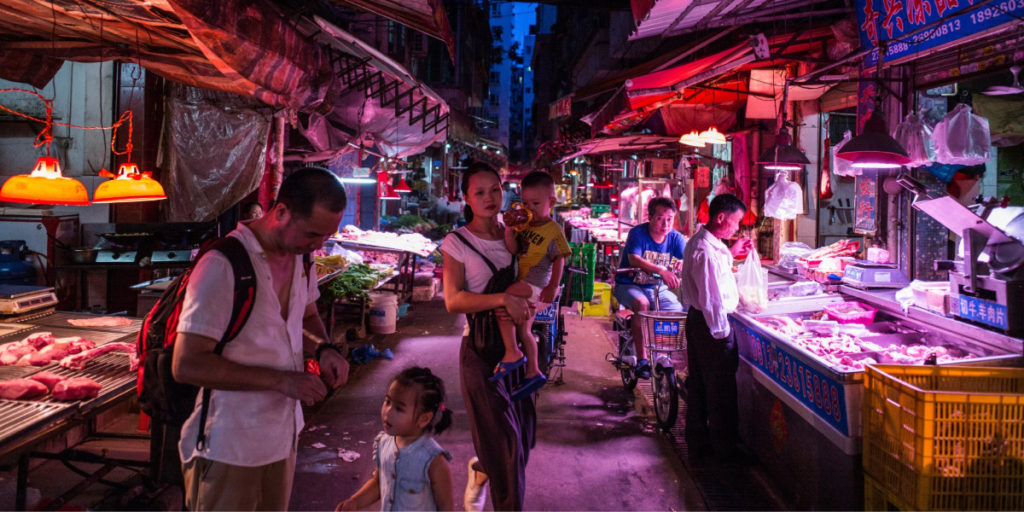
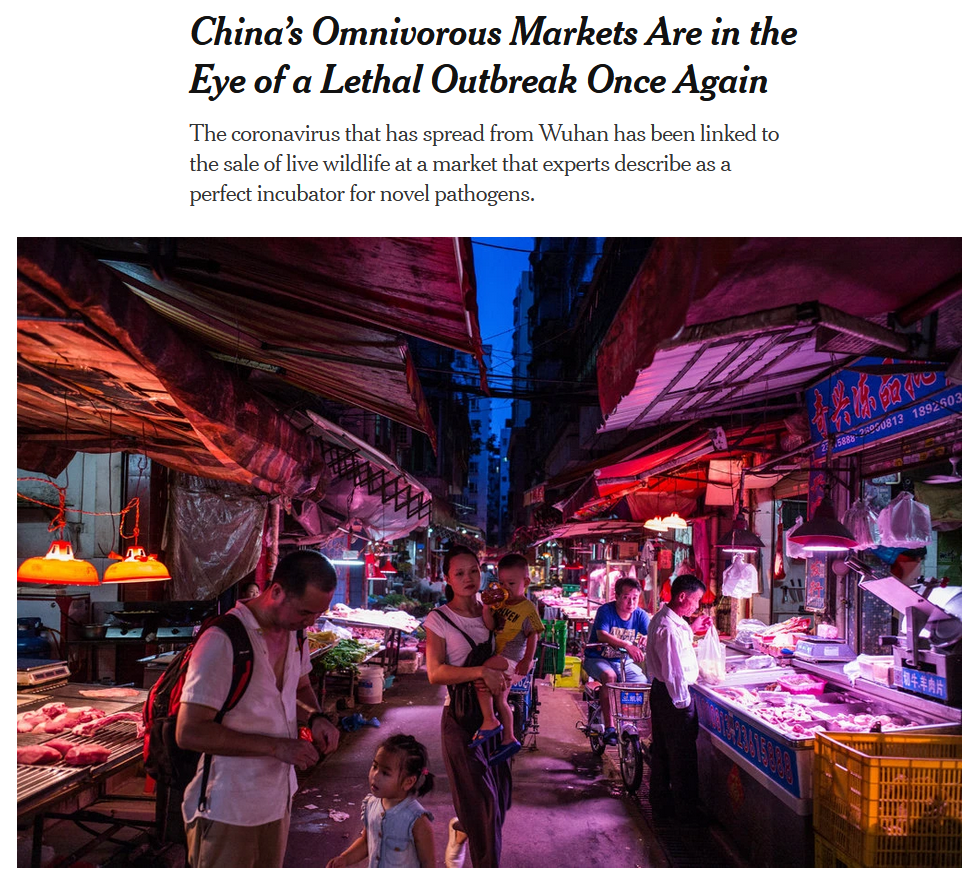
The New York Times (1/25/20) says the eating of unusual animals like turtles and snakes is “driven as much by the desire to flaunt wealth as by a mix of superstition and belief about the health benefits of wildlife.” Whereas people eat frog legs at Coney Island because, well, they like the way they taste.
The stigmatization of Asian people and their culture as “inferior” or “exotic” isn’t a new phenomenon. What is considered acceptable or “strange” meat is often the result of arbitrary cultural norms, and Chinese food has often suffered from hypocritical cultural appropriation once it became popular, before being stigmatized again by racist and propagandistic news coverage following the Covid-19 outbreak (FAIR.org, 3/6/20, 3/24/20). Alongside a spike in hate crimes against Asian people are reports of Asian restaurants and other businesses—especially those owned and run by Chinese people—struggling to survive because of resurging racist stereotypes about “dirty” Chinese eating habits.
As James Palmer noted in Foreign Policy (1/27/20), debunking a widely circulated video of a supposed ordinary Chinese woman in Wuhan biting into a whole bat (the featured woman was the host of an online travel show, eating in the Micronesian nation of Palau), Americans have long branded Chinese people as carriers of disease. For example, in 1854, the New York Tribune wrote that Chinese people were “uncivilized, unclean, filthy beyond all conception.”
And if there’s a reason why it’s widely believed that the novel coronavirus emerged in a Chinese “wet market” in Wuhan, it’s because many of the earliest reports treated this origin theory as fact.
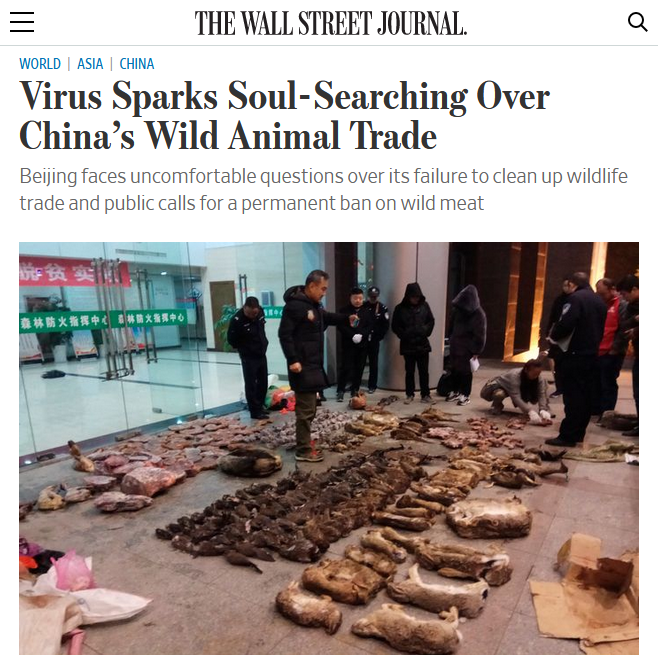
The Wall Street Journal (1/26/20) criticizes China’s “failure to clean up the wildlife trade,” but doesn’t acknowledge that New York City also has a market for exotic meats like wild boar, buffalo, camel, kangaroo, ostrich and emu.
The South China Morning Post (1/22/20) reported that “exotic animals” were “available at a wet market in the central Chinese city of Wuhan that is ground zero of a new virus,” with many of those infected having lived or worked near the Huanan Wholesale Seafood Market, which experts “believe is the source of the virus.” The New York Times’ “China’s Omnivorous Markets Are in the Eye of a Lethal Outbreak Once Again” (1/25/20) reported that “the markets are fixtures in scores of Chinese cities,” and “they are the source of an epidemic.” The Wall Street Journal (1/26/20) reported that the “carcasses and live specimens” found in the Huanan Market are “typical of the wet markets where most people in this country buy their food,” making China a “hot spot for such outbreaks,” with its “long tradition of eating wildlife.”
While the possibility of Covid-19 emerging from these so-called “wet markets” hasn’t been eliminated, it is not at all certain that the virus emerged from these markets. When CNN (4/6/20) interviewed several virus experts for a report on the various origin theories of Covid-19, all of them acknowledged that anyone who claims to know the origins of the outbreak with certainty is “guessing,” with the experts reportedly “at odds” over the “once widely accepted theory that the virus originated at a wet market.”
New information is constantly being updated, and while scientists currently seem confident that the virus initially spilled over from bats, because they’re considered to be natural hosts of coronaviruses, the intermediary animal host (if there is one) is still unidentified. Previous theories about intermediary hosts, like snakes sold in these “wet markets,” have already been abandoned, with more recent theories about anteater-like pangolins serving as the intermediary hosts being dubious, as most of the already-illegal pangolin trade is for their dried scales, where viruses are unlikely to persist.
Early in the outbreak, a Lancet study (1/24/20) found that roughly a third of the first hospitalized patients—13 of 41—had no connection to the Huanan Market that featured so prominently in early reports regarding the timeline of the virus (e.g., Washington Post, 1/26/20; New York Times, 2/1/20), with the first patient having no reported link to the seafood market, as well as there being “no epidemiological link” between “the first patient and later cases.”
When Science magazine (1/26/20) reported on the Lancet’s findings, it noted that if their findings are correct, then the first infections must have occurred in November 2019—if not earlier—because of the incubation time between infection and symptoms surfacing. Although “Patient Zero” has yet to be identified, the South China Morning Post (3/13/20) seemed to confirm this hypothesis when it found that updated Chinese government data has traced the first case of someone in China suffering from Covid-19 symptoms to a 55-year-old resident of Hubei province on November 17, 2019.
All this casts doubt upon the Huanan Market being the source of the outbreak.
Yet one can find op-eds regularly echoing longstanding racist stereotypes in corporate media, seemingly without any knowledge or interest in what these “wet markets” actually are. One journalist formerly based in Shanghai claimed in USA Today (4/8/20) that the “strangest animals for human consumption” to his “Western eyes” were “turtles, snakes and frogs,” before condemning Chinese “cultural traditions of medicine, animal husbandry and culinary tastes” for being a “unique incubator of terrible diseases.” Georgetown professor Bradley Blakeman wrote a patronizing op-ed (The Hill, 4/1/20) arguing that “China’s domestic demand and customs for exotic and live food are a direct threat to the health, safety and welfare of the world,” calling on the world to focus on the “domestic food laws” of countries like China, where they aren’t meeting “standards of health, safety and welfare.”
One can also find articles pointing out the recognizable unsanitary eating habits of Americans (CNN, 8/10/17). Exotic meat like turtles, snakes, frogs, squirrels, camels and alligators can be eaten in the US as well, yet no one is singling the US out for the peculiar eating habits of some Americans. Neither are wildlife markets unique to Asia, as there are 80 slaughterhouses and live animal markets in New York City alone, the current global epicenter of the pandemic.
Corporate media also undermined the epidemiological need to be specific about what species the Huanan Market actually contained, and in what frequency, by relying on montages from different markets across China—with little acknowledgment of when and where these pictures were taken—while omitting the significant variations in cuisine among different regions of a country populated by over 1.3 billion people. A more contextual approach would have informed audiences that wildlife actually isn’t commonly eaten in China—the practice being largely restricted to the southeast region and some towns—with many Chinese people disapproving of the practice as well (one recent poll showing near 97% strong disapproval).
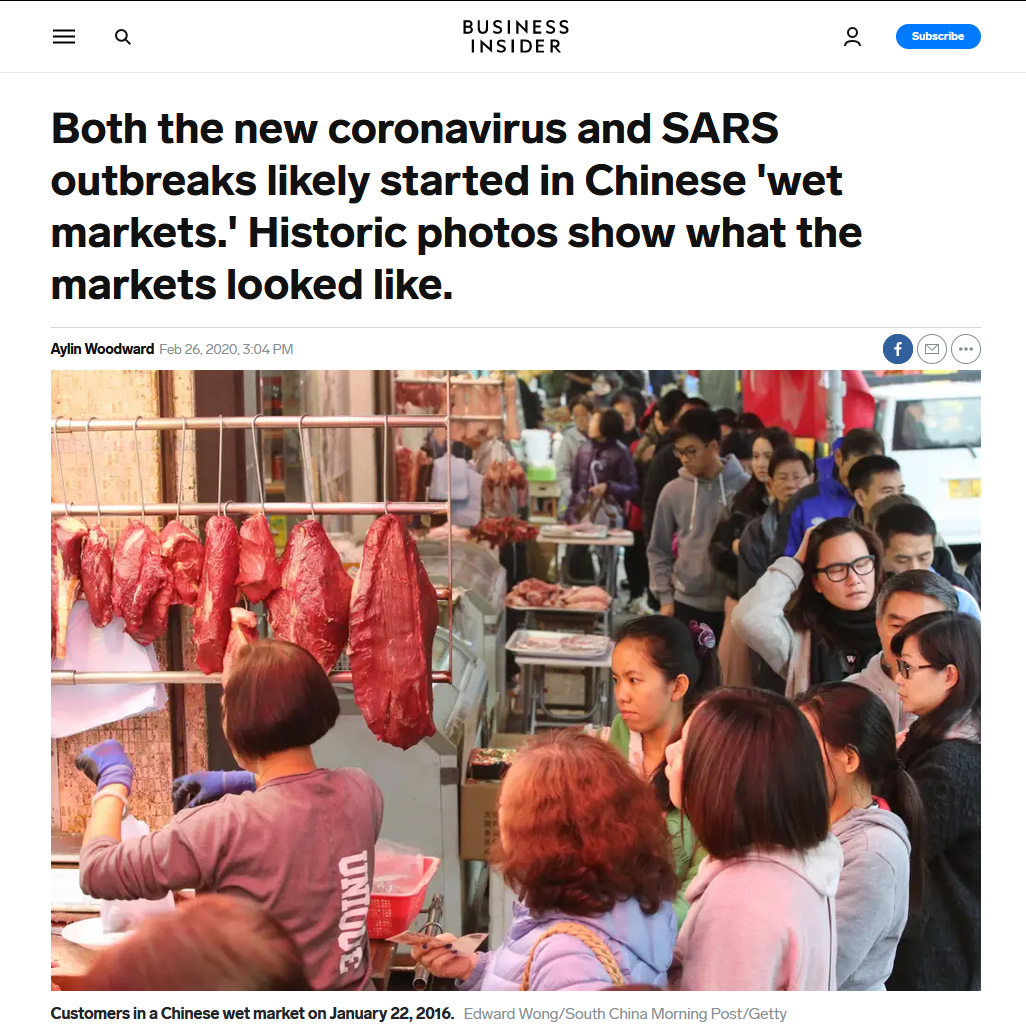
Business Insider (2/26/20) uses the phrase “historic” to justify using photos that are up to 16 years old—along with images from Indonesia, Vietnam and the Philippines.
To maximize shock value, Business Insider’s “Both the New Coronavirus and SARS Outbreaks Likely Started in Chinese ‘Wet Markets.’ Historic Photos Show What the Markets Looked Like” (2/26/20) featured numerous explicit images of wildlife being held in captivity, butchered and sold. Although Business Insider acknowledged that research since the shutdown of the infamous Huanan Market on January 1 has “indicated the market may not have been the origin of the outbreak,” it nevertheless cited sources claiming that these “pandemics” are “more likely to originate in the Far East because of the close contact with live animals [and] the density of the population.” It also needlessly invoked the stereotype of Asians eating dogs, despite its history of being used to justify American colonization, and having no connection to the virus:
Wet markets put people and live and dead animals—dogs, chickens, pigs, snakes, civets and more—in constant close contact. That makes it easy for zoonotic diseases to jump from animals to humans….
Wet markets like Huanan are common in China. They’re called wet markets because vendors often slaughter animals in front of customers.
NPR’s “Why They’re Called ‘Wet Markets’—and What Health Risks They Might Pose” (1/31/20) also featured images designed to stoke horror and distrust of Chinese food and hygiene, when it claimed to explain why “wet markets in mainland China” are “particularly problematic,” and why they’re called that. NPR falsely asserted:
Patients who came down with disease at the end of December all had connections to the Huanan Seafood Market in Wuhan China. The complex of stalls selling live fish, meat and wild animals is known in the region as a “wet market.”
Researchers believe the new virus probably mutated from a coronavirus common in animals and jumped over to humans in the Wuhan bazaar.
I visited the Tai Po wet market in Hong Kong, and it’s quite obvious why the term “wet” is used. Live fish in open tubs splash water all over the floor. The countertops of the stalls are red with blood as fish are gutted and filleted right in front of the customers’ eyes. Live turtles and crustaceans climb over each other in boxes. Melting ice adds to the slush on the floor. There’s lots of water, blood, fish scales and chicken guts. Things are wet.
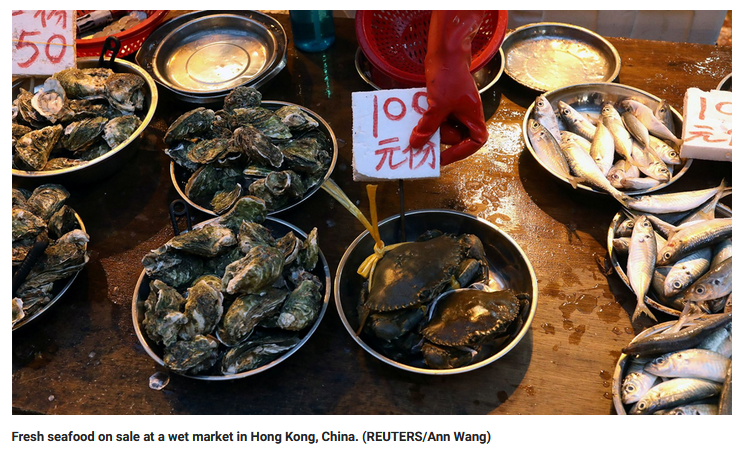
Among the “bizarre, unusual items” Fox News (4/9/20) depicted as being available at Chinese wet markets: fresh seafood.
Although Fox News’s “China’s Wet Markets Can Include these Bizarre, Unusual Items” (4/9/20) also acknowledged that “scientists have not yet determined exactly how the new coronavirus infected people,” it still offered more sensationalist coverage by featuring graphic images of the scandalous items featured for sale in these markets (also featuring dogs):
But these kinds of wet markets, which have long included bizarre and unusual items, are known to operate in not the most sanitary conditions….
“Wet markets,” as defined by the Oxford English Dictionary, are places “for the sale of fresh meat, fish and produce.” They also sell an array of exotic animals.
And like many other “wet markets” in Asia and elsewhere, the animals at the Wuhan market lived in close proximity as they were tied up or stacked in cages.
Despite what these reports claim, “wet markets” are not called that because there’s a lot of blood and water all over the place, where vendors often slaughter animals in front of customers. And neither should “wet markets” be confused with wildlife markets—as many journalists frequently do—since the vast majority of wet markets don’t keep or sell wildlife.
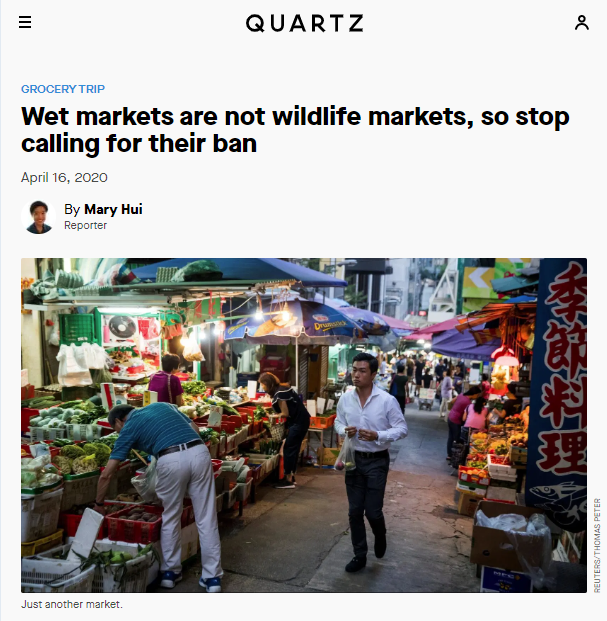
While it’s true that China’s wildlife regulations could be improved, “wet market” is a blanket term used to describe any market that sells fresh produce and other perishable goods in an open air setting. They are called “wet markets” because they don’t primarily sell “dry” nonperishable goods, like packaged noodles found in supermarkets; the “wet” comes from melting ice used to keep seafood fresh, as well as shop owners hosing down their stalls to keep their fresh produce clean (Quartz, 4/16/20).
Media coverage like the above also regularly omits the cultural, nutritional and economic importance of these wet markets for millions of Chinese people (Earth Island Journal, 4/13/20). Wet markets serve an important function by fostering interpersonal relationships, passing down cultural food knowledge, in addition to offering more nutritious food at lower prices for low-income families, compared to the processed food containing higher amounts of salt and sugar found in supermarkets (LA Times, 3/11/20). Although supermarkets now account for about half of all grocery spending in China, the attraction of wet markets is similar to the appeal of Western farmers markets, and the low prevalence of food-borne microbial illnesses in East Asia suggests they aren’t cesspools of disease, but generally do a good job of providing households with affordable and fresh produce (Washington Post, 4/5/20).
More importantly, as anthropologists Christos Lynteris and Lyle Fearnley pointed out (The Conversation, 1/31/20):
Where [wet] markets do contain what many Western media portray as “wild animals,” the majority of these are actually bred and farmed in captivity, such as mallard ducks, frogs or snakes. Only a smaller proportion of animals are actually poached from the wild for sale.
For the sake of argument, even if we were to assume that Covid-19 emerged from the Huanan Market, it still isn’t obvious why China should be blamed for the pandemic. What is perhaps most omitted in the discussion of Chinese wet markets is the perspective of farmers, producers and vendors. Although media reports often marvel at the consumption of wild animals, little is said about why farmers produce them.
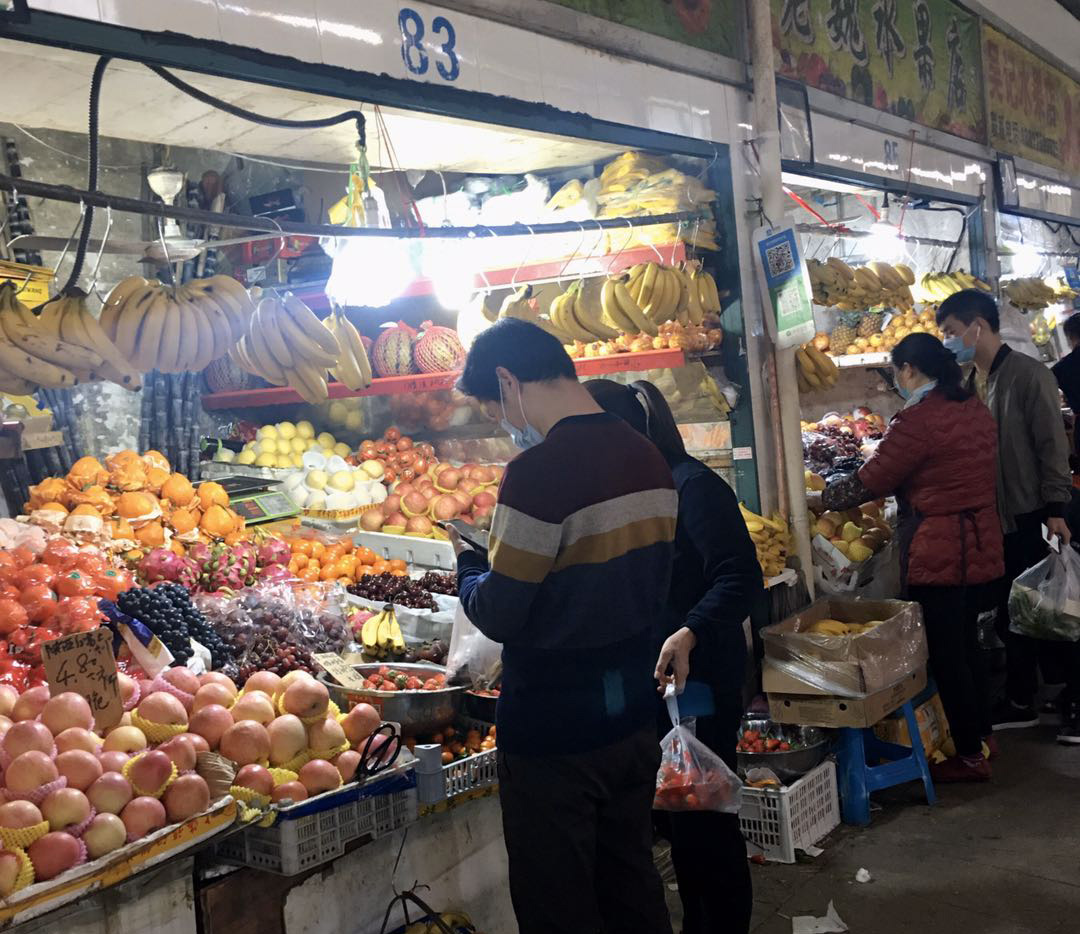
Wet markets “are basically the Eastern equivalent of farmers’ markets, with a congregation of stands and farm suppliers selling you the latest and freshest haul of produce and livestock—at reasonable prices,” Earth Island Journal (4/13/20) reports.
When one investigates why some Chinese farmers engage in the wildlife trade, it’s because the Chinese Communist Party once encouraged the wildlife trade as part of their strategy of state-directed rapid industrialization financed by foreign investment. The Chinese government pursued this path in order to overcome the economic devastation inherited in the aftermath of the Century of Humiliation by Western and Japanese colonialism, as well as to avoid the counterrevolutionary hostility from the US that led to the USSR’s collapse (Monthly Review, 3/31/08). When China industrialized its food production system as part of this strategy—and pushed out smallholding farmers from the livestock industry in the process—some of them turned to the increasingly lucrative wildlife trade encouraged by globalization (and corporate media) to survive.
More astute journalists have already connected the increasing frequency of zoonotic pandemics like Covid-19 to larger systemic causes, rather than offering simplistic and culturally biased condemnations of Chinese hygiene and eating habits. Several have pointed out that Covid-19’s emergence is inseparable from globalization and the ongoing climate crisis, as humans are devastating the natural habitats of many species by altering terrestrial and marine environments, which then increases the nature and frequency of human contact with wildlife harboring diseases. This health and climate crisis is also inseparable from industrial food production and meat-eating habits around the world coming from the cesspools of filth and disease we call factory farms (Al-Jazeera, 3/30/20; Vox, 4/22/20).
So when we read reports condemning China’s pollution and previous encouragement of the wildlife trade (omitting the US’s role and China’s impressive environmental progress), it’s important to keep the complex legacy of colonialism in mind before issuing hasty and hypocritical condemnations. It’s easy to point fingers at Chinese “wet markets” to distract from the US’s failures, but US journalists should prioritize holding their own government accountable, and connecting seemingly isolated issues to larger causes.
Featured image: New York Times depiction (1/25/20) of a wet market in Shenzhen, which is 680 miles from Wuhan (photo: Lam Yik Fei/New York Times).






Our “cesspools” are deemed essential
It’s quite interesting how the American politicians are so willing to blame China—–when the real criminals appear to be Trump, Jared, Pence and Pompeo. Killing the meat company workers appear to be o.k.—– as MITCH wants no corporate liability for their deaths. Did they kill off OSHA already ?
We need a redo , as who wants to live in Serf-America. And so, you strange political people, that while it may be true that an ,”army moves on its stomach, ” it is even more true that, CORPSES do NOT move an economy!
A couple of comments on cultural appropriation:
> Garrison Keillor, I think on his original Prairie Home Companion radio show, once characterized the American way of dining as “standing up in the kitchen, eating out of little white cardboard containers.” While he didn’t specify Chinese food, the image seems quinessential.
> Chinese food (or the mainstream American version of it) is widely loved, but this love is stereotypically associated with Jewish families. Like many stereotypes, it could hold a grain of truth. It was certainly true in my family when I was growing up in Queens, NY, in the 1950s. We kept three sets of dishes: milchig (for dairy), fleishig (for meat), and trayf (non-kosher) for Chinese takeout. Even as a kid, I savored the contradiction. Meanwhile, Jewish comedians always got a laugh with this line: ” Jewish civilization, 5700 years old; Chinese, 4,400 years old. The great mystery: What’d we eat for 1300 years?!”
The solution is simple. Stop eating disease-infested corpses and go vegan/plant-based.
You’re obviously started from an angle , Wet market are the most likely origin so far . Your way of saying it’s ”not eliminated ” is misleading at best https://www.eurosurveillance.org/content/10.2807/1560-7917.ES.2020.25.4.2000058#r4
Corporate Media was never good at reporting science , Sensationalism and clicks is all what they look for . Same with Nuclear related reporting
Again Cho batters the cudgel of “racism” against the heads of FAIR readers with his customary long, long piece that never establishes where this racism lies. Are Chinese wet markets vectors for zoonotic diseases? Possibly in this COVID-19 case, possibly not.
If Cho highlights the poll that has 97% of Chinese people disapproving of wildlife markets in their country, are they, too, racist in their self-disapproval? With all the obvious racism in the US, of world-historical proportions in the past and now, this one case is a thin reed to try to use as a sword to prove full-bore USA-style racism.
Are the Chinese autocratic authorities and the Chinese food inspectors above reproach in this pandemic? If they are not, then let’s establish that there is much more going on than the big R word, and save the ink for actual, existing racism.
I’ve lived in Beijing for 20 years and not once until this year did I hear or read that a typical market was a called a wet market. I speak Chinese fairly fluently. They are called ‘markets’, ‘free markets’, ‘vegetable markets’ and so on on, but ‘wet’, never. As I live in Beijing and have lived here for quite some time, I am most familiar with this part of China but let me tell you that if anything is done in China, it’s also to be found in Beijing as Beijing is a melting pot of people’s, their culture and especially their food from all over China. A typical market is organized as stalls or booths. There are sections for selling fruit, vegetables, meats (all proteins) and also sections where you can buy dried foods such as rice, flour, etc, certain sundries you might find in a grocery store and even a selection of other goods useful about the house or kitchen. In the meat area, you will find mostly pork, some beef and mutton. The most unusal four legged beast you might find is rabbit. The poultry section will have mostly chicken and some duck and goose. Used to be chickens could be bought live, and slaughtered and singed right when purchased, but with fears of bird flu, that practise was mostly discontinued years ago although you still find that same in out of way corners out of the eyes of the authorities. As for fish, Chinese prefer to buy it live when they can and yes, it’s a bit wet, but it’s a small part of the market so there’s certainly no reason to call the whole market ‘wet’ just because one section is. Most of the vegetables and fruits are brought in daily from huge distribution centers that operate day and night. As refrigeration is not common, vegetables and fruits are usually sold that day and discounted just before closing to clear inventories and before the stuff can start to spoil in the summer or freeze in the winter. Meats are also mostly usually just slaughtered that early morning escpecially pork which is by far the biggest seller and what is slaughtered is sold by evening-at least that’s the goal. As far as exotic animals, well, you’re not going to find that at a typical market as there’s no demand. Perhaps in the south, and those are probably specialty markets, maybe one to a large city and certainly not all over the place. As for me, I’ll take a market over the grocery store any day. Foods are fresh, prices are lower and there’s more elbow room. Believe me, shopping in a crowded Chinese grocery store is nothing like wandering down the half empty aisles of a Safeway or the like back in the States. In fact, if we had the same sort of markets in the US, I think many people would be quite pleased. There you go, that’s an eyewitness account. Please keep in mind that most of what you read in the US corporate press is either ignorant, intentionally ignorant, or just a flat out racist lie designed to yank your chain, all the best and to your health, Mike
https://www.youtube.com/watch?v=-OoT2OZWCOI&feature=youtu.be
Bill Maher monologue: Asian live markets & U.S. factory “farms”
And a P.S. – California hosts markets very similar to those in Asia, with animals–both wild and domestic–crammed in together cheek-to-jowl with the human population, a disaster waiting to happen, in cities such as Los Angeles, Oakland, San Jose, San Francisco, Sacramento, et al.
California annually imports some TWO MILLION American bullfrogs, plus an estimated 300,000 freshwater turtles for human consumption. None are native to California, and they are frequently bought and released into local waters, where they prey upon and displace the native species. The bullfrogs are commercially-raised in China, Taiwan, Brazil and Mexico. ALL of the market turtles (mostly red-eared sliders and various softshell species) are taken from the wild in states East of the Rockies, depleting local populations. It needs to stop.
Worse, ALL are diseased and/or parasitized, though it is ILLEGAL to import or sell such products. Some two dozen necropsies on the market frogs & turtles have documented cases of E. coli, salmonella, and pasturella (all potentially fatal in humans), plus cases of giardia, blood parasites, even one case of malaria. The animals are housed in horrendous conditions, often stacked four-and-five deep, without food or water. Many are butchered while fully-conscious. Not acceptable!
Worse, the majority of the bullfrogs test positive for the dreaded chytrid fungus, Batrachochytrium dendrobatidis (Bd), cause of the extinctions of 200+ amphibian species worldwide in recent years.
The issues are three-fold: Environmental protection; animal welfare; risks to public health. The markets are in need of SERIOUS reforms throughout the world At the very least, commerce in wild animals (mammals, birds, reptiles, amphibians) should cease everywhere.
This writer is deluded. Don’t try and claim that anyone who criticises these markets for their disgusting animal cruelty is somehow a racist. Boiling live cats and dogs to death and cramming cages of pets and animals together so that they may poo into one another’s cages is simply wrong and criminal – don’t play the race card.
It is sad that racists insisted ALL wet markets in Asia sell wildlife or exotic animals or sell dog, cat or bat meats. Wildlife markets are NOT the same as wet markets. A fish market is a wet market, so are you going to ban all the fish markets in Europe, US, Japan? How can you get fresh sushi without fresh fish? Are you going to ban Japanese people eating sushi? Racists believe chinese eat dogs when in fact they are all banned in the country ages ago. You seriously think there are no animal protection groups in China out of 1.4b people?
‘Jwod2012’ you’re clearly lacking a few brain cells up in the old head pal. Have a look at the secret video footage that LOCAL undercover journalists (I repeat LOCAL) have taken. How would you like to be boiled to death in a tub of boiling water? No? Didn’t think so but perhaps that where vermin like you belong
Okay but the main problem is the lack of hygiene standards; yes this happens in the US too, but there are people who check up on these things, there are consequences when food safety is found to be less of a priority. When there is nobody checking to make sure hands are washed, and randos are allowed to poke and prod at meat, there becomes a public health issue. Whether or not that itself caused the pandemic, it’s a problem. It’s not racist to say that the chinese government needs better food safety standards and laws, it’s just common sense. I’m worried for the safety of course citizens, not judging their culture.