Breaking News Alerts Keep Public Posted on Trivia and Trump
Media outlets promise comprehensive news alerts about important breaking stories occurring everywhere—but that’s not what subscribers are getting.
FAIR is the national progressive media watchdog group, challenging corporate media bias, spin and misinformation.
FAIR studies explore particular media issues or outlets in-depth, adding hard numbers to debates over media content and journalistic practices.


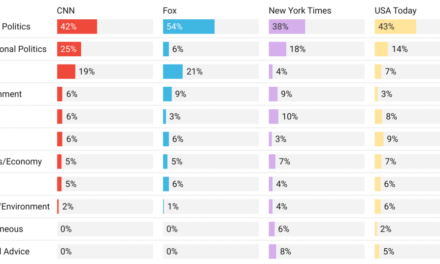
Media outlets promise comprehensive news alerts about important breaking stories occurring everywhere—but that’s not what subscribers are getting.

A new FAIR study finds that media conversations about student-led campus encampments in solidarity with Palestine rarely included students themselves.

A review of six months of New York Times coverage exposes a remarkable selective interest in threats to journalism.
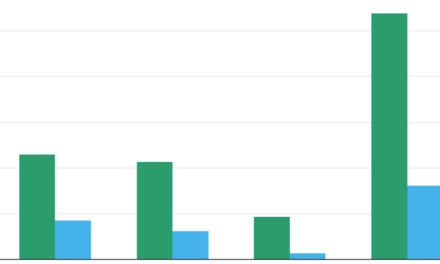
Since October 7, leading papers have overwhelmingly applied the term “brutal” to violence committed by Palestinians rather than by Israelis.

Establishment media in the US were slow to cover South Africa’s charge—initially providing the public with thin to no reporting on the case.

Despite efforts to include Palestinian voices, editors at two leading papers skewed the Gaza debate toward an Israel-centered perspective.

Sunday show guests skewed strongly toward US politicians with strong financial influence from the military industry and pro-Israel advocates.

Cable news coverage of victims, war crimes and context show a double standard when it comes to US allies versus official US enemies.
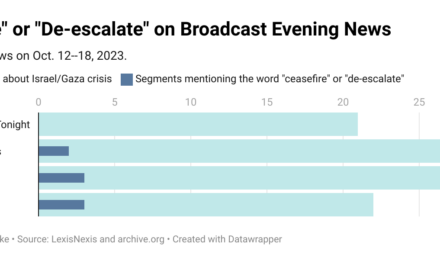
As casualties in Gaza mount, most TV news outlets have paid scant attention to the growing calls for a ceasefire.

On US TV news, viewers were more likely to hear climate denial than the connection between fossil fuel consumption and worsening wildfires.

The New York Times used its front-page coverage primarily to wonder whether trans people’s rights and access to healthcare have gone too far.

The New York Times leaned heavily on official sources when reporting on policing policy—giving the biggest platform to the targets of reform.

News outlets treat cases like Tyre Nichols’ as isolated incidents, lavishing short-term attention that makes the chronic seem exceptional.

If newspapers were concerned about human life, there wouldn’t be such a gap in coverage between Iranian and US-made weapons.

Perspectives that critically examine government actions have been hard to find in New York Times and Wall Street Journal reporting on Ukraine,

NPR failed to call attention to the US policy of starving Afghanistan by restricting its trade activity and seizing its banking reserves.

A Nexis search of ABC, CBS and NBC news programs found not a single mention, even in passing, of the Indian heat wave crisis.

A FAIR study of nightly news shows found a dearth of segments connecting record gas prices to any climate or alternative energy conversation.
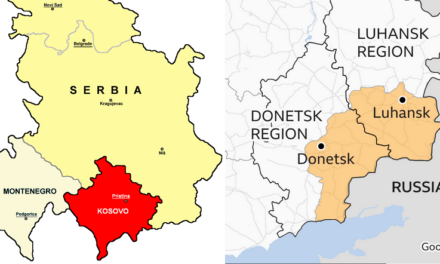
A self-determination claim that accords with Russian interests, and diverges from the US position, is concealed from the public.

Out of 20,000 pieces on recent mass shootings, FAIR found only 37 that linked shootings to toxic masculinity or misogyny.

