Thom Hartmann on Epstein & MAGA, Han Shan (2009) on Ken Saro-Wiwa
To tell this as a tale about two uniquely bad men is a terrible disservice to a story of the systemic criminal victimization of women.
FAIR is the national progressive media watchdog group, challenging corporate media bias, spin and misinformation.


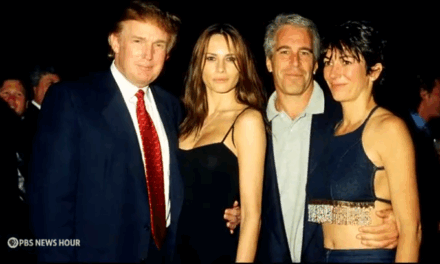
To tell this as a tale about two uniquely bad men is a terrible disservice to a story of the systemic criminal victimization of women.

“The same forces that were at play in the ’60s to remove Lumumba are at play today in terms of keeping the Congolese from advancing.”

A critical lens should extend to Bill Gates, who doesn’t talk about other planets, but has some pretty grandiose ideas about this one.

The African continent as a playing field for white people to test their theories, extract resources and stage proxy wars is time-tested.

Vox had much to say about causes of African conflict, but pointedly left out any reference to the role of US training programs.

Trevor Noah did his best to spin Chinese investment in Africa into neo-colonialism—regardless of the underlying reality.
“We see the centrality of Lumumba to not only post-independence Congo, but a post-independence Africa.”

While corporate media have largely let the water crisis in Flint go, the story isn’t over, nor has justice been served.

“Africa, Africans and descendants of Africans, including in this country, were really made into the Other.”
Apologists for colonialism could always expect New York Times coverage that was inimical to Africa’s aspirations for self-determination.

Racist fables, omissions and hypocrisy have plagued US media’s Africa reporting through history and up to today.

Coverage of Covid-19 in Africa, despite the continent’s relatively low infection rates, is disproportionately grim and macabre.

The “dictator” label is also a powerful cue, used by media to prime the reader to see a particular country or leader a certain way.
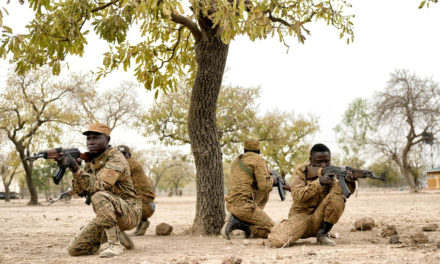
With a report on Russian influence in Africa, the New York Times added to its series of reports depicting Official Enemies surpassing the US in the race for global dominance.

“What Next in Africa?” read a recent Washington Post headline. Among the possible answers not considered by the Post article: “Close US military bases,” “End US drone strikes” or “Stop US special forces raids.”
Ebola is less a story about a bizarre new disease and its unpredictably disastrous capacities, and more a sad old story about poverty and priorities.

CBS presented a very moving and dramatic account of the fight against ebola in Liberia. But no Liberians spoke in the piece.
On the show this week: On the day of his funeral, the New York Times declared that Michael Brown was “no angel.” We look at that and other shoddy reporting from Ferguson. Plus Newsweek spreads farfetched fear about Ebola and African immigrants, and we look at how often union leaders appear on the Sunday chat […]
Newsweek’s cover story is built around the idea that illegally imported “bushmeat”–what we would call “wild game” if it were being eaten in the United States–could carry the deadly Ebola virus.
But is there any evidence that imported meat could actually carry Ebola? On that score, Newsweek comes up empty.

This week on CounterSpin: With the Islamic State, or IS, occupying large swathes of Iraq and Syria, a common refrain from politicians and pundits is to suggest that the group would not be a menace had the US intervened earlier and more deeply in the Syrian civil war. Author and professor Vijay Prashad will join us to address that canard and other misconceptions about Iraq, the US and the Islamic State.
Also on the show: The recent summit of African leaders in Washington DC was criticized by some for soft-pedaling human rights issues, but that only meant in African nations; media seemed to have no question at all about the beneficent goals of the policy of increased ‘investment’ on the continent by US corporations. We have some questions; we’ll ask them of Emira Woods of ThoughtWorks and the Institute for Policy Studies.

