Michael Hiltzik on ‘No One Wants to Work!’
Do elite media have space for people who don’t want to risk their lives for less money than they need to live?
FAIR is the national progressive media watchdog group, challenging corporate media bias, spin and misinformation.


Do elite media have space for people who don’t want to risk their lives for less money than they need to live?

By omitting the devastating impact of sanctions, corporate media attribute sole responsibility for economic and humanitarian conditions to the Venezuelan government, thereby using the misery provoked by sanctions to validate the infliction of even more misery.

To hear corporate media tell it, the most important promise—and the only one they will hold him accountable for—is one Biden never even made: to compromise with the GOP for the sake of compromising.

The $2,000 check is indeed far from a perfect plan to help ordinary Americans, yet if it is the only plan currently on the table, many in corporate media are inclined to leave it there.

“Just as we know that trickle-down, giving money to the rich, doesn’t help—we know long-term unemployment hurts. A lot of the people that are unemployed six, eight, ten months, they may never work again.”
While we await the day that Trump’s face and voice are no longer at the top of every newscast, it ain’t over til it’s over. And harms he does as a lame duck are harms nonetheless.

“The reality that we live in today is not immutable. It is the product of choices, of power dynamics, of motivations of certain sectors over others, a set of priorities that we can shift. And not just in some abstract, pie-in-the-sky, theoretical thinking, but actually right here, right now.”

Steve Wamhoff, director of federal tax policy at the Institute on Taxation and Economic Policy, discusses the takeaways from Trump’s taxes.

While the question of how quickly to reopen will affect potentially millions of lives, equally important is asking what science can tell us about how to reopen.

Covid-related arrears put nearly a quarter of all US households at risk of eviction or foreclosure, according to one estimate (Washington Post, 5/31/20). The poor and people of color are the hardest hit, not just by the novel coronavirus but also by the economic fallout: More than half of lower-income adults say they or someone […]
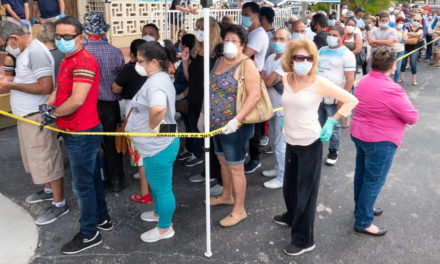
It’s easy enough to find reporting in major US news outlets describing the hardships many Americans are facing. But lamenting inequality is one thing, and acknowledging—or, God forbid, highlighting—efforts to rectify it are very much another for corporate media.
It may be unlikely that the United States will summon the political will to implement a realistic plan for not just delaying, but stopping Covid-19. But it’s crucial for media reporting on options in the fight against the outbreak to distinguish.
It may be unlikely that the United States will summon the political will to implement a realistic plan for not just delaying, but stopping Covid-19. But it’s crucial for media reporting on options in the fight against the outbreak to distinguish.

Ignored by nearly all US news organizations, at least initially, was an explanation that the official unemployment rate was actually incorrect.

When reporters and editorial contributors to the New York Times reiterate the notion that government spending is anathema, or that we need to be worrying about debt even as we fight the coronavirus, we are setting ourselves up for a rerun of the response to the global financial crisis,

It is perhaps not surprising that the view that profits are more important than lives has been treated as a reasonable opinion by corporate media.

For a perfect illustration of how corporate media function as ruling class propaganda, watch how they spin a titanic upward redistribution of wealth as a “rescue plan” for the US economy, and paint a robber baron like US Treasury Secretary Steve Mnuchin as a “savior” of the American public.

Editorial boards and journalists should frame economic and public health problems in more structural and systemic terms going forward as they consider the scope of the pandemic.

“This is really an opportunity to think bigger and think in a bolder way than we have before about what it’s going to take, not just to fill the gaps in our infrastructure that the crisis has so clearly laid bare, but also to think beyond, about what we want our economy to look like.”

“We now have 28 years of experience with Reaganism. The average income of the bottom 90% of Americans is today what it was back in 1980, when you adjust for inflation, and the incomes of the top tenth of 1% and above have gone through the roof. It doesn’t work.”

