Legitimate Targets?
In their zeal to present the war against Yugoslavia as a moral crusade, members of the media sometimes slipped into the logic of ethnic cleansing.
FAIR is the national progressive media watchdog group, challenging corporate media bias, spin and misinformation.


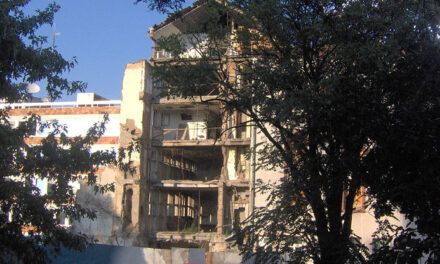
In their zeal to present the war against Yugoslavia as a moral crusade, members of the media sometimes slipped into the logic of ethnic cleansing.
In May, there was a huge break in the story of the recent U.S. missile attack on Sudan. But you’d hardly know it from reading the U.S. press. In a tremendous reversal on the part of the U.S. government, the Treasury Department decided to unfreeze the assets of Saleh Idris, the owner of the El […]
More than 200,000 Guatemalan civilians were killed or disappeared during 36 years of civil war ending in 1996, according to a report from the Guatemalan Historical Clarification Commission released in February. The nine-volume, 3,500-page report found that U.S. assistance was a key factor in human rights violations during the armed conflict. Yet Guatemala’s human rights […]
When the Indonesian government announced in January that it would consider cutting East Timor loose if people there refused its autonomy proposal, reports started surfacing that tensions between pro-Indonesia and pro-independence East Timorese had reached a critical point. Reuters wrote (3/10/99): “President B.J. Habibie…startled the world by suggesting independence as a ‘second option’ if autonomy […]

Jimmy Carter’s reputation has soared lately. Typical of the media spin was a Sept. 20 report on CBS Evening News, lauding Carter’s “remarkable resurgence” as a freelance diplomat. The network reported that “nobody doubts his credibility, or his contacts.” For Jimmy Carter, the pact he negotiated in Haiti is the latest achievement of his long […]
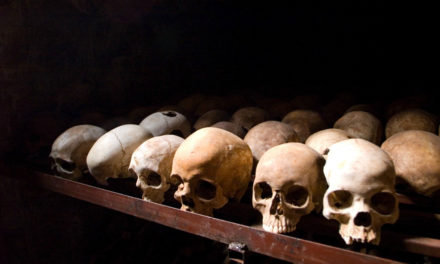
No one–least of all the US government–lifted a finger to stop the slaughter of hundreds of thousands of Rwandans. And US media coverage played along with the Clinton administration’s policy of handwringing.
Imagine that a small country is invaded in 1975 by a powerful neighbor well over 100 times its size, a major recipient of U.S. military and economic aid. About one-third of the population—over 200,000—people die as a result of the invasion, politically created starvation, and the ongoing occupation. Despite the atrocities and numerous U.N. resolutions […]
Question: When does a drought that threatens millions of human lives become news that fits the front page of the New York Times? Answer: When animals die. That’s the rule New York Times editors apparently followed in the week of July 5-12, 1992, when they published five substantial stories in eight days on countries ravaged […]
In September 1987, when Amnesty International issued its annual (1986) report on human rights abuses in 129 nations, it received scant and oversimplified coverage reflecting the anti-Sovietism of the day. Amnesty’s world-spanning report was typically cast in a superpower framework, as US journalists focused on human rights violations in the USSR or in countries out […]
Most mainstream human rights organizations place a de facto priority on questions of physical integrity and violations of political and civil rights. Social and economic rights are addressed only insofar as they have a direct bearing on the political and civil issues; labor organizing, for example, is a form of free association, and restraints on […]
A wave of exhilaration surged through the crowd when the first contingent of Chinese workers joined student hunger strikers in Tiananmen Square. Three thousand students started their protest in May, two days before Soviet leader Mikhail Gorbachev arrived for historic talks with China’s rulers. By the time Gorbachev left Beijing, mass demonstrations had spread to […]
‘The enthusiasm for free-market initiatives and other reforms became the new rationale for turning a blind eye to the continuing repression in China.’
On October 27, 1987, the president of El Salvador’s Human Rights Commission, Herbert Ananya, was assassinated in broad daylight on the streets of the capital. He was the seventh official of the group to be murdered or disappear in the 1980s. The story didn’t make the front page of The New York Times or the […]
The signing of the Central America peace accord in Guatemala City set off a U.S. media reaction that showed once again the extent to which White House assumptions are shared by the national press corps. While some reporters have questioned whether President Reagan sincerely supports the Arias plan, virtually all mainstream media accept the administration’s […]
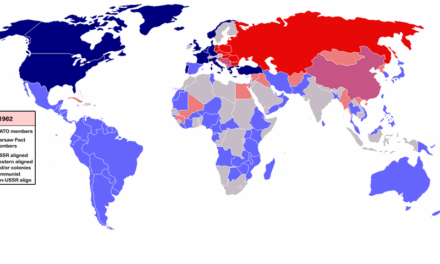
An unbiased press would report events in both superpower blocs without fear or favor.

