‘What Do Americans Think?’—and by ‘Americans,’ We Mean Right-Wing Texans
Media are still trying to turn Trump’s decision into a problem for the party that didn’t launch the unpopular war rather than for the one that did.
FAIR is the national progressive media watchdog group, challenging corporate media bias, spin and misinformation.



Media are still trying to turn Trump’s decision into a problem for the party that didn’t launch the unpopular war rather than for the one that did.

US corporate media tend to humanize Iranians only when they can be portrayed as victims of their own government.
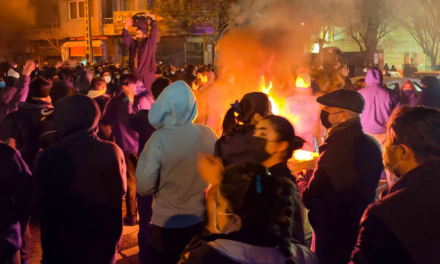
The New York Times and Washington Post offer facile arguments for US attacks on Iran, on the assumption that the US wants to brighten Iranians’ futures.

If US media habitually placed the news in political context, claims of US and Israeli intervention in Iran would hardly be regarded as dubious.

Information from a major hack targeting Israel revealed that Jeffrey Epstein played a significant role in brokering multiple deals for Israeli intelligence.

56% of Americans opposed Trump’s bombing. Why wasn’t this reflected in the range of opinions presented by America’s top press outlets?

“The scope of debate…is not ‘Do we have any legitimacy to be bombing Iran?’ but ‘Is bombing Iran the best way to stop them from enriching uranium?’”
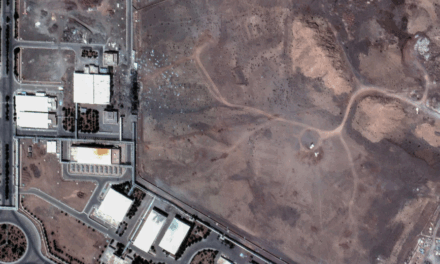
Rather than condemning the US bombing of Iran as a blatant violation of international law, commentators gushed over the “brilliant military operation.”

US corporate media in war mode are a force to reckon with. We do some reckoning with media analyst Adam Johnson.

The ultimate goal of the New York Times editorial was to promote the idea that war with Iran could potentially be desirable—and certainly justifiable.

Israel’s special relationship with the US means it gets special coverage in the US corporate media, presenting its assault on Iran as fundamentally justified.

New York Times columnist Bret Stephens made an overt case for US military intervention to topple Venezuela’s government.

The media hawks are flying high, pushing out bellicose rhetoric on the op-ed pages that seems calculated to whip the public into a war-ready frenzy.

Musk’s Twitter is keeping certain information out of the public view—information that just happens to damage the presidential ticket he supports.

Following Israel’s assassinations of a Hezbollah commander in Beirut and a Hamas negotiator in Tehran, corporate media pundits have called for the US and Israel to escalate the region-wide war.

Please tell the New York Times to correct its false claim that there is no doubt that Iran is pursuing nuclear weapons.

If newspapers were concerned about human life, there wouldn’t be such a gap in coverage between Iranian and US-made weapons.

Once we realize what “stability” and “destabilizing” mean, news from corporate outlets makes much more sense.
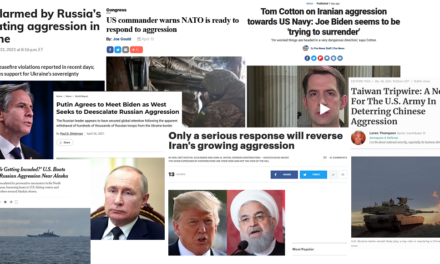
Western corporate media overwhelmingly reserve the word “aggression” for official enemy nations—whether or not it’s warranted. In contrast, US behavior is almost never categorized as aggressive,

With the word “proxy,” corporate media downplay the extent of US interference in other countries, while frequently portraying Iran as undercutting other peoples’ independence.

