Labeling Kidnapping a ‘Capture,’ Media Legitimate Violation of International Law
It’s misleading to use language like “capture” and “arrest,” which evoke the US upholding the law, to describe heavily armed US forces taking Maduro prisoner.
FAIR is the national progressive media watchdog group, challenging corporate media bias, spin and misinformation.


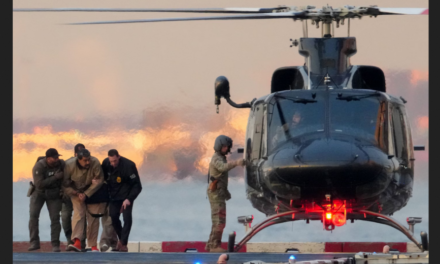
It’s misleading to use language like “capture” and “arrest,” which evoke the US upholding the law, to describe heavily armed US forces taking Maduro prisoner.
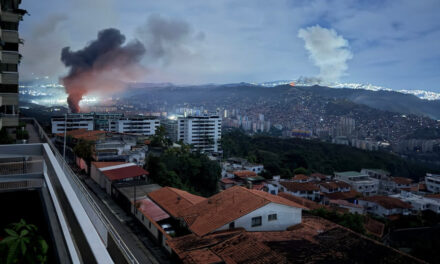
Please ask the New York Times and Washington Post why they failed to report on the Venezuelan invasion and kidnapping when it could have saved lives.

Reporting on the government institution charged with saving us from the Covid pandemic was restricted enough to leave real holes in what we knew. The Centers for Disease Control and Prevention—like many other organizations these days, public and private—prohibits its employees from speaking freely to reporters. At many entities, the rules mean staff members […]

Though it’s right to impugn the whims of Elon Musk, the outrage against Twitter’s labeling policy is highly selective.

Once we realize what “stability” and “destabilizing” mean, news from corporate outlets makes much more sense.

For media to imply that Voice of America or any other organizations under the US Agency for Global Media umbrella are virtuous and independent is categorically dishonest.

While more explicit admissions of deception on the part of US officials involved in wars are always appreciated, one question rarely discussed among the reports and opinion pieces praising the Afghanistan Papers is what this scoop says about the Washington Post.

An Atlantic essay’s main complaint about Chinese propaganda seems to be that Beijing is better at it than Washington.

In their efforts to refrain from using the negative—but accurate—term “coup” to describe events they support, the media have sometimes had to go to bizarre, roundabout and garbled lengths to dance around it.

It is virtually an iron law of journalism that descriptions of US government-friendly groups will be designed to signal readers that they deserve support.

The US government and its allies are effectively using the platform to silence dissenting opinion, both at home and on the world stage, controlling what Facebook‘s 2 billion users see and do not see.
That these two US government creations, along with a NATO offshoot like the Atlantic Council, are used by Facebook to distinguish real from fake news is effectively state censorship.

“Over a period of time, it became clear to most working journalists, especially in Washington, that their careers were not well-served by trying to maintain the high standards of journalism—that is, really seeking the truth, questioning those in power and those trying to sell them these lines—it became easier to go along with it.”

“One could argue that independent media is more powerful today, progressive independent media, than it was during the height of the New Left in the late ’60s and ’70s.”

Some perspective on the impact of Trump’s decision to “recognize” Jerusalem as the capital of Israel–apart from what it means for “Trump on the World Stage,”

When you have arguably the US’s most prestigious for-profit media outlet describing government propaganda as “efforts to counter propaganda,” it’s pretty clear that the nation’s demand for propaganda is going to be met–whether by the public or the private sector.

Seemingly out of nowhere, North Korea became the top news story at the beginning of April. Tensions between the United States and North Korea were on the rise after new supreme leader Kim Jong Un conducted several missile and weapons tests, beginning at the end of 2012. The threats, bluster and provocations that followed led […]
Venezuela’s left-wing populist President Hugo Chávez died on Tuesday, March 5, after a two-year battle with cancer. If world leaders were judged by the sheer volume of corporate media vitriol and misinformation about their policies, Chávez would be in a class of his own. Shortly after Chávez won his first election in 1998, the U.S. […]

Withholding important news over supposed national security concerns is nothing new. And in many cases, no official request is even needed—the decision-makers seem to have internalized the notion that keeping the government’s secrets is part of their job.

Issues like oil spills, land use rights, groundwater pollution etc. are all complaints made by critics of the Keystone XL pipeline. And looming over all of them is the way that tapping the tar sands will exacerbate climate change. But the media doesn’t seem to care.

