A Cop Killed a Black Man—Then Things Got ‘Ugly’
Some might say that the turn toward ugliness occurred in the afternoon, when a police officer fatally shot a black man.
FAIR is the national progressive media watchdog group, challenging corporate media bias, spin and misinformation.


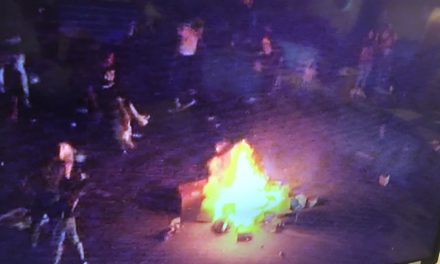
Some might say that the turn toward ugliness occurred in the afternoon, when a police officer fatally shot a black man.
“Public safety agencies…perceive any threat to their own political power as analogous to a threat to public safety. And that exactly, of course, precisely gets the relationship wrong, because the people who are capturing police violence on video, they are the ones enhancing public safety here.”

“The media will talk about someone with mental illness, but it’s often in a way that blames the mental illness for the eventual force used against them.”

The disability community is routinely marginalized in the media, making it hard to address the frequency with which law enforcement’s use of force involves people with disabilities.
“What’s needed is something that really asks, why have we so dramatically expanded the role for police, and why are we so heavily targeting poor and minority communities for this kind of intensive and invasive policing?”

Media insist there is “nationwide soul-searching” going on on the problem of racist police brutality. Certainly there is pain and anger, but when it comes time to talk about how to change things, corporate media don’t seem to have a great deal to say.
“Copspeak” — the jargon used by police departments — is internalized by journalists covering police violence, and it affects the public’s perception of crime and police brutality.

Broken Windows enjoyed, for many years, a reputation as public safety gospel and the miracle solution to New York’s crime-ridden past. But now a report by the New York Police Department’s inspector general’s office has undermined the premise of the city’s famed crime-fighting philosophy
“Justice Sotomayor takes issue not just with the result in the Strief opinion, but with the results in a range of Fourth Amendment opinions…. The Fourth Amendment hasn’t been interpreted in a manner that allows for courts to respond to the realities of policing in minority communities.”

Max Blumenthal and Sarah Lazare, writing for AlterNet about the refusal of Orlando police to release 911 transcripts from the Pulse massacre, quoted FAIR’s Jim Naureckas on the power of police leaks.
“To the extent that there is violence, community members wanted an approach that really steered people away and got at root causes. And they were continually ignored, over and over. And so what they got instead from the city was a giant raid, because that’s what the city understands, that’s what the police department understands.”

Last week, New York City police officers arrested four well-known activists for filming them. Copwatchers—people who regularly film and document police activity—have often been targeted by cops who don’t want to be recorded, despite reminders that recording police interactions is legal in the city. While legal protections for filming police are still unclear in some […]

The police reform conversation, pushed into the national consciousness through mass protests and acts of civil disobedience by everyday people, was steered toward the theme of “community policing” by establishment figures—with the help of the media.
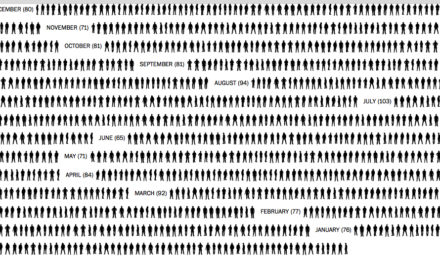
The Washington Post’s tally of fatal police shootings in 2015 is a journalistic accomplishment. But it’s hard to escape the feeling that the Post framed its report to minimize its remarkable findings.
“We have in this society, around issues of race, an extraordinary ability to know things and not know things at the same time…. I think journalists have a critical role in sort of disabling…those strategies of denial.”
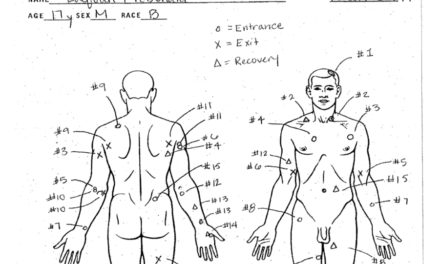
The video that belied the official story of the police killing of 17-year-old Laquan McDonald, along with an autopsy that also showed police’s initial story to be false, eventually came to light through the work of journalists—but not mainstream journalists;

Daniel Holtzclaw evidently selected his victims because he believed no one would care about them. Media shouldn’t prove him right.

“The moment this becomes a law enforcement issue, that becomes the moment where the student’s future is placed at risk. And that means our institutions are underserving students.”
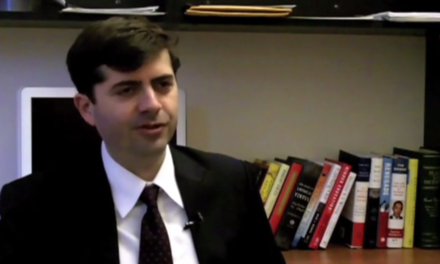
“There is a very hard-wired tendency among Americans in general, and liberals in particular, to think that even when things are going wrong, that the law is good and fundamentally on our side. That the law is synonymous with justice.”
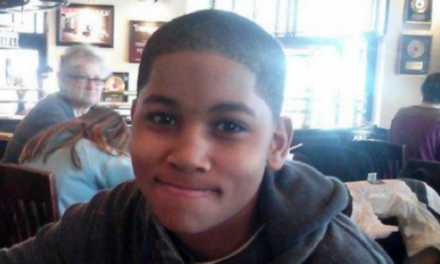
It looks unlikely that the officer, Timothy Loehmann, who shot 12-year-old Tamir Rice will face any prosecution at all for the killing. If the justice system won’t bring justice, what could?

