And Now, Our Expert on Africa… US Billionaire Michael Bloomberg
African leaders are in DC for a big summit, so CBS Face the Nation turns to noted Africa expert…Michael Bloomberg?
FAIR is the national progressive media watchdog group, challenging corporate media bias, spin and misinformation.


African leaders are in DC for a big summit, so CBS Face the Nation turns to noted Africa expert…Michael Bloomberg?
When the Washington Post’s David Ignatius writes a column headlined “Putin Steals the CIA’s Playbook on Anti-Soviet Covert Operations,” is that supposed to be a criticism or a compliment?
U.S. media coverage of Nelson Mandela’s legacy celebrates the late icon’s forgiveness. But one area that gets relatively little attention is US support for the racist government Mandela fought against.
In his obituary for Nelson Mandela, the Times’ Bill Keller went into detail about Mandela’s armed efforts to overthrow the apartheid state–seemingly in an effort to belittle them.
George W. Bush doesn’t speak to the press much, but based on the fawning treatment he got from ABC News’ Jonathan Karl, he might want to re-consider.
The record of the U.S. government’s support for authoritarian, corrupt and/or murderous regimes is not really up for debate. The only question is whether one believes that the U.S. extends such support despite a deep-seated preference for democratic rule and human rights.

The French military commenced Operation Serval against separatist rebels in Northern Mali on January 11, 2013. The air and ground intervention was undertaken with the cooperation and support of the United States, as well as several European and African states. U.S. press reporting has provided a simplistic account of the intervention as a heroic effort […]
It was not altogether surprising to see a headline in the New York Times, “Leader of Vote Count in Kenya Faces U.S. With Tough Choices.” The “tough choice” is apparently that the candidate in the lead, Uhuru Kenyatta, has a terrible human rights record.

What’s missing from the Mali storyline? And what is the likely impact of this latest military action on the Malian people? CounterSpin talks to Emira Woods from the Institute for Policy Studies. And Barack Obama’s nomination for Treasury Secretary, Jack Lew, has been celebrated in the financial community and corporate media. William Black joins us to talk about how the Lew nomination is just another brick in the Wall Street on the Potomac.
There’s nothing quite like the demise of a U.S-allied dictator to get the Paper of Record talking about the “clash” between U.S. “ideals” and the actual policies the country carries out. Today’s New York Times (8/22/12) carries the headline “Ethiopian Leader’s Death Highlights Gap Between U.S. Interests and Ideals,” under which Jeffrey Gettleman lays out […]
The viral video Kony 2012, a call by the U.S.-based group Invisible Children to “make famous” the brutal African warlord Joseph Kony and capture him through military action, has been seen by an unprecedented 87 million people, according to YouTube. The video has come under fire for inaccuracy and for what many see as a […]

[mp3-jplayer tracks=”CounterSpin102811 John Feffer and Heidi Garrett Peltier @https://eadn-wc04-3257648.nxedge.io/audio/counterspin/CounterSpin102811.mp3″] Download MP3 This week on CounterSpin: When Barack Obama ordered armed military advisors to central Africa to help regional officials fight the brutal Lord’s Resistance Army and its leader Joseph Kony, few journalists asked why or why now. The fact that the LRA is bad seemed […]
Drudge Report headline, right now: CLAIM: Iran Arranging to Buy Yellowcake in Africa… Is my computer a time machine, traveling back to 2002-03?
Reporting on variousWhite House personnel changes, specifically the idea that Clinton administration veteran Gene Sperlingwill soon head the National Economic Council, the New York Times explains (1/6/11): Mr. Sperling, much like Mr. Obama, is a liberal but with a pragmatic bent. “Pragmatic,” in corporate media code, means “centrist,” because it’s an article of faith in […]
Time’s Alex Perry, the magazine’s Africa bureau chief, responded in the FAIR Blog comments section to FAIR’s Julie Hollar, who recently (FAIR Blog, 6/25/10) criticized Perry for neglecting to mention the U.S. and Belgium’s role in propping up the Mobutu regime in Congo. Perry said: The idea that the U.S. created Mobutu and maintained him […]
In his May 23 column–“Moonshine or the Kids?”–New York Times columnist Nick Kristof has hit upon the “simplest option” for keeping poor African kids in school (and ending malaria): getting their fathers to stop drinking, smoking and whoring. There’s an ugly secret of global poverty, one rarely acknowledged by aid groups or U.N. reports. It’s […]
NBC reporter Ann Curry’s fawning interview with actor Ben Affleck (NBC Nightly News, 5/19/10), about his celebrity activist work in the Congo, is downright embarrassing: CURRY: Why do you pick the place that people think is actually one of the worst places in terms of the number of atrocities, in terms of the level of […]
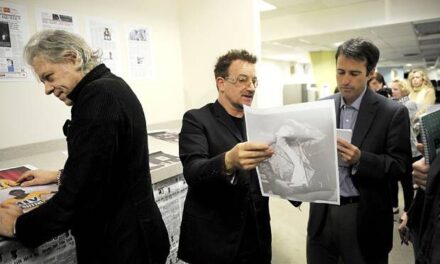
Canada’s Globe and Mail decided to do a special issue on Africa this Monday, and who better to guest edit than Bono and Bob Geldof? There’s a piece about their day at the paper that’s truly absurd. Here’s the section on “Opinion Pages”: They move back to the meeting table to discuss more content […]
Thomas Rogers of Salon‘s Broadsheet (9/10/09, ad-viewing required) reports that world champion South African runner Caster Semenya recently “was tested (possibly without her consent) by the International Association of Athletics Federations” and “now the results of her gender testing have leaked, and, if the reports are to be believed, they show that she is, in […]
Eighteen-year-old Caster Semenya, a runner from South Africa, just blew away the competition in the women’s 800-meter world championship race. But the news reports yesterday weren’t about that–they were about whether she’s “really” a woman or not. And supposedly serious outlets like the AP and CNN are sinking to tabloid levels of coverage on the […]

