NYT Apologies Depend on Whose Lives Are Distorted
The New York Times didn’t apologize when the paper was criticized for misrepresenting the lives, not of couples in an upper-middle-class suburb, but of impoverished food-stamp recipients.
FAIR is the national progressive media watchdog group, challenging corporate media bias, spin and misinformation.



The New York Times didn’t apologize when the paper was criticized for misrepresenting the lives, not of couples in an upper-middle-class suburb, but of impoverished food-stamp recipients.

Unmoored for commercial reasons from any hard and fast standards for what constitutes a fact, media factologists are free to follow their own political whims (or those of their outlets). Which seems to be what’s going on in a recent Washington Post factchecking effort by Glenn Kessler, “Bernie Sanders’ Claim That ‘36,000 People Will Die Yearly’ if Obamacare Is Repealed.”

The New York Times minimizes Keystone’s impact on the climate, in the service of false balance and downplaying the impact of Trump’s anti-environmental moves.

The New York Times asserted after Trump’s inauguration, “It remains an open question whether he will continue to be the relentless populist who was on display on Friday.” But looking at Trump’s nominations and appointments, it’s hard to discern any signs of populism whatsoever.

Why is it so important to corporate media commentators that presidential legitimacy not be questioned? By and large, they are part of and identify with an establishment whose fragility is all too evident.

Given the paper of record’s strenuous downplaying of the 2001 inaugural protests in the name of “Tradition and Legitimacy,” it’s not surprising that 16 years later, the paper’s reporters remember those protests as being “modest.”

Given that the report’s allegations were driving criminal investigations, affecting inter- and intra-party battles and were claimed to have the potential to “affect national security,” it’s hard to argue that the public was better off left in the dark until the powers that be get to the bottom of it.

To ignore the fact that taxes generally flow from the metropolitan centers to the hinterlands, in an effort to justify a fantasy of rural grievance, is frankly poisonous.

One almost gets the sense that editors writing headlines like these have enlisted themselves on the sheriff’s team, waving spectators away with a “nothing to see here, folks.”

Stephen Bannon has called his Breitbart website “the platform for the alt-right.” How does one go about providing a platform for a white supremacist movement?

In a properly functioning media system, Gladwell argues, the purpose of leaks is to fool people into accepting government indoctrination—and it would be a shame if that system were to break down.

The New York Times offers Democrats a strategy that goes after rural, whiter, more conservative voters—presumably by being more conservative—vs. a strategy of counting on demographics to deliver victory to a party focused on social and environmental issues.

If the Hollywood Reporter was planning to be asking questions like, “How do you approach different ethnicities and cultures in animation?” you’d think it would try to get to get some kind of diversity in its panel of animation directors.

It would be nice if Morning Edition could get someone to discuss Trump’s Homeland Security pick who didn’t believe exploiting immigrants was necessary for Americans to be able to afford food.

So who do we blame for Trump—the age group that voted for Clinton by the widest margin, or the ones that voted for Trump? If you’re the Washington Post, the biggest Clinton backers are responsible for Trump, naturally.

It seems likely that the omission of Frank Bruni’s name—a familiar one, of course, to regular readers of the New York Times op-ed page—was a deliberate choice.

President Trump, like any president henceforth, will start off his administration with all the tools he needs to establish an authoritarian regime. And any impulse to do so will no doubt be facilitated by an elite press corps.
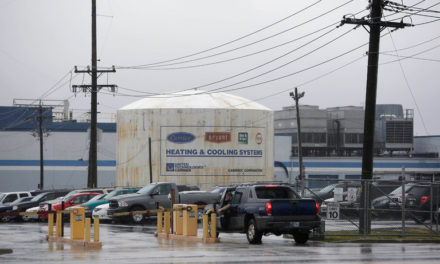
The Carrier debate provides a microcosm of the media debate over jobs in the 2016 election season: On the one hand, sweeping promises to bring jobs back based on pandering to corporations, and on the other hand fatalistic assurances that there’s no way to bring jobs back.

In the wake of a disastrous Election Day, does the Democratic Party need to present economic policies that have more to offer the majority of voters? Don’t bother, argues New York Times columnist Paul Krugman.

The New York Times gets a failing grade for its headline over a report on escalating police violence against Native American activists and others defending the Missouri River against the Dakota Access Pipeline.

