

Janine Jackson interviewed Jamila Michener on expanding voting rights for the June 24, 2016, episode of CounterSpin. This is a lightly edited transcript.

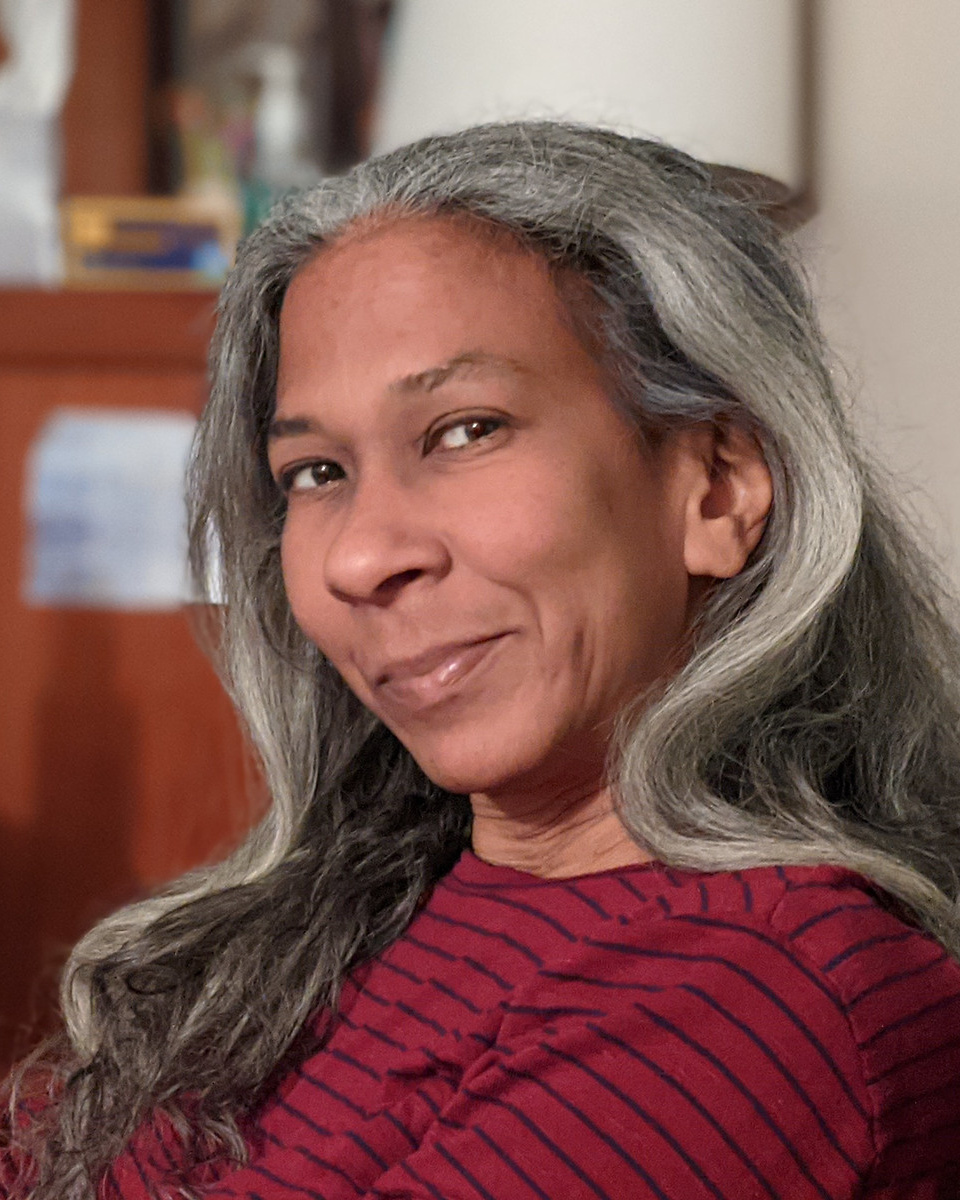
Jamila Michener: “There’s this cycle where the people whom the policies affect most acutely are not having a voice in the political process that produces those policies.” (photo: Frank DiMeo)
Janine Jackson: Judging by the amount of coverage alone, you’d have to assume that corporate media take elections extremely seriously. But if journalists believe so strongly in the electoral process, why aren’t they more interested in efforts to expand participation in it? Higher voting turnouts would serve, one would think, to justify media’s implied premise that elections merit attention as a legitimate, if flawed, reflection of the public interest and will.
Jamila Michener is assistant professor in the Department of Government at Cornell, working on the politics of poverty and racial inequality in the United States. She joins us now by phone. Welcome to CounterSpin, Jamila Michener.
Jamila Michener: Thank you.
JJ: Well, your piece on American Prospect’s website is headlined “Playing Offense on Voting Rights.” It’s based on the paper “Race, Poverty and the Redistribution of Voting Rights,” which appears in the June issue of the Journal of Poverty and Public Policy. Listeners will know there are things for voting rights advocates to defend against. We’re seeing restrictions around, for example, ID requirements that were greenlighted by the Supreme Court’s weakening of the Voting Rights Act. You’re not saying, don’t do that defense, but just that it’s a mistake to stop there?
JM: Absolutely. The defense is clearly critical in the particular political milieu that we’re in, but there’s a lot more to thinking about voting rights than that. Part of the reason why offense is really important is because, right now, participation in our democracy is really skewed, and there are specific populations that are marginal: Low-income folk, folks who have disabilities, people of color who are both affected by policies in specific ways that make them more vulnerable, and who participate sometimes, in some cases, less in the political process. And so there’s this cycle where the people whom the policies affect most acutely are not having a voice in the political process that produces those policies, and that’s a problem.
JJ: It’s almost like a self-tightening knot.
JM: Yes.
JJ: Well, this has been recognized, and it’s led to the creation of a couple of tools. The question your work suggests has to do, in part at least, with implementation.
JM: Yes. So this is really important. I’m always astonished, in just my regular, everyday conversations with people, that when I talk about legislative tools that we have for increasing participation in the political system that there‘s not as widespread knowledge of these as I think there should be. And so when I mention the National Voter Registration Act to people, first of all they’re amazed that anything like this could ever have passed. But the 1990s were a different time, when Congress was doing more, for better or worse, than they’re doing now.
And Section 5 is the motor voter component that lots of people know about, it’s the reason why when you go to the DMV you’re asked to vote. But Section 7 is a component that very few people know, that the same thing is supposed to happen when you go to public assistance agencies. You’re supposed to be asked to vote when you apply for food assistance, when you apply for medical assistance, for any sort of aid from the government.
And although it’s supposed to happen, all of the evidence that we have suggests that it’s not happening, and that some states are worse perpetrators, worse at complying with this law. What my research focuses on is why: Why wouldn’t states comply with a law that’s supposed to make our democracy better?
JJ: Well, I think as you describe who it would be reaching out to and including, listeners can start to think of reasons that people might not necessarily want to—not to be too cynical—but to include those folks. But let’s talk because it is—it might be something people would guess about, but you’ve actually looked at, you know, what does compliance look like and what are the different factors that seem to affect compliance with Section 7. And what did you find?
JM: I thought precisely in the way that you just outlined, which is, well, who’s going to be brought into the electorate by this law? And the answer is low-income people, people living in poverty; because of the intersection between race and poverty, disproportionately people of color; and also, because many people who have disabilities and who have other life challenges interact with government agencies, those folks. And so in particular around race and poverty, I thought, well, there are political implications to bringing low-income people and people of color into the electorate.
So I paid a lot of attention to what role race played in the process. And so I found ways of measuring the extent to which states were complying with this law. And there was a lot of variation across states and even over time, but the states that were doing the worst were the states that had the largest share of their population that was black. So states that had many African-Americans relative to other racial groups actually did a consistently worse job of complying.
And also states where not just the population consisted of African-Americans, but when African-Americans and other folks of color did not participate in politics. So when they didn’t have as much political power, when they weren’t registered to vote at high rates relative to whites in that state, that’s when it appears that there was very little accountability and very little effort on the part of political elites to comply with this law.
JJ: I’ve seen some scoffing at proactive registration efforts, and not just a line that, oh, it’s just Democrats who believe in big government, which ties in of course with the Section 7 stuff. But also this idea, represented by a letter to the editor in the Eagle Tribune, I think in Wichita, Kansas [actually New England—ed.], that said, well, “why not go all the way and have the state cast their votes for them?”
It’s this idea that voting is a privilege, and if you don’t jump through whatever hoops exist for you, wherever you’re situated, then you don’t want it bad enough and, therefore, you don’t deserve it.
JM: The thing that political scientists, people who study politics like I do, are well aware of is that the hoops aren’t the same for everyone, and that’s a problem.
Lowering the barriers to voting, you might think we’re making it too easy, and why should something so important be easy? But it’s really an issue that it’s so much harder for some folks than others.
And we think about the low-income population and the number of barriers that they face, in terms of having working hours that are different, that make it more difficult to find the time to register or vote, in terms of having less access to child care, less access to transportation, even less access to discussion networks, to people around who are talking about voting, who are saying, hey, I went and registered today, did you? They’re further away from DMVs, so the motor vehicle agencies where most of us are getting registered, they’re not close to those places.
You know, I think if most Americans are honest with themselves, they would admit that they usually register to vote in incidental ways. Because they’ve moved and so they filled out that form at the post office, or because they went to get their driver’s license, so they checked that box. Most of us aren’t jumping through hoops to register to vote. For most of us, it’s easy. But that’s not the case for low-income people, especially low-income people of color who live in urban areas, or low-income whites who live in isolated rural areas. And why should those folks have less access to the franchise unless they jump through more hoops than the rest of us to be able to vote? It’s really unfair.
JJ: It’s hard to overstate the problem with seeing democracy as being defined by a process that, hey, if some folks can’t get themselves into it, that’s just how it is. I remember reading years ago, lots of polling places aren’t accessible by wheelchair. And—hey, oops, like you should have figured that out and filled out a form and mailed it in earlier. I’m talking about the way the question is presented, and I guess what I want to ask you, finally, is, what we really want to do is expand participation in the franchise.
But there’s also something to be said for at least naming the issue. If we aren’t going to do that, we should at least acknowledge that when we talk about the democratic process, and the electorate wants this and the public wants this, we should at least put a big asterisk next to that.
JM: That’s absolutely true. I mean, when legislation passes, there’s this sense that this is now the law of the land and we should accept it, but thinking about the process that produced that law and whose voice mattered, right, it really affects how we view the legitimacy of policies and of laws. And so, yeah, absolutely, being straightforward about what the kind of gaps and the inequalities and the holes in the system are is really important. It’s important for changing anything. And in part that’s driven by the folks on your end, right, the journalists who are responsible for—to a certain extent, right, not entirely, but to a large extent—responsible for shaping what the public knows about and what they don’t.
And it’s amazing how little these issues of unequal access come up. And even when we see them in the media, it’s not clear what the policy roots of these problems are. Folks focus on it as an individual problem: Well, low-income people just won’t go and vote, they won’t do what it takes. But not as a structural problem that’s about transportation or disability access or ability to get childcare, so that you can get to that polling place without having to worry about what’s happening with your children. So I think if those aspects of the barriers were emphasized more effectively, it would give people a different story than the story of, well, either you do it on your own or you’re at fault.
JJ: We’ve been speaking with Jamila Michener of Cornell University’s Department of Government. Her adapted article, “Playing Offense on Voting Rights,” can be found online at Prospect.org. Jamila Michener, thank you so much for joining us this week on CounterSpin.
JM: Thank you.



a perfect example of education totally eliminating someones common sense
LOL that letter to the editor is insane