Big news, everyone! Billionaires don’t like socialism.
In response to a rising progressive tide in the United States, a new genre of stories has emerged in corporate media: rich guys warning against taxing them, or really changing anything about the system at all.
CNBC (1/22/20) ran an article headlined, “BP’s CEO Chides AOC and Bernie Sanders for Their ‘Completely Unrealistic’ Green New Deal Ideas.” “They have a completely unrealistic idea of the complexity of the global energy system,” outgoing BP CEO Bob Dudley told the cable network at the World Economic Forum at Davos. At no point did CNBC allude to the enormous conflict of interest the oil multi-millionaire might have in discussing solutions to the climate crisis.
Not content with hearing only one CEO’s opinion, that same day CNBC (1/22/20) published another Davos interview, called “JPMorgan CEO Jamie Dimon Takes on Socialism, Says It Will Lead to an ‘Eroding Society,’” where Dimon told readers that “socialism has failed everywhere it’s been tried,” and claimed that millennials don’t understand what it really is. A billionaire investment banker doesn’t like socialism? Stop the presses!
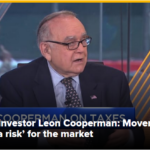
CNBC frequently publishes such non-news. An article (6/20/19) headlined “Bernie Sanders ‘Doesn’t Have a Clue’” featured supposed wisdom from multibillionaire Goldman Sachs alum Leon Cooperman, who stated bluntly: “We have the best economy in the world. Capitalism works,” and that Sanders’ “far-left” agenda is “counterproductive.” “I’m not in favor of raising taxes. Taxes are high enough,” Cooperman predict-ably said.
Neither article mentioned JPMorgan and Goldman Sachs’ role in the 2008 global financial crash, the up to $29 trillion bailout their industry received, and how these corporations need capitalism to continue regard-less of whether it “works” or not.
CNBC (4/16/19) not only allowed United Healthcare CEO David Wichmann to claim that Medicare for All would “destabilize the nation’s health system,” leading to a crisis and a “severe impact on the economy,” without a word of scrutiny, it also bolstered his credibility, telling readers that he “rarely discusses politics,” implying that this was a highly reliable, expert opinion, and certainly not scaremongering from a giant, for-profit organization making billions annually off the sick.
This practice is hardly limited to CNBC. For example, a number of prominent outlets, including NBC News (4/13/16), the Wall Street Journal (4/13/16), Business Insider (4/13/16), USA Today (4/14/16), CBS News (4/13/16), Politico (4/13/16) and Fortune (4/13/16), covered a Verizon CEO’s LinkedIn blog post (4/13/16) that claimed Sanders held “uninformed” and “contemptible” views on the economy. “When rhetoric becomes dis-connected from reality, we’ve crossed a dangerous line,” Verizon’s Lowell McAdam wrote, insinuating that the rich were “targets” in potential danger.
The fight for a $15 minimum wage has also, predictably, been attacked by restaurant owners who are among the stingiest when it comes to wages. Fox Business (6/6/19) repeated former CKE Restaurants CEO Andy Puzder’s claims that “Bernie Sanders’ proposals will kill economic growth,” and lead to a reduction in wages for those he claims to represent. No mention of the interest the ex-boss of the Carl’s Jr. and Hardee’s franchises had in low-paid workers.
And surely when Ken Langone described Sanders as “the Antichrist” —a particularly ugly epithet to hurl at a Jewish politician—the Wall Street Journal (5/10/18) should have at least pointed out that the multi-billionaire founder of Home Depot was a major GOP and Trump donor.
Yahoo! Finance (1/24/20) offered its own entry in the musings-from-Davos genre, interviewing Bank of America CEO Brian Moynihan, who told editor-in-chief Andy Serwer: “One of the things we’re trying to get everybody to understand, is you can be capitalist and make progress for society. But don’t challenge capitalism.” Yahoo!’s write-up did mention that Moyni-han had been paid $26.5 million in 2018, and that he “has faced scrutiny over politicized issues like executive pay.”
By reporting what multimillionaire and billionaire CEOs say about efforts to change a system they so clearly have a huge stake in staying the same, without highlighting, or even mentioning, their conflict of interest, corporate media are doing their audiences a disservice—effectively propagandizing them into supporting a model their owners and advertisers benefit from.