There Are ‘Questions’ About Trump’s ‘Board of Peace’—But Don’t Expect AP to Answer Them
AP tells us in bold letters, “There are many questions about how the board will work.” That implies that AP will be asking them, or care about the answers.
FAIR is the national progressive media watchdog group, challenging corporate media bias, spin and misinformation.



AP tells us in bold letters, “There are many questions about how the board will work.” That implies that AP will be asking them, or care about the answers.

How do you explain that violent crime is on the decline? AP relegates reality to a dependent clause, and then recites inflammatory hysteria word for word.

The Trump administration has created a fake controversy to bully the media, and the public, to go along with what it says, no matter how strange.

As US economic power continues to wane, the US and its allies in the media continue to try to assert imperial influence over Latin America.
Wilder told FAIR that the vagueness of when such standards of objectivity apply meant these standards could be “asymmetrically imposed on certain journalists in a way that has censored and policed journalists before me.”

Please tell the Associated Press to include a serious warning about the dangers of Covid-19, based on CDC guidelines, in its standard description of the coronavirus.

A recent AP piece on Ecuador’s protests was a good example of how elites push for austerity.

Some in the press pounced on Beto O’Rourke’s description of an Iraq war that is “27 years and counting.”

That diverse people need to be in the room, that reporting involves listening to and learning from them—now there’s a radical idea.

In “Barr as Attorney General: Old Job, Very Different Washington,” Associated Press reporter Eric Tucker made no mention whatsoever of Barr’s role in Iran/Contra pardons.
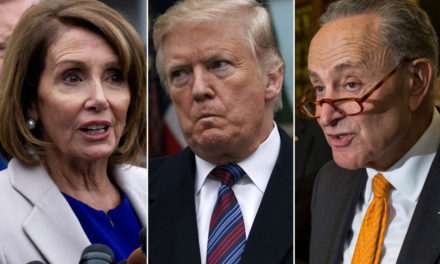
Both the AP and New York Times factcheck stories following Trump’s immigration speech included just a single example from the Democratic response. Perhaps not coincidentally, both of those strained, scrounging-for-anything examples turned out as flaming journalistic failures.

The Associated Press (6/6/16) has unilaterally declared Hillary Clinton to be “the Democratic Party’s presumptive nominee for president,” based on the news agency’s own polling of unelected superdelegates.

The AP published a thrilling account of how the FBI, in concert with Moldovan authorities, “disrupted” a smuggling ring that was supposedly trying to sell “nuclear material” to ISIS and other terror organizations over a five-year span. The tale made news across the English-speaking world. There was only one problem: At no point did the multiple iterations of the AP’s reporting indicate that anyone belonging to or connected to the Islamic State in Iraq and Syria (aka ISIL or Daesh) had any contact with the smugglers.
‘American Life,’ From GOP to CIA Bob Schieffer kicked off his final show as host of CBS’s Face the Nation (5/31/15) with a clip of what he said on his first show 24 years ago: “Our aim is going to be very simple here, to find interesting people from all segments of American life who […]

“Incidents involving white law enforcement and black suspects have raised concerns across the US,” writes the Associated Press.
But the “incidents” raising concerns have not involved black “suspects.”
“Black lives matter” is the rallying cry of the burgeoning movement against police killings. The Associated Press, covering that movement, has produced a perfect example of what journalism looks like when black lives don’t matter.
Is Obama’s decision to stop talking about inequality really about a debate within the Democratic Party? Or is it about not losing Wall Street donors?
With peace talks on hold, Israeli prime minister is back on US television talking about Iran’s supposed nuclear threat. Good thing for him his claims are so rarely challenged.
Media are suggesting that Russian leader Vladimir Putin’s defense of his actions in Ukraine suggests he is delusional. But what do they call it when US leaders appear unable to remember US invasions of other countries?
Politicians go out of their way to denounce whistleblowers and “leakers” whose revelations of classified data, they claim, have harmed national security. But it’s always worth pointing out that the outrage is selective.

