What Do You Call Edward Snowden?
CBS’s Scott Pelley suggests that Edward Snowden admitted to being a “spy” for Russia. But he’s not the only one using odd language to describe the NSA whistleblower.
FAIR is the national progressive media watchdog group, challenging corporate media bias, spin and misinformation.


CBS’s Scott Pelley suggests that Edward Snowden admitted to being a “spy” for Russia. But he’s not the only one using odd language to describe the NSA whistleblower.
A new FAIR Action Alert (8/14/13) asks where Face the Nation‘s dissenters are on NSA surveillance. Please leave copies of your messages to CBS, or comments on the alert, in the comments thread below.
The new student loan law lowers rates–and then, almost certainly, raises them in the near future. But hey–at least it’s bipartisan.

The United States has reportedly carried out nine drone attacks in the last few weeks in Yemen, generating headlines about the targeting and killing of suspected Al-Qaeda militants in the impoverished country. But how can media know for sure who is being killed? The uptick in attacks is apparently related to the alleged terrorist chatter […]
After intelligence reports about a possible Al-Qaeda attack , the Sunday chat shows were packed with politicians claiming that this meant that the NSA had been vindicated.
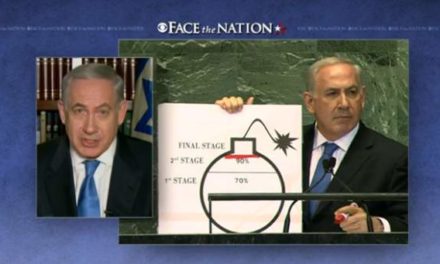
CBS Face the Nation gave Israeli prime minister Benjamin Netanyahu yet another chance to make dubious claims about the threats posed by Iran’s supposed weapons.
CBS covers the Edward Snowden and the NSA scandal by asking Bush-era NSA chief Michael Hayden for help. And NPR wonders if media coverage of marriage equality is too tilted in favor of… equality? Plus network TV doesn’t cover Obama’s climate speech–but the fake newscast at Comedy Central does.
Who would have thought the future of the environment was some kind of joke? It turns out comedians actually seem to care more about climate change than the people who produce real news programs do.
So a serious TV journalist might want to grill Michael Hayden on his role in the warrantless wiretapping scandal. But he was on Face the Nation, and Bob Schieffer wasn’t conducting that kind of interview.
CBS’s Schieffer followed the establishment media’s script on Snowden: We don’t know what exactly the government is doing, and we should know, but the guy who’s generated the discussion about all of this is a narcissist.
The debate over the government’s surveillance powers that was set off by whistleblower Edward Snowden is an important one. Who is invited to take part in that discussion really determines the kind of debate we’re likely to get.
What’s the press saying about the Bradley Manning trial? We take a look at a strange CBS Evening News report about a U.S. atrocity in Afghanistan, and David Gregory thinks he found an Obama flip-flop.
How many Iraqis died in the Iraq War? Public responses to that question are disheartening because they reflect a very distorted public perception of the war. But they are indicative of an even bigger problem: corporate media’s inadequate coverage of the human costs of U.S.-led wars.
In a courtroom base near Tacoma, Washington, Army Staff Sergeant Robert Bales will plead guilty today to killing 16 civilians–most of them women and children–in an Afghan village on March 11, 2012. A little more than a year later, U.S. media seem to have not much interest left in the Bales case.
If you care at all about war and peace, press freedom, whistleblowers’ rights and the public’s right to know what the government is doing, the trial of Bradley Manning is of enormous consequence. It would have been hard for NBC News to come up with a more hostile framing.

This week on FAIR TV: Obama’s big speech on U.S. anti-terrorism policies was treated as a big shift, a pivot away from war. Was it? Activists around the world rallied against Monsanto–which wasn’t considered big news here. And Bob Schieffer complains that the White House makes it hard to get good guests for his Sunday […]
Mainstream reporters are speaking openly about the chilling effect of the Obama White House’s investigations into leaks of classified material. But this willingness to talk about how the White House operates can lead some journalists to make some rather strange arguments.
If you followed the coverage of President Barack Obama’s May 23 speech at the National Defense University, you would think something big happened to the “war on terror.” That was probably the message the White House wanted the press to send. But is true?
President Barack Obama’s address yesterday on U.S. terror strategies got a lot of attention for supposedly charting a new course in America’s longest war. But some of the facts were mangled along the way.
CBS anchor Scott Pelley declared, “We are getting big stories wrong, over and over again.'” Well, that sounds like pretty dramatic self-criticism. But, as usual with corporate media self-critiques, Pelley’s criticism mostly misses the mark.

