Grading the States’ Coronavirus Control
The New York Times’ graphics aren’t helping to hold state governments responsible; they’re actually obscuring which officials have implemented an effective anti-coronavirus strategy.
FAIR is the national progressive media watchdog group, challenging corporate media bias, spin and misinformation.


The New York Times’ graphics aren’t helping to hold state governments responsible; they’re actually obscuring which officials have implemented an effective anti-coronavirus strategy.

When reporters and editorial contributors to the New York Times reiterate the notion that government spending is anathema, or that we need to be worrying about debt even as we fight the coronavirus, we are setting ourselves up for a rerun of the response to the global financial crisis,
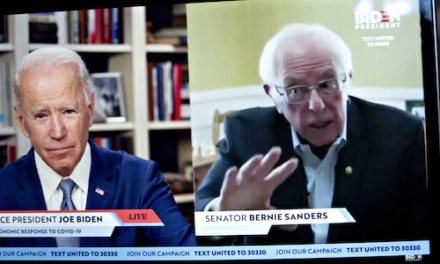
Giving a two-person unelected board the discretion to cancel an election when candidates have not terminated their campaigns is something you would think newspapers would take a bit more seriously.

The New York Times graphics department has done some great work translating the data of the Covid-19 pandemic into visual form, allowing readers to get an intuitive sense of the scope and course of the outbreak. Their “Real Coronavirus Death Toll in Each State” (5/5/20) is not a good example of that great work. […]

It is perhaps not surprising that the view that profits are more important than lives has been treated as a reasonable opinion by corporate media.

Election Focus 2020: With only about half the states having cast their votes in the Democratic primaries, the Covid-19 pandemic has frozen the majority of campaign activity, but the New York Times has already chosen its winner.

What the New York Times describes as being “as successful in controlling the virus as most other nations” really means having the tenth-worst per capita death toll from the coronavirus in the world.

More testing is good, but media shouldn’t let states use it as an excuse for out-of-control viral transmission—or as cover for a premature reopening of the economy.

Election Focus 2020: In the New York Times’ world, it’s apparently OK to bemoan a society and an economy that privileges the rich over the poor, but it’s unacceptable to run for the presidency on a promise to reverse those priorities.

Election Focus 2020: With only about half the states having cast their votes in the Democratic primaries, the Covid-19 pandemic has frozen the majority of campaign activity, but the New York Times has already chosen its winner.
It’s a savvy businessperson who can get the New York Times to publish a free advertisement on their behalf. So kudos to L. Gordon Crovitz, former publisher of the Wall Street Journal, who convinced the Times (1/21/20) to run a column under his byline that included this pitch for his company’s services: Advertisers such as […]

Given the blasé response to the market’s inability to deliver life-saving equipment to those who need it, because it’s not “sufficiently profitable,” it is perhaps not surprising that the view that profits are more important than lives has been treated as a reasonable opinion by corporate media.

Election Focus 2020: The New York Times gives a a true orgy of really big numbers in the form of trillions of dollars of additional taxes and spending, providing readers with no context that would let them know how much impact these taxes are likely to have on the economy and/or their pocketbooks.

Throughout the impeachment process, the New York Times has underplayed the danger to democracy, both of Trump’s obstruction of the process and the brazen resolve by Republicans to absolve him no matter what.
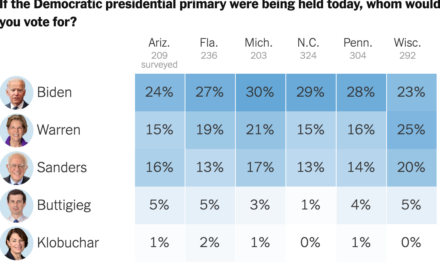
So the paper recycled its poll to tell essentially the same story, about Democrats being too far left for the battleground states, in a different and more roundabout way, presenting it as if it were new.

Election Focus 2020: The New York Times has a distinctly poor record of picking winning candidates, often making tragically comical predictions and assertions in its endorsements.

When the president carries out dangerous, aggressive actions, such as the assassination of Iranian general and political leader Qassem Soleimani in Baghdad on January 3, “resistance” turns to assistance from the corporate press.

Election Focus 2020: Yamiche Alcindor has repeatedly used her articles, tweets and media appearances to portray Sanders in an unflattering light.

Rather than explore the full extent of the Trumpist lurch towards authoritarianism, much of which is palpable and documentable but not necessarily “provable” in the way the Ukrainian extortion scheme is, the New York Times has gone all in on the obsession with the smoking gun.

Election Focus 2020: Even in the Trump era, corporate media, forever insistent on an “objective” approach that always hears out “both sides,” continue to exhibit a dangerous blindness to their own biases.

