Media Allow Republicans to Use ‘Unity’ as Tool of Division
Media lay out the narrative the GOP will work for the next two years to build: that Democrats are the ones sowing division by refusing to work together to get things done.
FAIR is the national progressive media watchdog group, challenging corporate media bias, spin and misinformation.


Media lay out the narrative the GOP will work for the next two years to build: that Democrats are the ones sowing division by refusing to work together to get things done.

When Western media reports omit necessary context, they imply that the appropriate benchmark to compare China’s response to is perfection, which it inevitably falls short of, allowing the creation of a narrative in which China’s pandemic response was especially (and suspiciously) incompetent and sluggish.

If editors learn anything from the events of the last four years, it should be that “balance” is a dangerous substitute for fairness and accuracy.

Please tell the New York Times to set the historical record straight by correcting its story to note that Daniel Ellsberg did in fact give the Pentagon Papers to the Times.
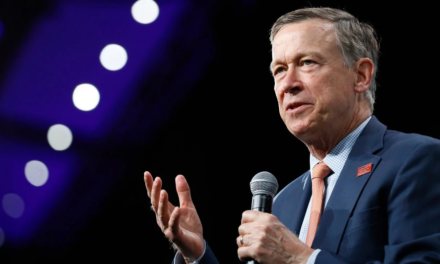
Democrats celebrated dual Georgia Senate race victories this week, which gives them, with Vice President Kamala Harris’ tiebreaker vote, a bare majority in the Senate. But not all Democrats are created equal, and the one-vote margin makes the politics of each individual in that majority more consequential. In 2020, several states witnessed competitive Democratic […]

Missed Story: Latino Voting Surge Boosted Biden A common theme in post-election coverage was how well Donald Trump did with people of color, particularly Latinos. “How Democrats Missed Trump’s Appeal to Latino Voters” was one New York Times story (11/9/20); another (11/16/20) read, “Liberals Envisioned a Multiracial Coalition. Voters of Color Had Other Ideas.” While […]

Please remind the New York Times that as a US paper, it has an obligation to cover the effects of US government policy on countries like Venezuela.

New York’s mayor’s dubious plan to reopen schools has found the New York Times to be its best form of public relations.

By assigning particular reporters to the “corporate influence” beat, the New York Times seems to let others reporters off the hook in terms of providing relevant information about officials’ corporate influences.
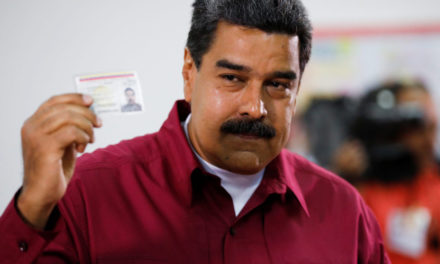
For the New York Times, crying election fraud then staging a coup is bad, and just like what dictators do—unless it is the US making dubious claims of electoral fraud against official enemies, in which case it is an honorable practice.

‘Dizzyingly Different Versions of Reality’ “Dueling Versions of Reality Define First Week of Fall Campaign” was the Associated Press’s headline over a piece by its chief political reporter Steve Peoples (9/4/20). “Embracing Both Sides journalism and injecting it with steroids,” as critic Eric Boehlert (PressRun, 9/8/20) put it, the story reported that Donald Trump says […]
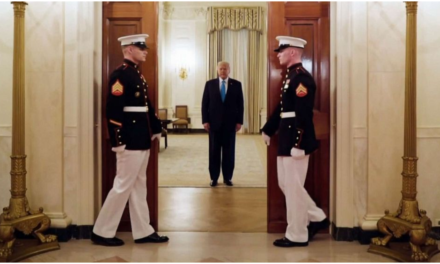
Besides framing it as “Many Democrats were outraged,” elite media normalized Trump’s behavior with passivity.

The effort to legitimize power, in this case by pretending a leading white supremacist was less central to the regime than he was, is pretty much the New York Times’ North Star.
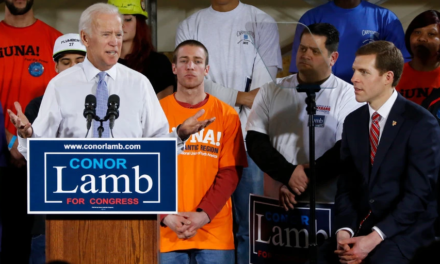
As the Democratic National Convention kicks off, election season is finally heating up again—which means it’s time for corporate media to get back to flogging their “move to the center” horse when covering Democrats.

Does it make sense to describe the alleged actions of Russian and Chinese hackers as a form of “theft”? If so, what kind of “theft” is it?

A New York Times editorial delivers a blunt critique of neoliberal economics–not what Times readers have been used to seeing on its editorial pages.

The New York Times has been patting itself on the back for recognizing authoritarianism in neofascist regimes that it helped normalize in Latin America for at least 50 years.

Despite the fact that the anonymous accusations were far from proven, and that both the Washington Post and Wall Street Journal included categorical denials from all those involved, including the White House, the Taliban and Moscow, much of corporate media treated the story as an established fact from the outset.

The New York Times purported to explain how the Taliban managed to “outlast a superpower through nearly 19 years of grinding war,” without examining at all how the US contributed to reviving and sustaining the Taliban insurgency.

The New York Times has it exactly backwards: Kramer’s confrontational approach didn’t “overshadow his achievements,” they are what made his achievements possible.

