‘It’s This Culture of Secrecy That’s Pervading the Courts’
“If the government is going to come in and say you can’t say something you have a constitutional right to say, they have to meet a very high burden.”
FAIR is the national progressive media watchdog group, challenging corporate media bias, spin and misinformation.


“If the government is going to come in and say you can’t say something you have a constitutional right to say, they have to meet a very high burden.”

Much of media’s story around Giuliani was about how cool and effective he was on September 11, 2001. And much of that story is myth.
“These modern-day protest movements are critical to realizing the full potential of American democracy and promises to equality and racial justice. Those movements should not be surveilled.”
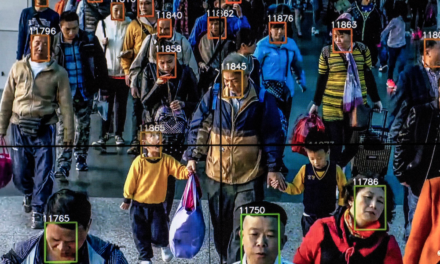
“There are, in fact, companies out there that purport to determine whether someone has a propensity to be a terrorist, simply by analyzing their face print.”

Boycotts are a constitutionally protected form of speech, but Congress and some states are moving to penalize boycotts aimed at territories illegally occupied by Israel.

“Understanding the limits of the dialogue possible in the elite but influential press is crucial to understanding our political lives.”
Understanding the limits of the dialogue possible in the elite but influential press is crucial to understanding our political lives…and the importance of maintaining spaces where we can openly debate and challenge a status quo that is harming millions of people and the planet.

Media’s propensity to serve as stenographers and lapdogs for law enforcement is nothing new. But the coverage of the NYPD’s drone roll-out is particularly egregious, because of how the move in the Big Apple could significantly impact surveillance and civil liberties nationwide.

It is a premise that data collection goes on in order to convict us of a crime that has not yet happened, that we haven’t committed. And we need to turn that whole structure on its head, which is to say that data needs to serve a public safety purpose, or there is no reason to collect it.
The New York Times has the ability to report on woes in other countries without recognizing that its own country has troubles that are similar or worse.

“Data needs to serve a public safety purpose, or there is no reason to collect it. We can’t preemptively create a police state based on future crime. Can’t do it. That’s George Orwell.”

“Black and brown voices for accountability and for change, and particularly around policing, have historically been viewed as deeply threatening.”

“I just don’t think a government of free people has any business sitting at the main junctures and watching all the people we communicate with, and when, and how often.”

Hundreds of thousands of women took to the streets in a show of resistance to the Trump administration, highlighting a range of threats to women’s human rights and well-being; central among those is the assault on abortion access.

The biggest, most resourced police department in the world likes to work in the shadows. You want to question that? You’re probably a terrorist enabler.

In a properly functioning media system, Gladwell argues, the purpose of leaks is to fool people into accepting government indoctrination—and it would be a shame if that system were to break down.

President Trump, like any president henceforth, will start off his administration with all the tools he needs to establish an authoritarian regime. And any impulse to do so will no doubt be facilitated by an elite press corps.

If we’re going to call Snowden’s documents “stolen,” then journalists frequently receive “stolen” records from sources and use them as the basis for stories—as the Times itself has done with documents released by Snowden. If Snowden is a thief, then the New York Times is a fence.

“What we’ve seen throughout history is the role that the media has played, when convenient, in forwarding a police PR narrative that reinforces the need for surveillance in our community, and conflates safety with surveillance in ways that I think everybody should find alarming.”
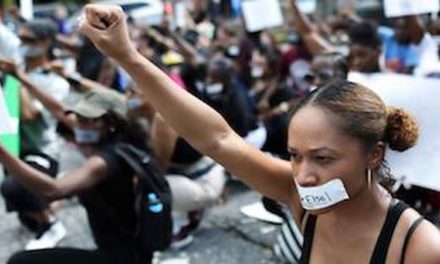
Corporate journalists rely on the First Amendment, but it’s increasingly unclear if the First Amendment can rely on them. The relative lack of interest in the impact of spying on activists—a practice with a long and disturbing history given new power by technology—is the latest example.

