Republicans Want to Look at Gun Violence in Movies? OK, Let’s Look
This is Hollywood’s relationship with the gun industry: When you put a gun on screen, people are going to want to buy it, regardless of whether it’s used by good guys or bad guys,
FAIR is the national progressive media watchdog group, challenging corporate media bias, spin and misinformation.


This is Hollywood’s relationship with the gun industry: When you put a gun on screen, people are going to want to buy it, regardless of whether it’s used by good guys or bad guys,

How did a tax cut that mainly benefits a small group of top earners become broadly popular? One reason is the nonstop deluge of stories over the past two months, cheerleading alleged “tax cut bonuses” from large corporations.
[mp3-jplayer tracks=”CounterSpin Richard Wolff Full Show @http://www.fair.org/audio/counterspin/CounterSpin180209.mp3″] MP3 Link This week on CounterSpin: Economic news is presented as facts and figures, but it’s also, maybe most importantly, a story, a narrative. But whether it’s an article about companies using their tax cut savings to give workers bonuses or one about how few of them are […]

Under the cover of a shallow understanding of “balance,” corporate media have internalized the outlandish idea that it is “partisan,” and thus not “neutral,” to acknowledge the undeniably destructive effects of particular political policies.

Now that the GOP tax bill has exposed “deficit concerns” by congressional Republicans as an empty marketing ploy, will those in the media who pushed the Deficit Doom narrative during the early Obama years admit they were wrong?

“While they’re fighting to maintain our healthcare, they’re also fighting for some necessary changes, to allow people with disabilities to be able to work and live in their communities.”

Republicans are putting in place a tax plan similar to what they campaigned on. If the fact that it mostly helps the rich is a surprise to anyone, it is due to the poor quality of reporting during the campaign.
The “boom” following Reagan’s tax cuts was similar to the growth during the Ford/Carter years–which are not generally remembered as a time of great prosperity.

The electoral chaos in Honduras—where a president has not been declared nearly two weeks after voting—requires media to connect the dots between a bipartisan US foreign policy that supports leaders deemed friendly to US “interests,” and the hardship and violence and voicelessness that pushes many to flee the countries run by those “friends.”
The GOP bill, passed by the Senate in the early hours of December 2 and described by major media outlets as a “tax cut,” is in reality an explicit handout to large companies and the ultra-rich that will actually increase taxes on working-class Americans.

“Lowering taxes is, at heart, what makes a Republican a Republican,” the New York Times told us. The problem with this assertion is that the Republican plans actually raise taxes for close to half of middle-income families.
“This industry is probably one of the most influential on the planet in terms of lobbying, political contributions. So it’s not so much that we lack the technical ideas to clean up the industry, but we have lacked the political will.”

The millions of leaked documents dubbed the Paradise Papers bring some sunlight to an arena where secrecy is the point: the world of “offshore financial centers,” where a melange of the world’s wealthiest stash money, bilk governments and generally betray any notion of a social compact.

A new report makes clear that not only were progressive groups scrutinized by the IRS, they were in fact targeted more than conservative groups.

“They’re talking about increasing the growth rate 5 percentage points—they’re just pulling numbers out of the air. There’s literally nothing to support that.”

The Supreme Court case of Gill v. Whitford, deciding whether the way Wisconsin Republicans redrew voting districts in 2011 amounted to “an aggressive partisan gerrymander,” touches on nothing less than whether the US can ever become the democracy so many hope for.
“If they aren’t spending their tax savings to create jobs, where is all of that money going? And, surprise, surprise, we found out that a lot of it was winding up in the pockets of their top executives.”
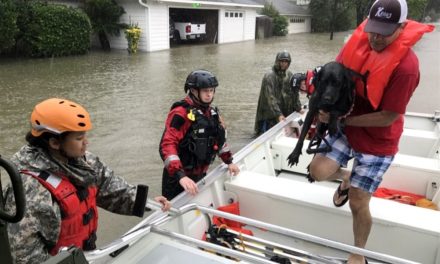
How will reporters covering Harvey treat climate change, as well as the role of poverty, racism and the gutting of infrastructure budgets–the things you explore when you want not just to report a disaster, but go some ways toward preventing future ones?
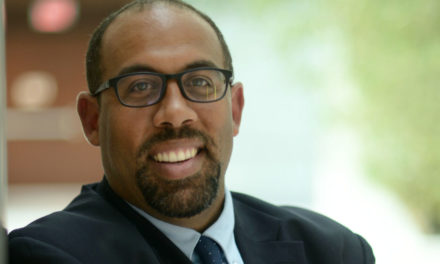
“When you think about what’s driving inequality, I would say a federal system that is subsidizing the income and expenses and wealth at the high end, at the expense of not investing at the low end, is really exacerbating that divide.”
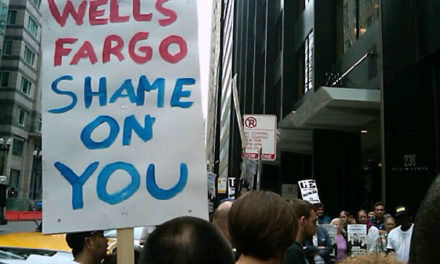
Activists are using the Wells Fargo scandal to call attention to a range of other problems at the bank—problems not addressed by a couple of top executives giving back some of their golden parachutes.

