Erasing Obama’s Record on the Afghan War
In focusing on how Obama might end the Afghan War–which hasn’t ended, of course–media accounts omit the fact that Obama massively increased the number of US troops in Afghanistan
FAIR is the national progressive media watchdog group, challenging corporate media bias, spin and misinformation.


In focusing on how Obama might end the Afghan War–which hasn’t ended, of course–media accounts omit the fact that Obama massively increased the number of US troops in Afghanistan
Brookings think tank hawk Michael O’Hanlon is on the Washington Post op-ed page today trying to convince readers that there are reasons to be hopeful about the Afghan War. It’s a story he’s been telling for a while now.
It’s not unheard of for journalists to express strong opinions about how the United States should conduct its wars. But sometimes reporters express their opinions by attributing them to others.
What do you do when the president of another country says US forces killed civilians there? You get US and other allied officials to anonymously deny it.
Most people know that Obama did not take office in 2010. So why offer that as the starting point in an analysis of how Obama is “bring[ing] the troops home” from Afghanistan?
The latest media-politics revolving door news is that Time managing editor Richard Stengel is leaving the magazine and heading over to the State Department to be the new undersecretary of State for public diplomacy and public affairs. That’s PR–or maybe propaganda, if you prefer that term.
The government isn’t having much luck showing the real world harm done by Bradley Manning and WikiLeaks. Perhaps they should call in Time columnist Joe Klein–he knows “for a fact” that bad things happened.
If you’re the commander of U.S. military forces in Afghanistan and you want to send a message that those troops need to stay in the country past 2014, apparently you just tell the New York Times that you’re ready to talk.
What Tim Dickinson called Hastings’ “enthusiastic breaches of the conventions of access journalism” were what enabled him to report the unguarded assessments of the officers running the occupation of Afghanistan.
What’s the press saying about the Bradley Manning trial? We take a look at a strange CBS Evening News report about a U.S. atrocity in Afghanistan, and David Gregory thinks he found an Obama flip-flop.
In a courtroom base near Tacoma, Washington, Army Staff Sergeant Robert Bales will plead guilty today to killing 16 civilians–most of them women and children–in an Afghan village on March 11, 2012. A little more than a year later, U.S. media seem to have not much interest left in the Bales case.
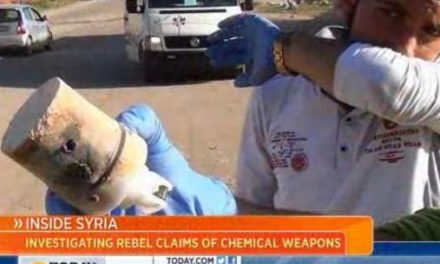
Peter Hart talks about Syria and chemical weapons claims, and author Dilip Hiro joins the show to talk about how stories about Afghan corruption fail to explain the U.S. role in creating that corruption.
NBC Nightly News anchor Brian Williams had a most peculiar reaction to revelations that Afghan president Hamid Karzai receives regular deliveries of cash from the Central Intelligence Agency.
O’Reilly was outraged by Sirota’s point that the government’s response would be very different–more costly, potentially more violent–if the perpetrators fit a certain profile. This is ironic, because O’Reilly had, the night of the attacks, basically made Sirota’s point.
I suppose we might ignore that the first lady of a country appeared at an awards show, flanked by members of the military, to present a prize to a film about the heroism of U.S. intelligence. No, the real problem is Iran’s Photoshopping.
It goes to show you how limited the debate over warmaking is when politicians whose records are mostly pro-war can be portrayed as war skeptics. That’s what is happening with Barack Obama’s new cabinet picks: Sen. John Kerry for secretary of State and former Sen. Chuck Hagel as Defense secretary.
When we draw comparisons between a particular event and other similar tragedies, it is not to say that they all matter equally, but to remind ourselves that we’re conditioned to feel that some matter quite a bit more than others.
At the end of ABC‘s This Week (11/18/12), Martha Raddatz presented a brief viewer-mail segment: And finally, “Your Voice This Week.” Today’s question comes from Cheryl Robinson, who writes, “What happened in Benghazi was terribly tragic, and now we’re hearing of another Middle Eastern war on the brick. Let us and you, the media, not […]
It’s bad enough when media refer to civilian deaths in U.S. wars as “collateral damage,” but it was jarring to see how the phrase was used in a Washington Post headline today: Obviously, they’re talking about the sex-and-emails scandal. How could dead Afghan civilians ever threaten the career of a high-ranking U.S. official?
Some days it’s not easy to make it through a Tom Friedman column. Take today (11/14/12), for instance. I got all the way to the second sentence: Virtually every American president since Dwight Eisenhower has had a Middle Eastern country that brought him grief. In case you’re wondering, he really means every president: For George […]

