Chase Madar on Prosecuting Police
It looks unlikely that the officer, Timothy Loehmann, who shot 12-year-old Tamir Rice will face any prosecution at all for the killing. If the justice system won’t bring justice, what could?
FAIR is the national progressive media watchdog group, challenging corporate media bias, spin and misinformation.


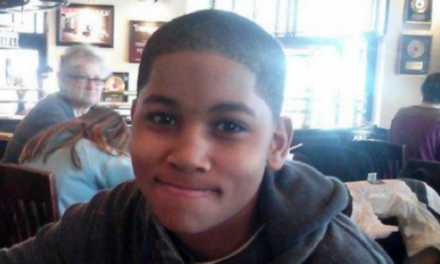
It looks unlikely that the officer, Timothy Loehmann, who shot 12-year-old Tamir Rice will face any prosecution at all for the killing. If the justice system won’t bring justice, what could?

if we’re a country that holds ourselves out as the shining city on the hill, then we have to look at the damage that we have done to communities, particularly to African-American and Latino, poor communities in this country, because of disparate treatment and policing.

Taking the Black Lives Matter movement seriously has to mean more than prompting presidential candidates to say the words aloud. CounterSpin talks about some potential elements of an actual criminal justice reform agenda.

There’s a more fundamental problem with a New York Times story that suggested that criticizing police violence is (maybe) responsible for a rise in homicides: It’s not clear that the rise in homicides that the story is pegged to actually exists.

Today, news organizations mostly recognize that the superpredator was little more than an ugly and racist caricature reflecting the witch hunts of the times. But old myths die hard, and some news organizations were all too eager to revive the racist narrative.

Captured on cellphone video, the incident received attention because we are living in a moment when many people have decided that the state-sanctioned killing of black people by law enforcement is worth our attention—and that’s very uncomfortable for those who want to believe that every police killing must be in some way justified, if we could only see how.

“Incidents involving white law enforcement and black suspects have raised concerns across the US,” writes the Associated Press.
But the “incidents” raising concerns have not involved black “suspects.”
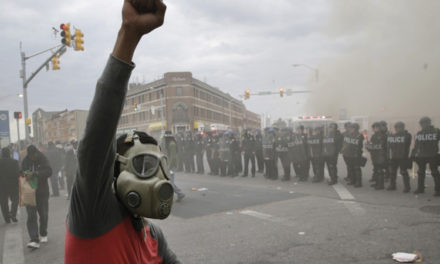
“Why is there so much anger?” If you were wondering that before you read the Washington Post’s “primer,” you’re probably still wondering.

The Washington Post calls Freddie Gray “the nation’s most prominent symbol of distrust in police.” The Post can’t call him a symbol of police violence, because as far as the paper is concerned, there’s no way to tell whether any police violence occurred at all.

New York Times coverage of the Baltimore protests has stuck mainly with government sources, even for a story that cries out for original reporting to cut through the official line.

Regardless of whether the deputies are indicted or not, they are public employees under whose custody a community member died; it’s unclear why the public has no legitimate interest in knowing who they are.

Before shocking video surfaced of a South Carolina police officer shooting a man in the back, most of the local press coverage, per usual, followed the police’s official narrative and amplified a storyline that, in retrospect, was entirely made up.
“Black lives matter” is the rallying cry of the burgeoning movement against police killings. The Associated Press, covering that movement, has produced a perfect example of what journalism looks like when black lives don’t matter.
If only police officer Daniel Pantaleo had been able to somehow control his own arm, Eric Garner would not have died.
How Fox News covered the Ferguson grand jury announcement.
That so many black people are killed by law enforcement is a painful, difficult thing to face. Perhaps that’s why media try so hard to look away.

This week on CounterSpin: Ferguson was back in the headlines recently with leaks from an autopsy report that, we’re told, seem to corroborate police officer Darren Wilson’s version of events from the day he killed Michael Brown. We’ll talk about the impact of those leaks along with other aspects of a story that is far from over, despite the fact that most corporate media appear to have moved on, with Chris King, managing editor of the St. Louis American.
Also this week: When the New York Times refers to a politician as ‘a former Marxist guerrilla who praises Hugo Chavez’ you know they don’t mean that in a good way. The Brazilian election saw a leftist incumbent challenged by a business-friendly candidate who we were told would grow the economy. Economist Mark Weisbrot will join us to talk about what the press was getting wrong about Brazil.
A new study has some outlets saying that social media inhibit debate. You want to compare Twitter’s record to the corporate media on that score?
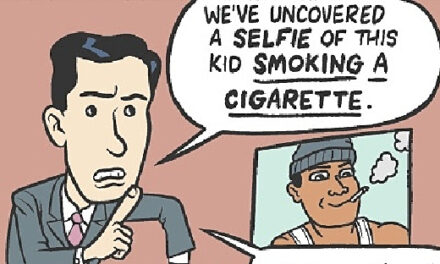
The New York Times makes some curious choices in its coverage of the victim in the Ferguson, Missouri, police shooting.
Watching coverage of the unrest in Ferguson on CNN last night (8/18/14), I was struck at the actual journalism I was treated to by CNN‘s Jake Tapper. It’s not every day corporate media is awestruck by the heavy-handedness of a militarized attack on civilians on US soil. But such was the case for Tapper, who […]

